
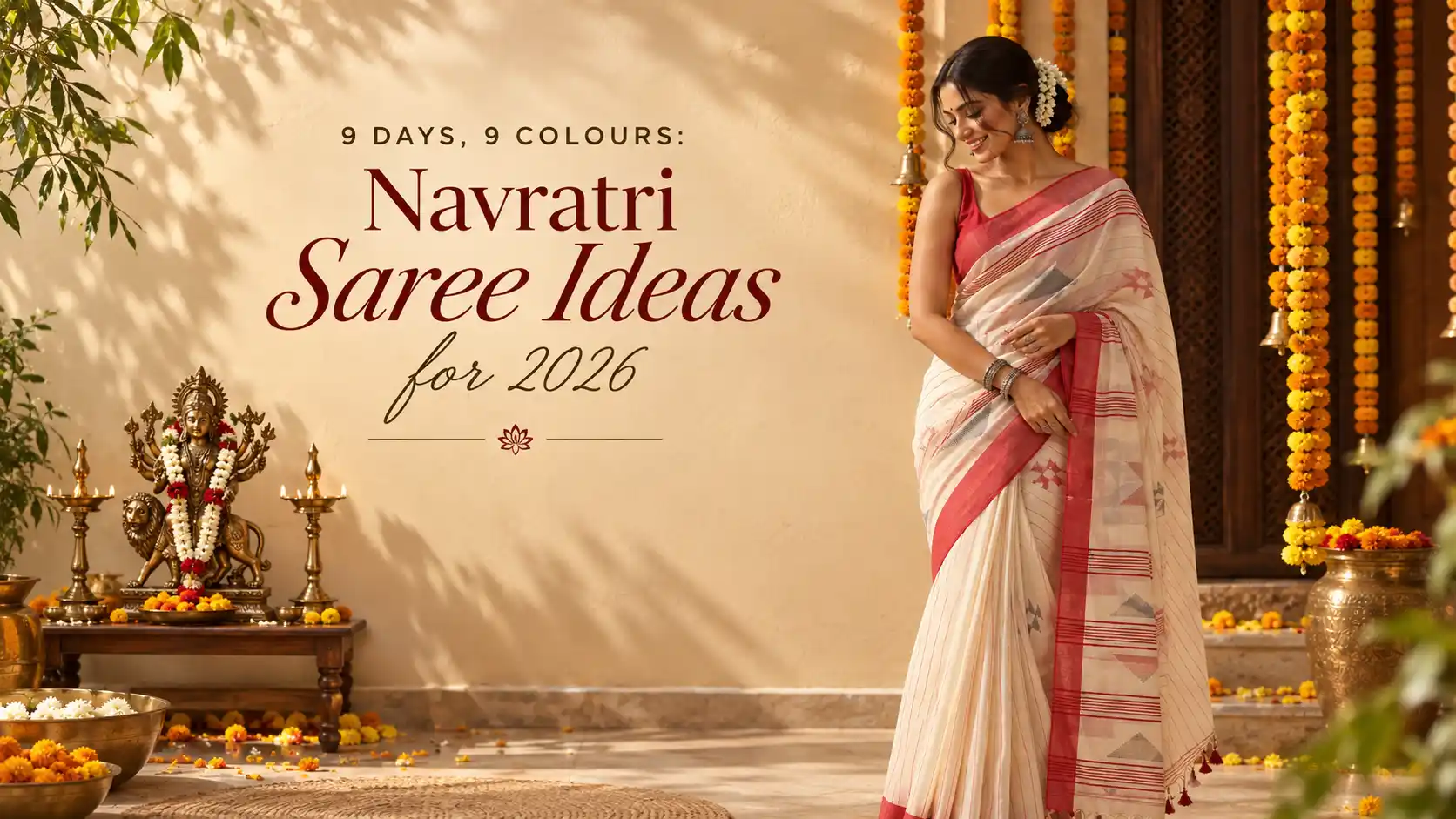
Navratri saree colour planning is basically half the fun of the festival. Nine nights, nine forms of the goddess, nine colours, and somewhere in between you have to actually decide what goes in your suitcase.
This guide covers what Navratri actually celebrates, the full 2026 day-by-day Navratri colour saree sequence, the fabrics that survive a full night of garba, and styling ideas so you’re not standing in front of your cupboard on day four wondering where your orange saree went.
The Significance of Navratri and How It’s Celebrated
Navratri means “nine nights,” dedicated to the nine forms of Goddess Durga, known together as Navadurga. Each night honours a different aspect of her, moving from raw strength on day one to quiet mastery on the final night.
That arc is really why the festival has stayed this alive for centuries. It isn’t just nine days of dressing up. It’s built on the idea that the divine feminine shows up in more than one form, and each form gets its own moment.
This is also why choosing a Navratri saree colour means something beyond fashion. Wearing the colour of the day is a small way of aligning with whichever form of Shakti is being honoured that night.
How the festival looks on the ground changes a lot by region:
- Gujarat: garba and dandiya raas, entire neighbourhoods dancing in open grounds late into the night
- West Bengal: Durga Puja, with elaborate pandals, idol immersions, and a build-up to Ashtami and Navami
- South India: Golu or Bommai Kolu, tiered doll displays with evening visits between homes
- Across India: nine-day fasting for many families, often broken with a Kanya Pujan on Ashtami or Navami
Different states, different rituals, same underlying rhythm: nine nights, nine forms of the goddess, and a colour marking each one. The festival closes with Vijayadashami, or Dussehra, celebrating the goddess’s victory and the larger theme of good triumphing over evil.
Why Navratri Saree Colours Change Every Year
If you’ve compared two Navratri colour lists and found them completely different, you’re not imagining it. The sequence isn’t fixed.
It’s tied to the weekday the festival begins on, since each day of the week is ruled by a planet with its own colour. Start on a Sunday and you get one order. Start on a Monday and it shifts.
For the most reliable version of the colour order in any given year, bookmark Drik Panchang.
Shardiya Navratri 2026 runs Sunday, 11 October to Monday, 19 October, with Dussehra on 20 October. Because it opens on a Sunday, this year’s Navratri saree colour sequence starts with orange.
Navratri Saree Colour Guide 2026, Day by Day
Here’s the full nine-day breakdown, with the goddess honoured on each date.
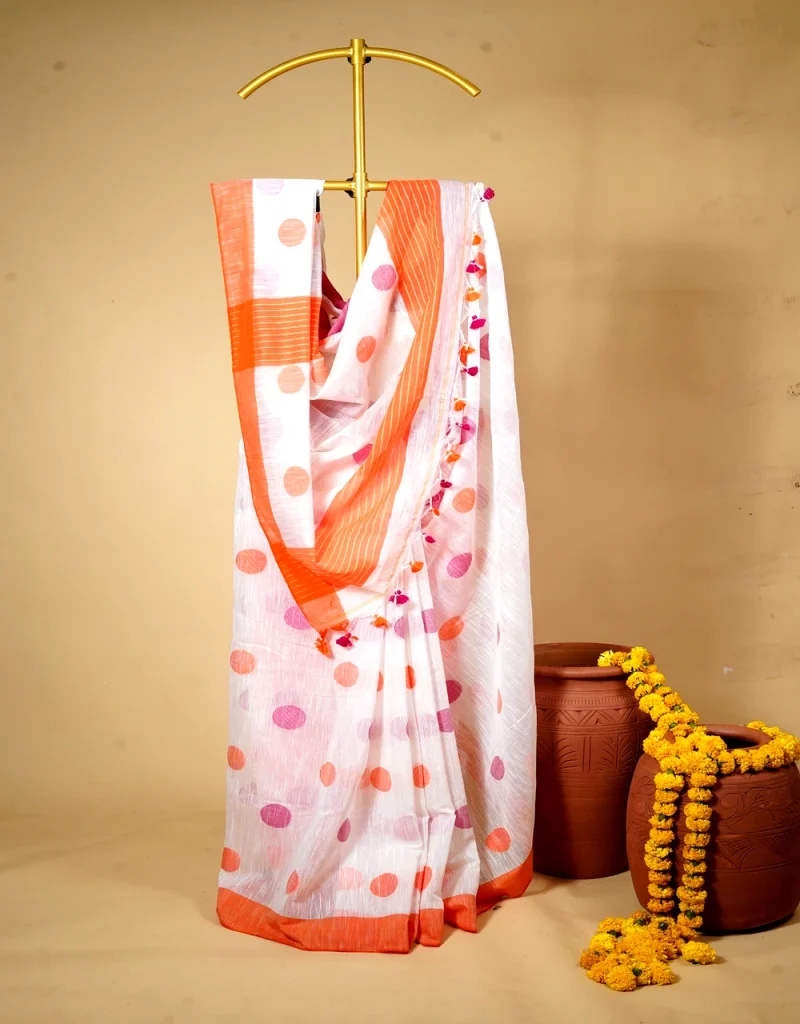
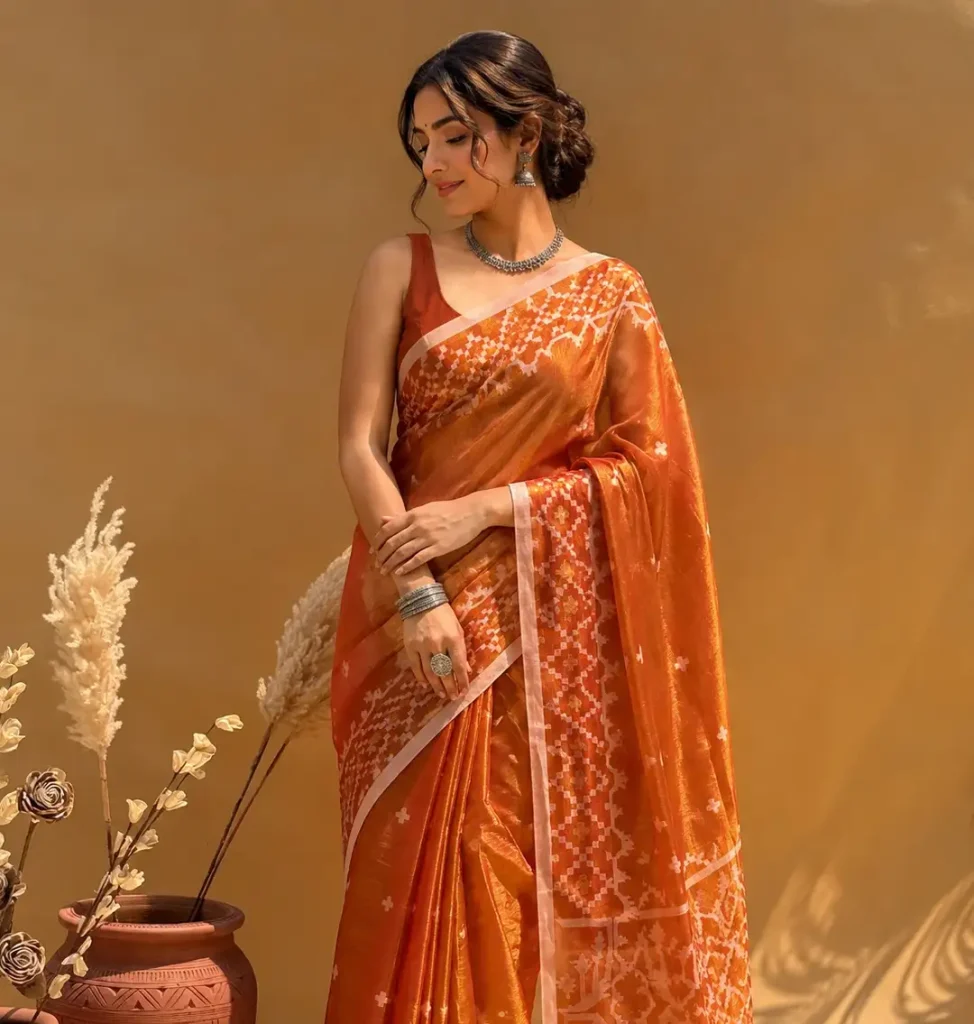
Day 1, 11 October: Orange
Maa Shailputri‘s day. Bright and energetic, works for Ghatasthapana morning and the first garba of the season equally well. Saffron, rust, and tangerine all count as this Navratri saree colour. Pair with gold jewellery and keep the rest simple.
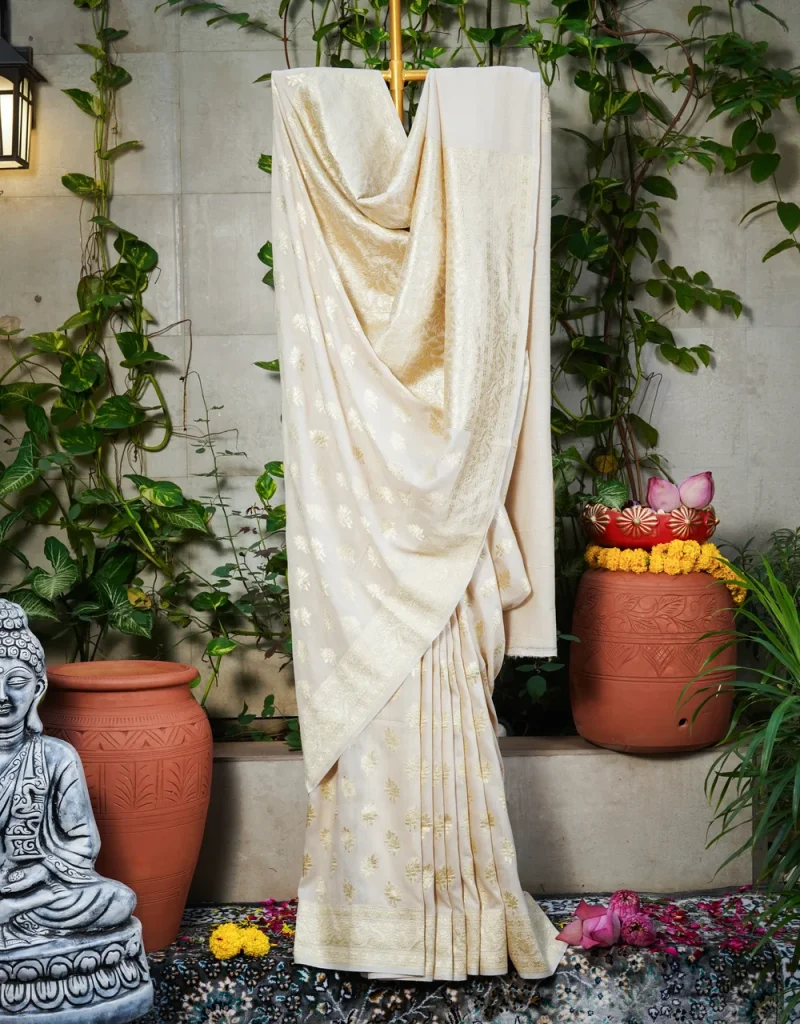
Day 2, 12 October: White
Maa Brahmacharini‘s day. A calm, purity-coded shade after the brightness of day one. Looks elevated with a gold zari border. A contrasting red or orange blouse adds personality without breaking the palette.
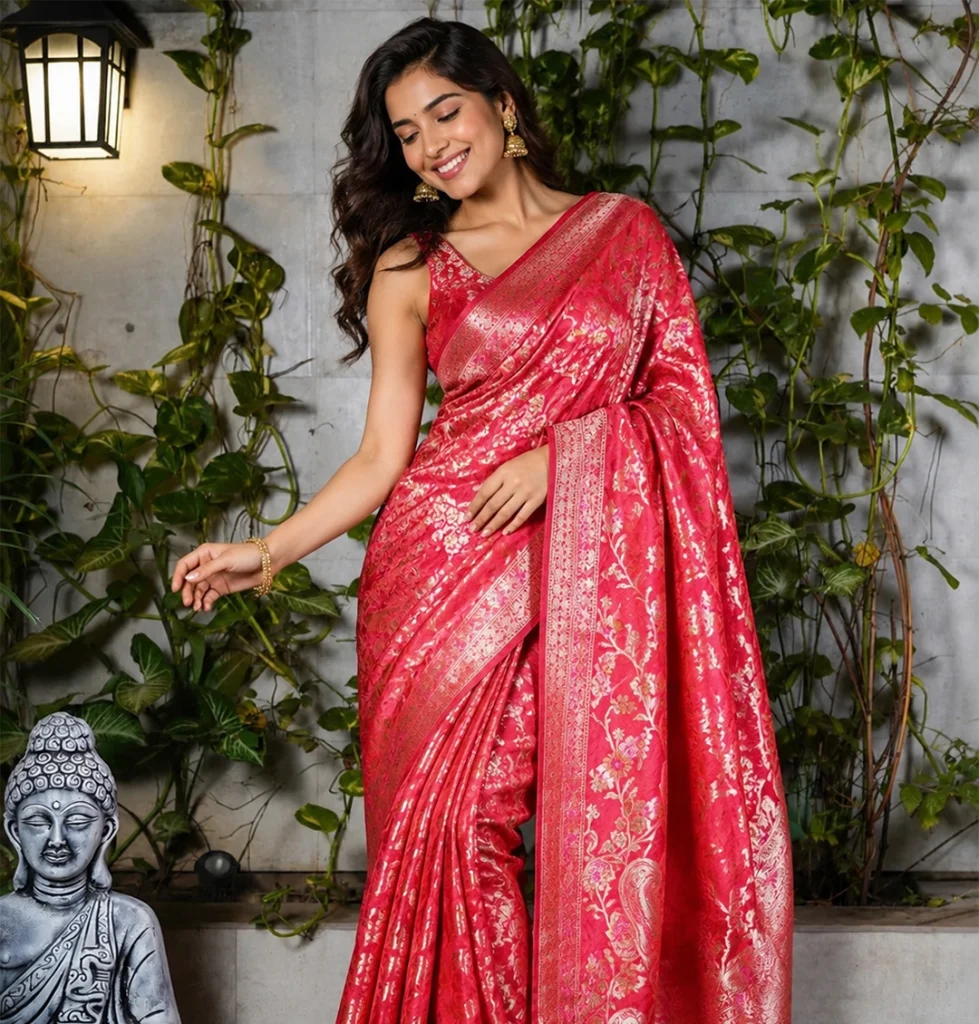
Day 3, 13 October: Red
Maa Chandraghanta‘s day, and the boldest Navratri saree colour of the nine. Signals strength, passion, and devotion, and is consistently the fastest-selling shade every season. A good night for your best Banarasi sarees, since red holds its richness even under low garba lighting.
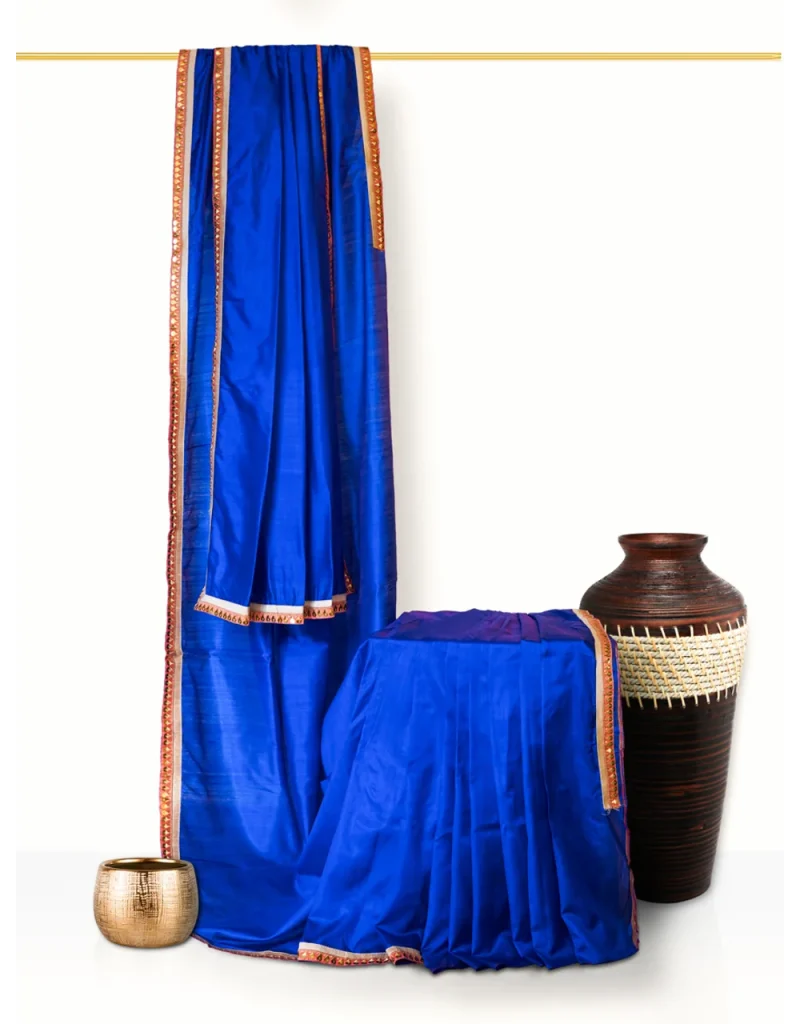
Day 4, 14 October: Royal Blue
Maa Kushmanda‘s day. The most underused Navratri saree colour on this list, which is exactly why it stands out. Reads as deep and sophisticated. Gold jewellery warms it up, silver keeps it cooler.
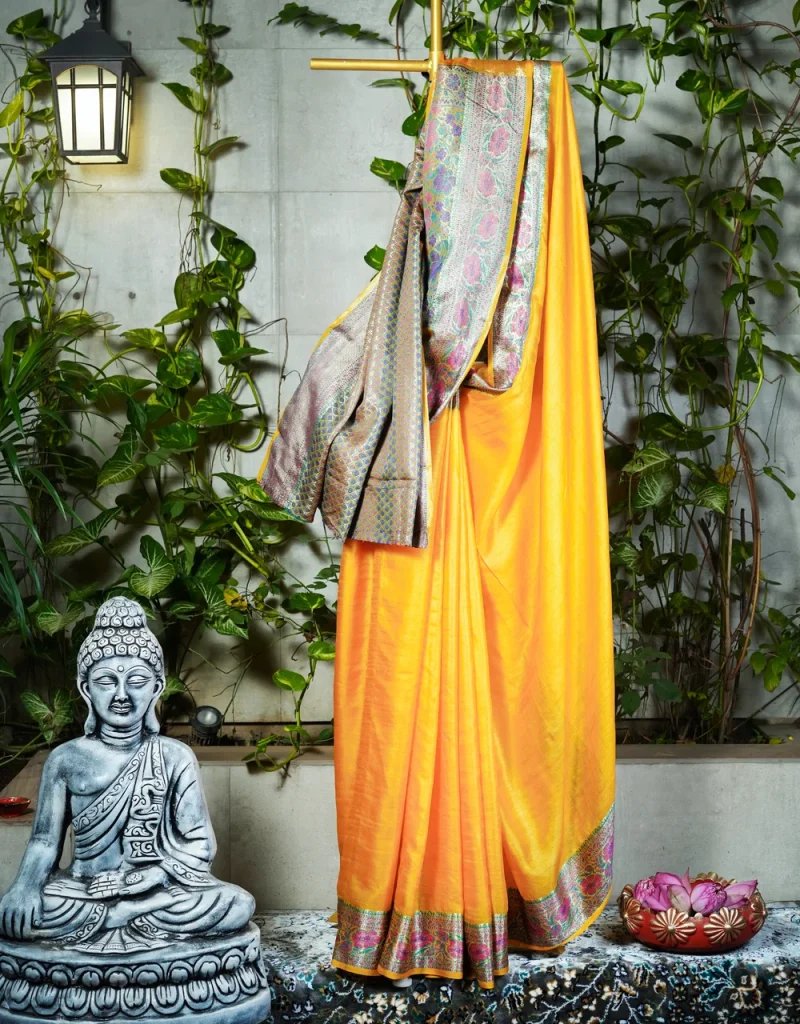
Day 5, 15 October: Yellow
Maa Skandamata‘s day, and one of the most-searched Navratri saree colours every year. Bright, cheerful, and flattering against most Indian skin tones. Golden or mustard yellow adds richness over a flat primary yellow.
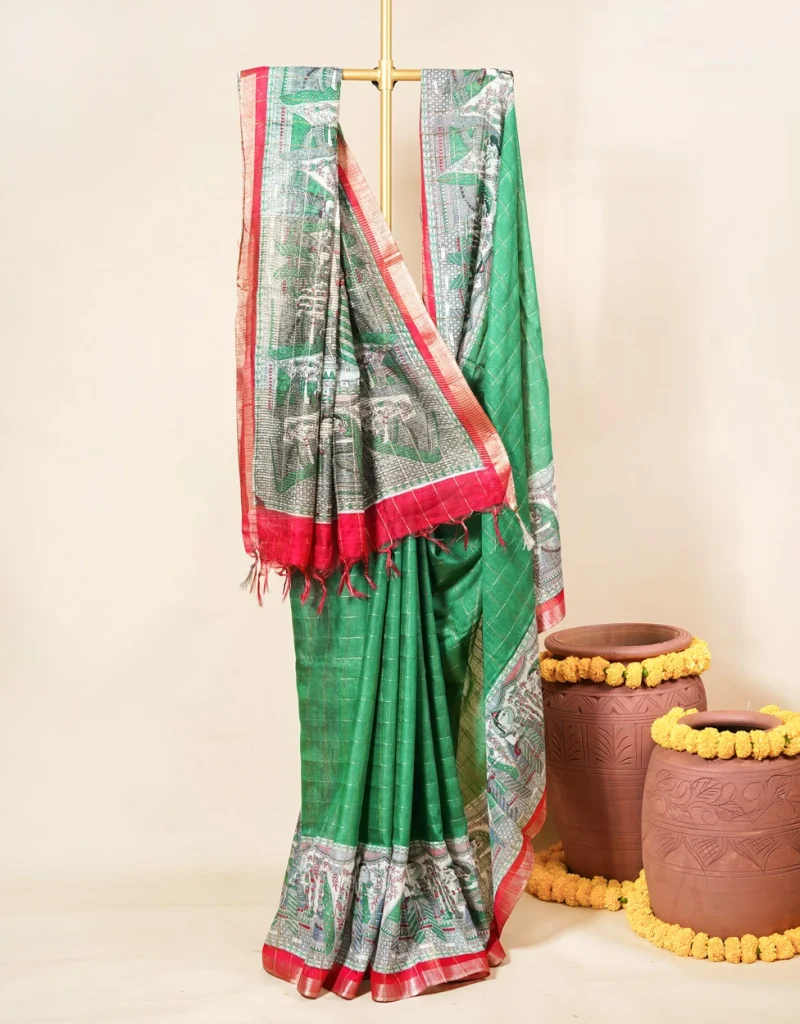
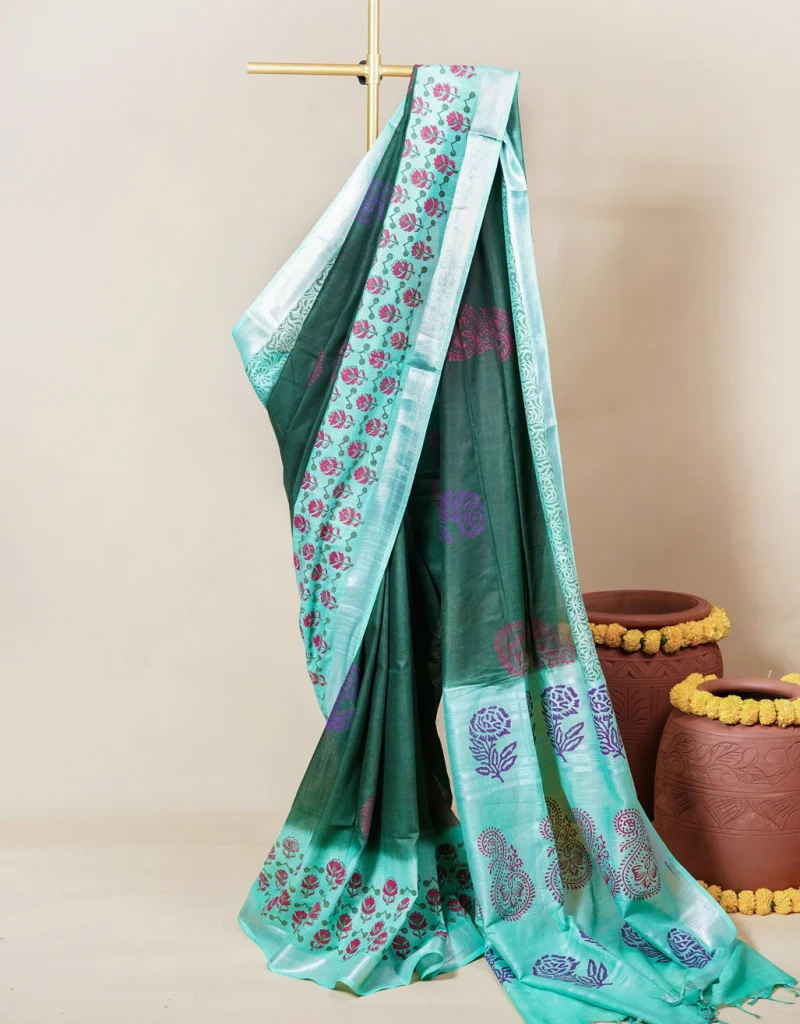
Day 6, 16 October: Green
Maa Katyayani‘s day, representing growth and renewal. One of the best-performing Navratri saree colours for garba specifically, since it catches light beautifully while dancing. Deeper bottle greens feel formal, lighter greens feel playful.
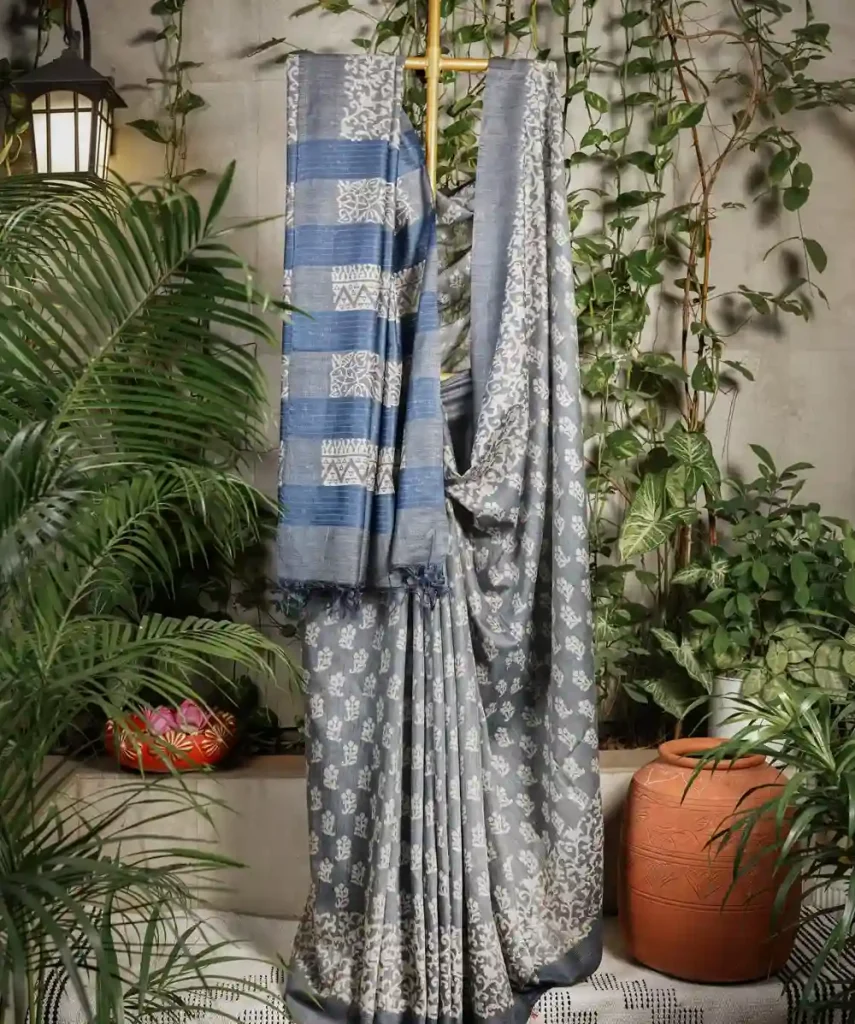
Day 7, 17 October: Grey
Maa Kalaratri‘s day, and the most understated Navratri saree colour of the nine. If bright shades aren’t your thing, lean into texture instead. A woven or metallic-bordered grey can outshine a heavily embellished piece in a louder colour.
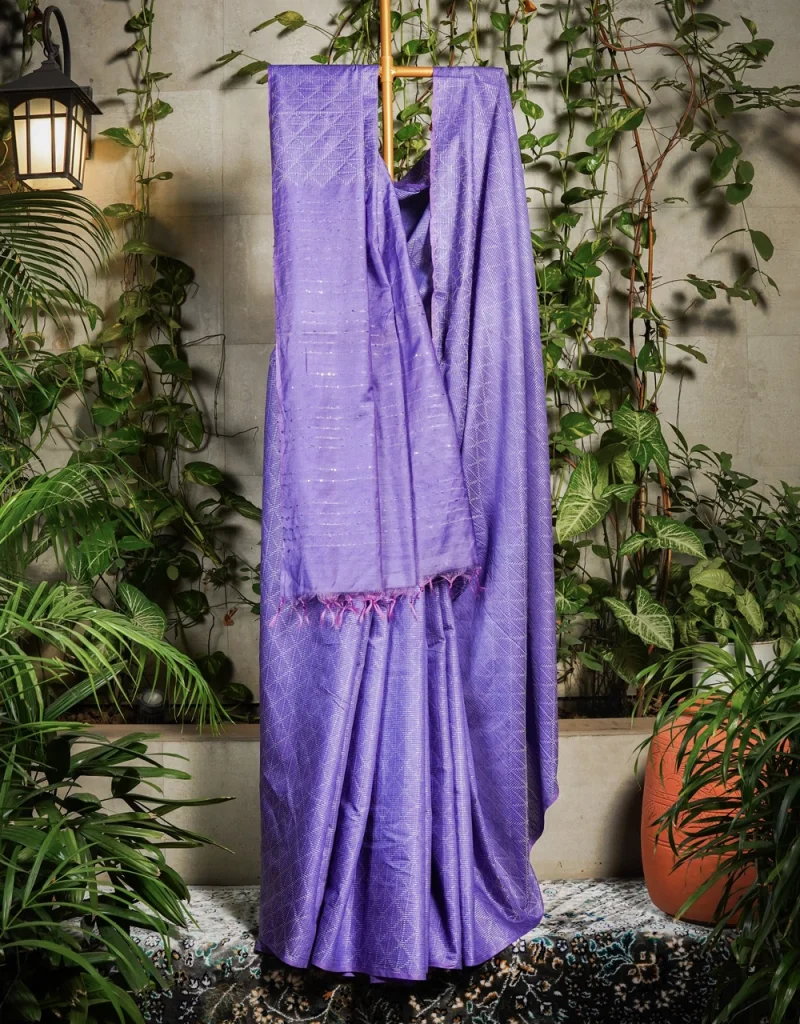
Day 8, 18 October: Purple
Maa Mahagauri‘s day. Rich, regal, and consistently one of the strongest-converting Navratri saree colours according to most sellers. Sits comfortably against both the brighter early days and the deeper tones that follow. Statement earrings and a classic blouse are usually enough.
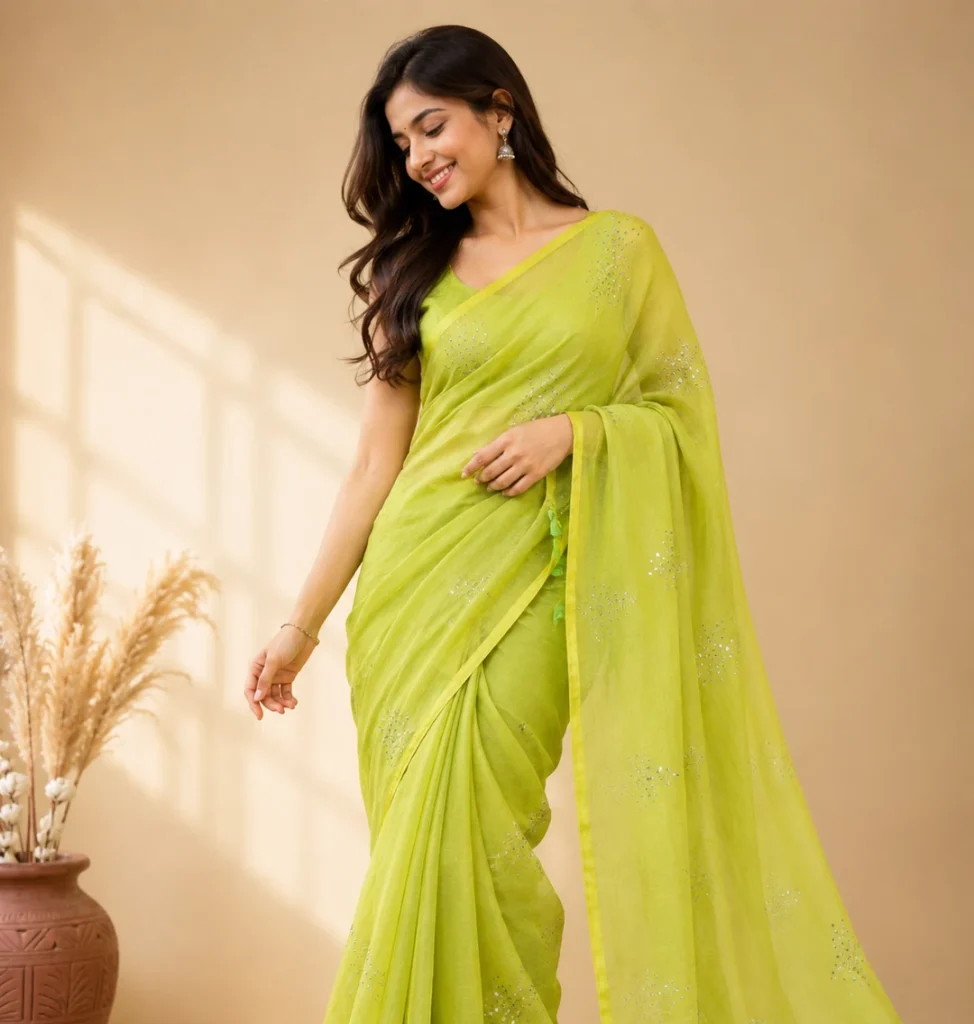
Day 9, 19 October: Peacock Green
Maa Siddhidatri‘s day, closing the festival on a teal-leaning shade. Pairs beautifully with gold jewellery and tends to be the most memorable look of the season simply because it’s less common. Save your richest fabric for this one.
A quick honest note on variations:
- Colour order can shift slightly by region and by which panchang a family follows
- Some lists swap grey or purple for a pink saree on the later days, and that’s a regional variation, not a mistake
- A black saree doesn’t appear in the traditional nine-colour wheel at all, so most people skip it during the nine nights and save it for the Dussehra after-party instead
Best Fabrics for Each Navratri Saree Colour
Picking the colour is only half the job. The fabric decides whether you’re comfortable at midnight or adjusting your pallu every ten minutes.
- Silk for puja mornings and standout nights: A drape in silk sarees feels instantly festive and holds colour well, which is why red, purple, and peacock green nights call for it most.
- Lightweight silk blends for full-day wear: Cotton silk sarees give you the sheen of silk with the breathability to get through puja in the morning and a family gathering in the evening.
- Tussar for rich but light: On the yellow and green nights, tussar sarees offer warm texture without the weight of pure silk.
- Mul cotton for garba and dandiya: Nothing beats a mul cotton saree when you’re actually dancing. Soft, breathable, and it drapes securely through hours of movement.
Styling Tips for Garba and Dandiya Nights
- Blouse: Mirror-work or contrast blouses are classic. A plain saree with a statement blouse photographs better than two busy pieces fighting each other.
- Jewellery: Oxidised silver jhumkas and stacked bangles work for garba. Save kundan or temple sets for puja evenings when you’re not dancing.
- Draping: A front-pallu drape, or a pre-draped saree, survives dandiya movement far better than a loose traditional pallu.
- Pins: Five to seven safety pins at the waist, pleats, and pallu will save you a wardrobe emergency mid-dance.
- Footwear: Comfortable juttis or embellished flats over heels. Garba grounds are not where you want to discover a blister at 10 pm.
How to Get 9 Looks Without 9 New Sarees
You don’t need a new Navratri saree colour for every single night. Most stylists suggest three or four new pieces for the standout days, typically day 1, day 3, and day 8 or 9, and reworking what you already own for the rest.
Change the blouse, change the jewellery, change the drape, and the same saree reads as a different outfit each time.
A Siakari handloom saree holds up especially well to this kind of reuse, since a well-woven drape looks different in daylight versus under string lights without losing shape or sheen.
Handloom weaving is also one of India’s oldest living crafts, and it supports weaver communities directly. Government schemes like the India Handloom Brand exist specifically to certify that authenticity, so buying handloom this Navratri does double duty for your wardrobe and for the craft itself. For more on why that heritage matters at scale, Fibre2Fashion has a good breakdown of the handloom sector and its role in rural livelihoods.
For the nine nights, a simple system works:
- Keep two or three heavier silks for the big nights
- Lean on lighter cotton and cotton silk blends for the rest
- Let accessories do the work of making each night feel new
Find Your Perfect Navratri Saree
Frequently Asked Questions
What is the Navratri saree colour for each day in 2026?
Day 1 orange, day 2 white, day 3 red, day 4 royal blue, day 5 yellow, day 6 green, day 7 grey, day 8 purple, day 9 peacock green, running 11 to 19 October 2026.
Why does the Navratri saree colour sequence change every year?
It’s based on which weekday the festival begins, since each weekday has a planetary ruler with its own colour. A different starting day means a different order.
What is the best fabric for a Navratri saree if I’m doing garba every night?
Lightweight cotton, mul cotton, and cotton silk blends are most practical since they’re breathable and drape securely through hours of dancing. Save heavier silks for puja mornings and two or three standout nights.
Do I need a new saree for all nine days?
No. Three or four new pieces for the key nights, combined with a change of blouse, jewellery, and draping for the rest, is enough to create nine distinct looks.
Can I wear pink or black during Navratri?
Pink shows up in some regional lists as a variation on the later days, so it’s not incorrect. Black isn’t part of the traditional sequence, and most people save it for after Dussehra instead.
Navratri is nine nights built around nine forms of one goddess, and the Navratri saree colour of the day is one small, easy way to take part in that, wherever and however you celebrate it. Pick your fabrics for comfort, save your richest pieces for the nights that matter most to you, and let a good Siakari handloom drape do the heavy lifting across more than one night.
Leave a Reply