
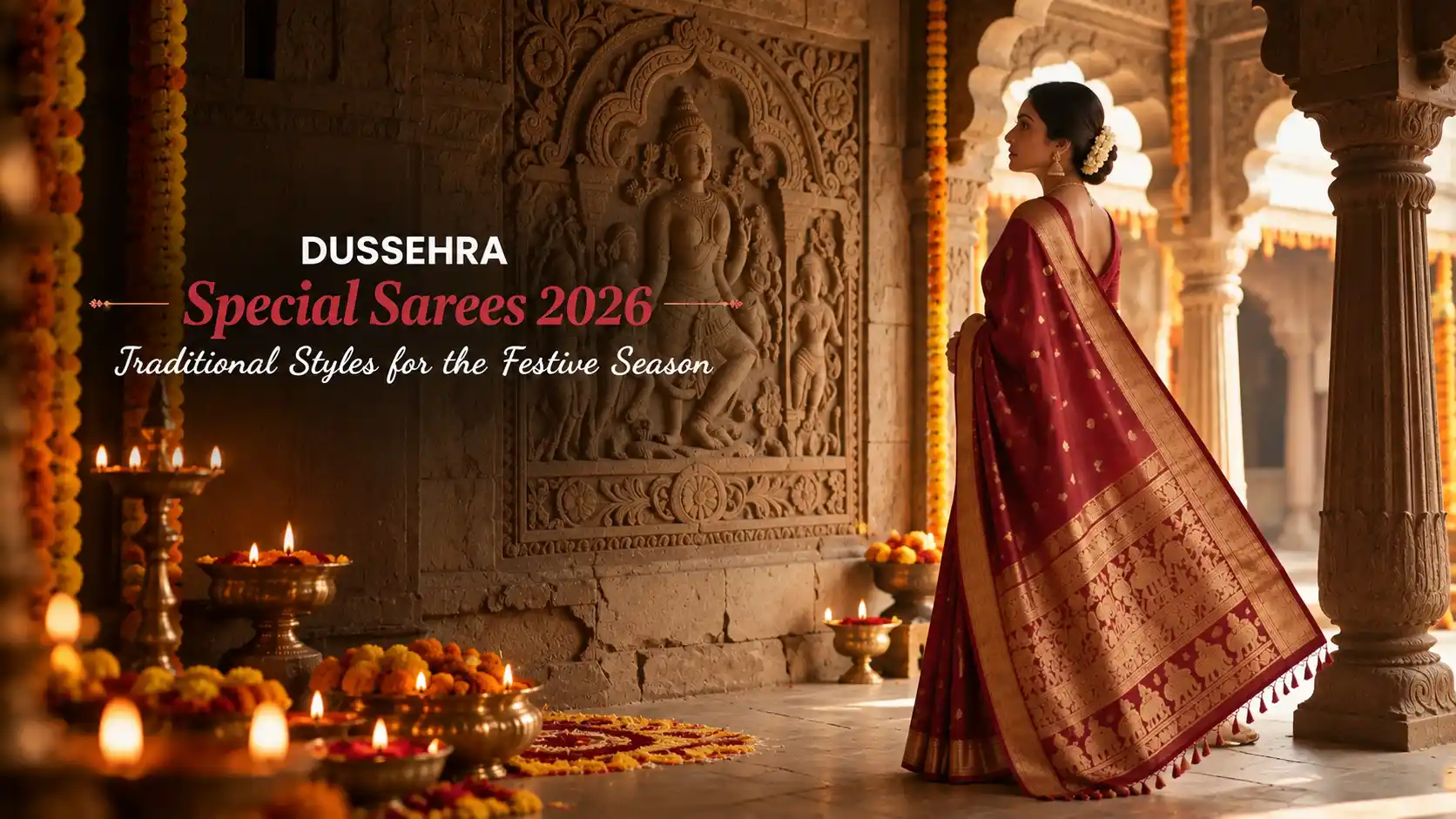
Dussehra special sarees are already on everyone’s mind as Vijayadashami 2026 approaches. Between the morning pooja, the family lunch, and the evening Ravan Dahan gathering, most women end up wearing one saree through the entire day, so the choice matters more than it looks.
This guide covers what the festival means, the fabrics, weaves, and colours that make the best Dussehra sarees for every part of the celebration, and styling ideas for the full day. Whether you already own a favourite drape or are hunting for something new this year, Siakari has festive weaves worth considering before you finalise your Dussehra festival sarees.
What Is Dussehra and Why Is It Celebrated
Dussehra, also written as Dasara or Dashahara, is a Hindu festival observed on the tenth day of the Ashvin month, usually falling in September or October. The name comes from the Sanskrit words “dasha” meaning ten and “hara” meaning defeat, a reference to the ten heads of the demon king Ravana. The festival is also called Vijayadashami, meaning the tenth day of victory, and it marks the end of the nine days of Navratri.
The Story Behind Dussehra
The core story comes from the Ramayana. Lord Rama defeated the ten headed demon king Ravana after a long battle, and this triumph is remembered as the victory of good over evil, truth over falsehood, and righteousness over injustice.
- In North India and Karnataka, Ramleela performances re-enact the entire Ramayana through plays and dance.
- The celebration ends with the burning of effigies of Ravana, his brother Kumbhkaran, and his son Meghnad.
- Families dress up in their best traditional wear for these Ravan Dahan gatherings, which is where Dussehra festival sarees really come into the picture.
Dussehra also marks the end of Durga Puja, honouring Goddess Durga’s victory over the demon Mahishasura.
- In West Bengal and much of Eastern India, this side of the story takes centre stage.
- The day is more commonly called Vijayadashami rather than Dussehra in these regions.
- A Bengali household observing Sindoor Khela dresses quite differently from a North Indian family heading out for Ramleela, which is part of why Dussehra sarees vary so much by region.
Why the Day Is Considered Auspicious
The ten heads of Ravana are traditionally linked to ten human vices, including lust, anger, greed, pride, jealousy, and ego. Celebrating Dussehra is meant to be a reminder to let go of these qualities and start fresh, which is why the day is considered auspicious for new beginnings, whether that means a new venture, a new home, or a new Dussehra special saree.
Regional Customs Worth Knowing
- Ayudha Puja, observed mainly in South India, involves worshipping tools, books, vehicles, and instruments used in daily work.
- In Maharashtra, families exchange Shami or Apta leaves, a tradition tied to the Pandavas hiding their weapons in a Shami tree during exile, symbolising good luck and prosperity.
- Farmers in several states worship their agricultural tools on this day, thanking them for the year’s harvest.
- Dussehra falls about twenty days before Diwali, which celebrates Lord Rama’s return to Ayodhya after his exile.
A single day of Dussehra festival sarees can involve a pooja at home, a temple visit, a family lunch, tool worship, and an evening gathering, all in one saree. That is exactly why comfort and versatility matter so much when picking what to wear.
Why Dussehra Special Sarees 2026 Matter for Vijayadashami
Because Dussehra carries this much religious and cultural weight, Dussehra special sarees feel different from an everyday drape. A saree worn for Ravana’s effigy burning, a family pooja, or a temple visit is doing more than completing an outfit. It is part of how the occasion is marked.
For many families, festive dressing has become part of the celebration itself. A saree taken out the night before, paired with jewellery and a blouse chosen in advance, works almost like a small ritual before the bigger rituals of the day begin.
Since the schedule shifts from house to house and region to region, Dussehra sarees need to work across more than one setting. Think about your actual day, whether it includes Ramleela, Ayudha Puja, or a Durga Puja pandal visit, before you think about the saree itself.
Best Fabrics for Dussehra Sarees You Can Wear All Day
The fabric you choose decides how comfortable your day will actually be. A saree that looks stunning in photos but feels unbearable by four in the afternoon defeats the purpose of festive dressing.
Silk Sarees for a Grand Dussehra Look
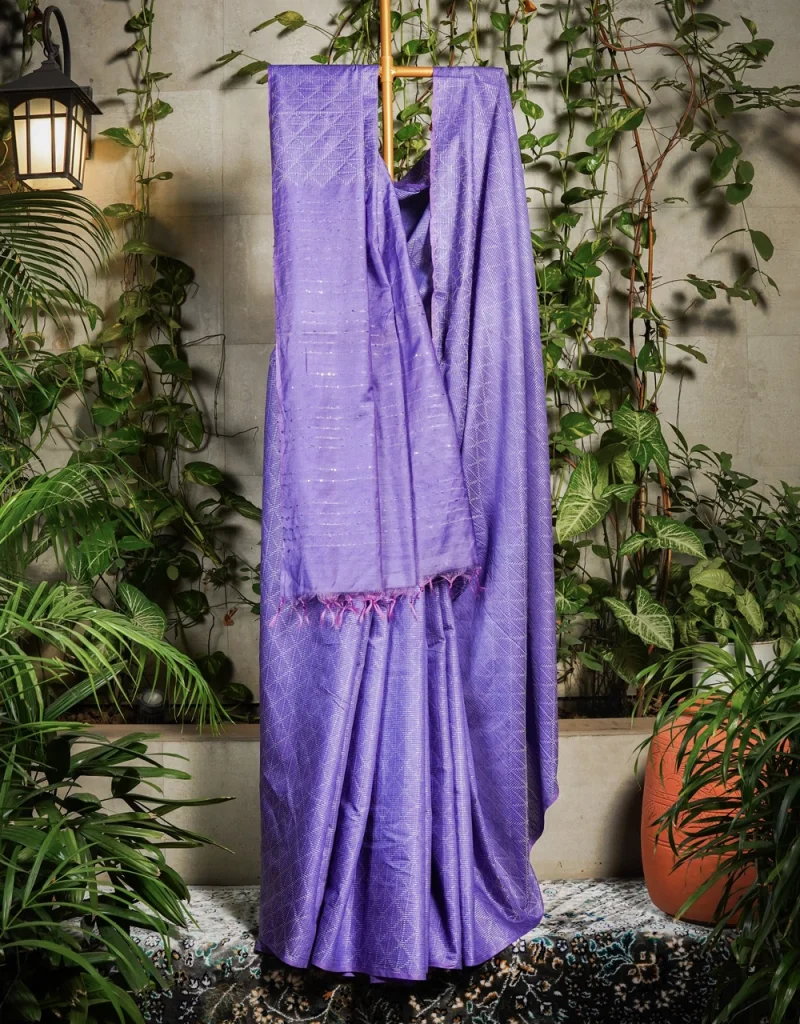
Nothing says festive quite like silk sarees.
- The natural sheen and structured drape make silk a reliable pick for a pooja or a family gathering where everyone is dressing up.
- Silk holds pleats well through a long day of standing and moving around.
- Deep reds, greens, and golds in silk photograph beautifully and carry the occasion well.
Cotton Silk Sarees for Comfort Through the Day
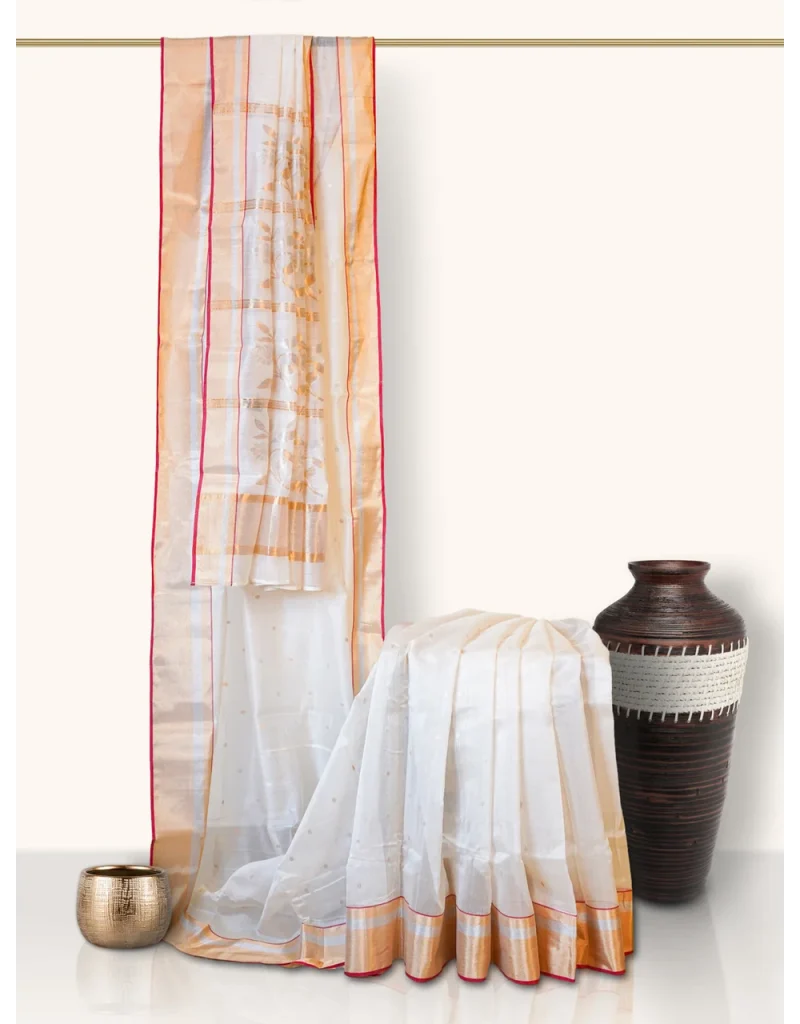
If your Dussehra plan involves travelling between the temple, a relative’s house, and an evening event, a cotton silk saree is worth considering.
- It sits between the richness of pure silk and the breathability of cotton.
- It does not feel heavy after several hours of wear.
- It works well for Dussehra sarees that need to last an entire day without a mid-afternoon change.
Mul Cotton Saree for Morning Poojas
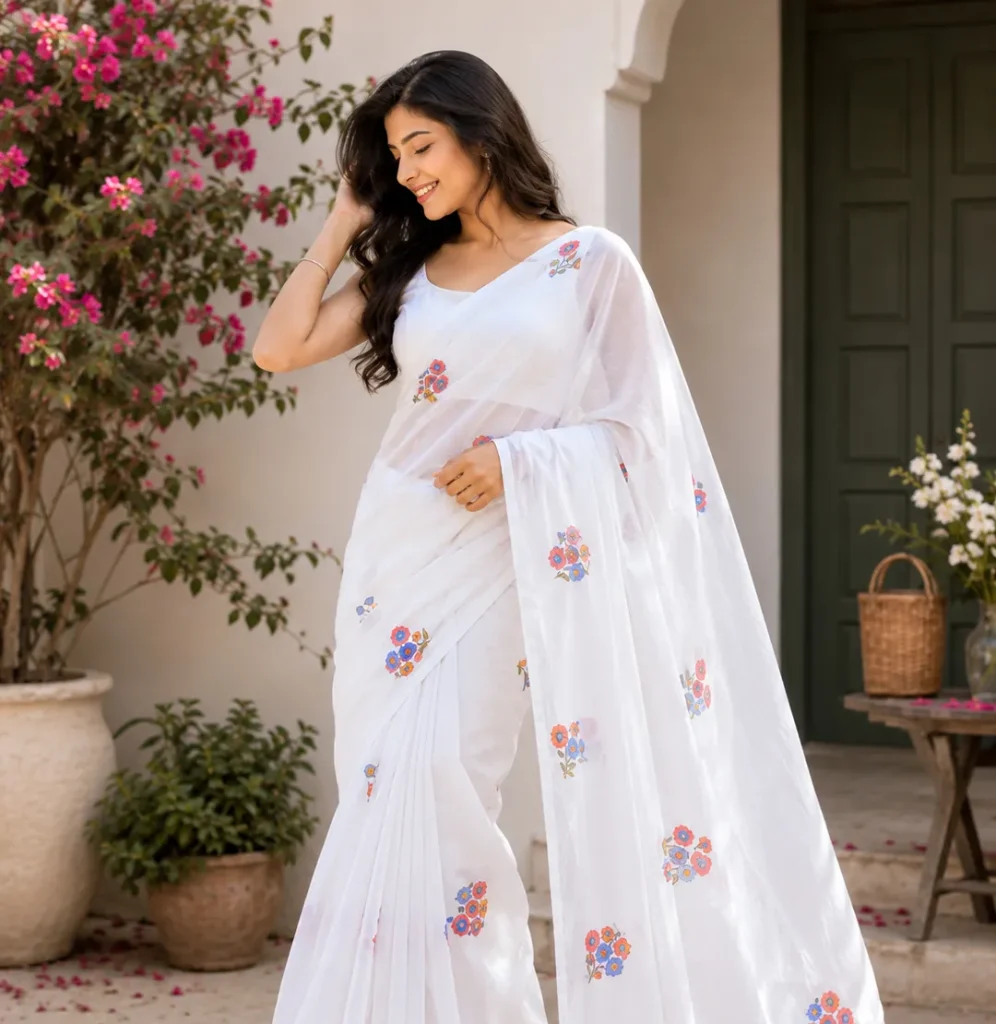
A mul cotton saree suits the earliest part of the day.
- It is light, breathable, and drapes softly.
- It works well for the morning pooja before the day gets busier.
- Many families save heavier silks for later and keep morning Dussehra special sarees simple.
Tussar Sarees for Understated Elegance
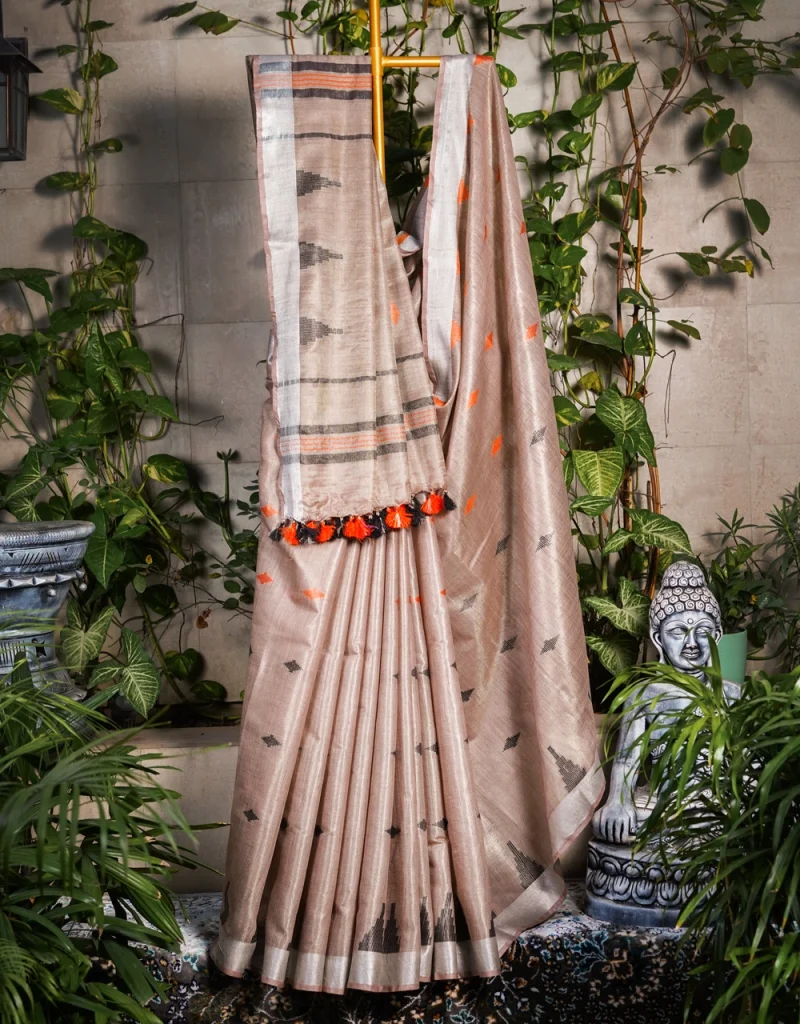
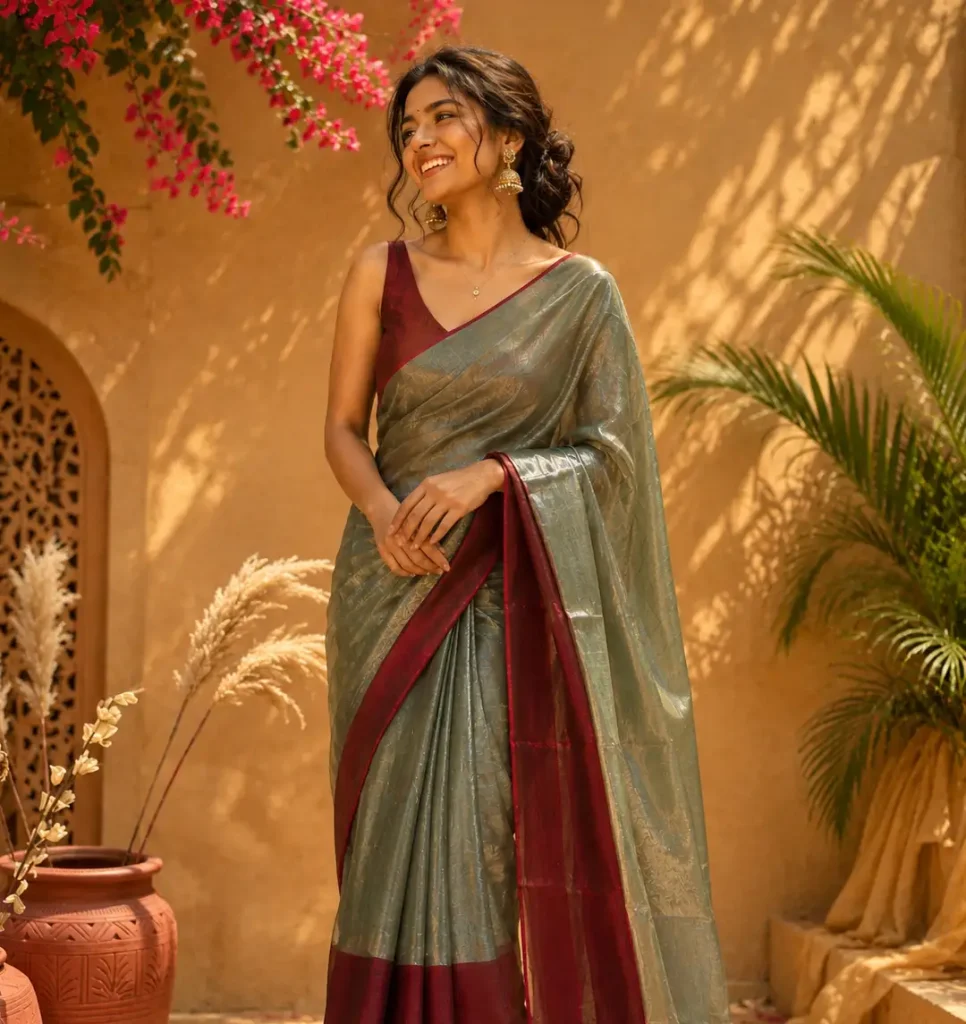
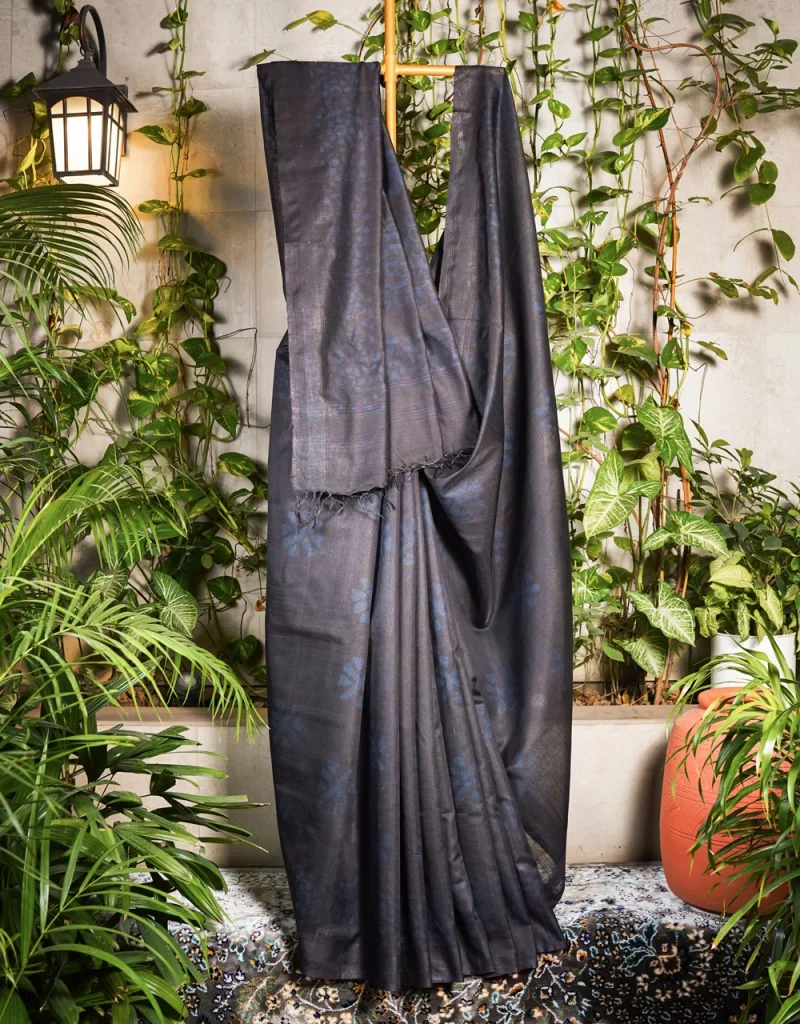
Tussar sarees bring a textured, slightly rustic sheen.
- They feel traditional without being heavy.
- They suit Dussehra festival sarees where you want a handwoven look without elaborate styling.
- A tussar saree in an earthy shade carries well from afternoon into evening.
Traditional Weaves That Define Dussehra Festival Sarees
The weave often decides how festive a saree feels. Handloom weaving has shaped Indian saree traditions for generations, and handloom saris are a traditional textile art of India, with several regions developing their own distinct weaving styles over centuries. That regional variety is part of why Dussehra sarees look so different depending on where you shop.
Banarasi Sarees for a Rich, Ready-Made Look
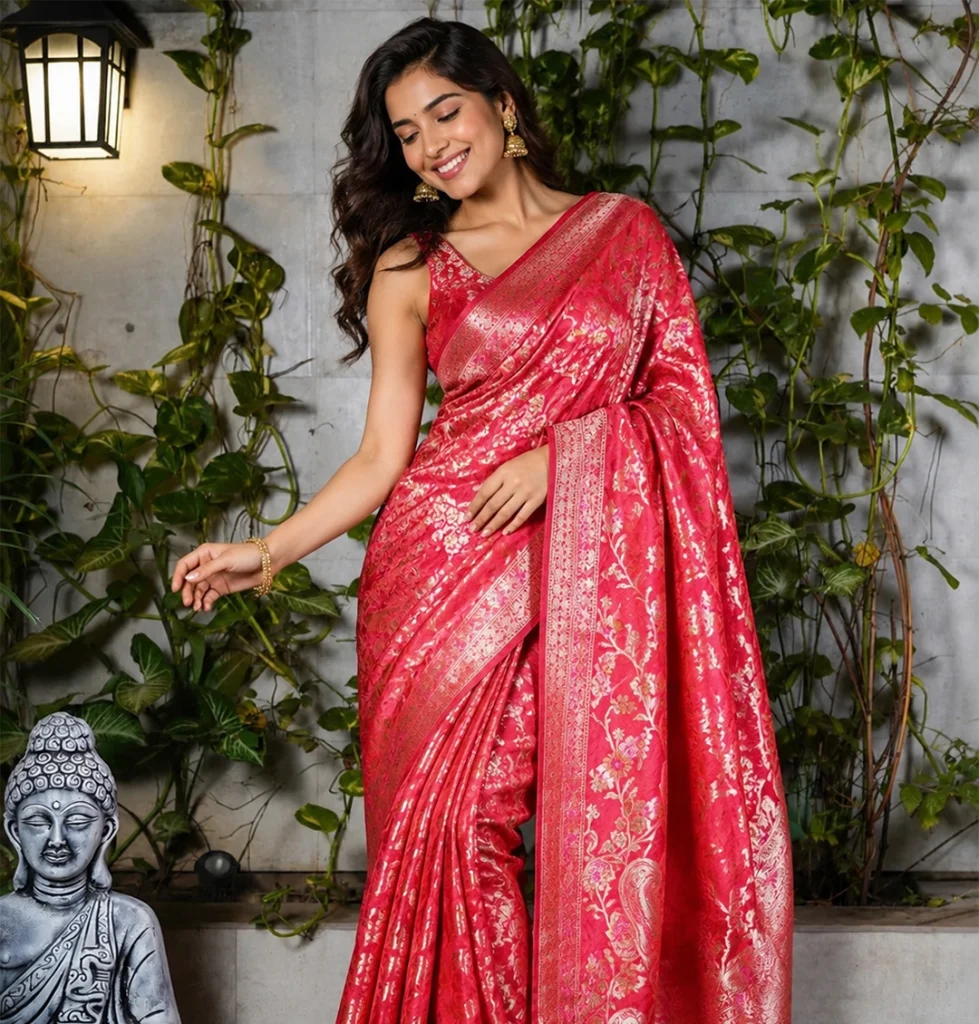
Banarasi sarees remain one of the most requested styles for Dussehra special sarees.
- The zari work, floral motifs, and rich borders give a Banarasi enough visual weight on their own.
- You rarely need elaborate jewellery to complete the look.
- A Banarasi in a deep jewel tone works particularly well for evening celebrations that continue after sunset.
At Siakari, festive weaves are chosen with exactly this kind of versatility in mind, so a saree bought for Dussehra festival sarees this year does not have to sit unused once the season passes.
Best Colours for Dussehra Special Sarees in 2026
Colour is where personal taste plays the biggest role. There is no single right answer, but a few shades have become festive favourites.
- Red remains the most traditional pick and pairs beautifully with gold zari across silk and Banarasi weaves.
- Mustard and yellow bring brightness that suits morning rituals without much extra styling.
- Emerald and bottle green create a richer look for family gatherings and evening functions.
- Maroon, rust, and deep orange suit women who prefer warmer festive tones.
Pink Saree for Daytime Celebrations
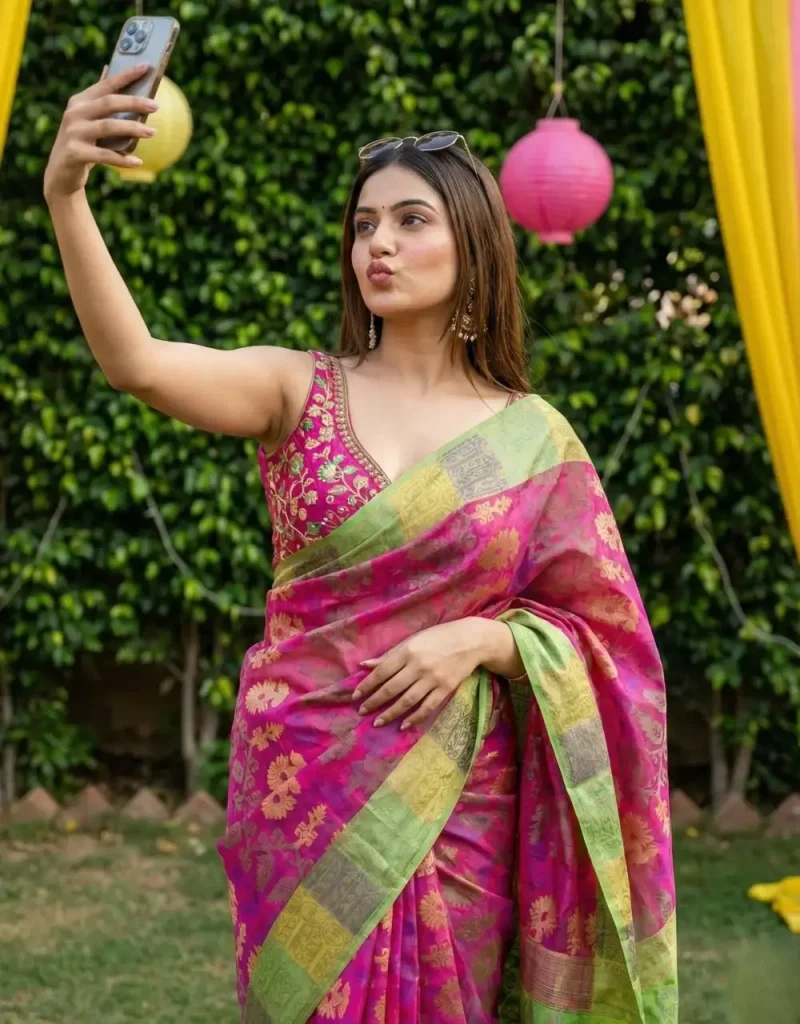
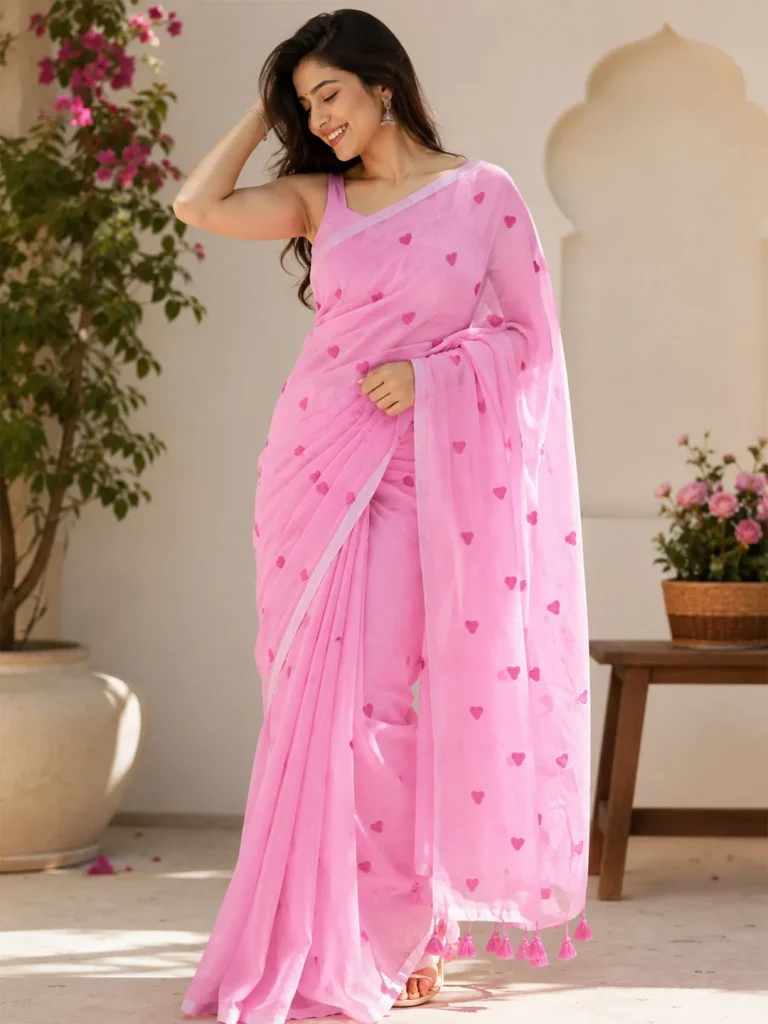
A pink saree brings softness into your Dussehra special sarees lineup without losing the festive mood.
- Blush and rani pink shades photograph well in daylight.
- Pink pairs effortlessly with gold jewellery.
- It works well for daytime temple visits and family lunches.
Black Saree for Evening Dussehra Functions
For the evening leg of Dussehra, a black saree offers a striking alternative to the usual reds and golds.
- It pairs well with statement jewellery.
- It suits Ravan Dahan celebrations and cultural programmes after dark.
- It gives Dussehra festival sarees a modern edge while still respecting the occasion.
How to Style Dussehra Sarees for Every Part of the Day
Most Dussehra celebrations stretch from morning to night, so styling around the day’s schedule works better than picking one look and forcing it to fit everywhere.
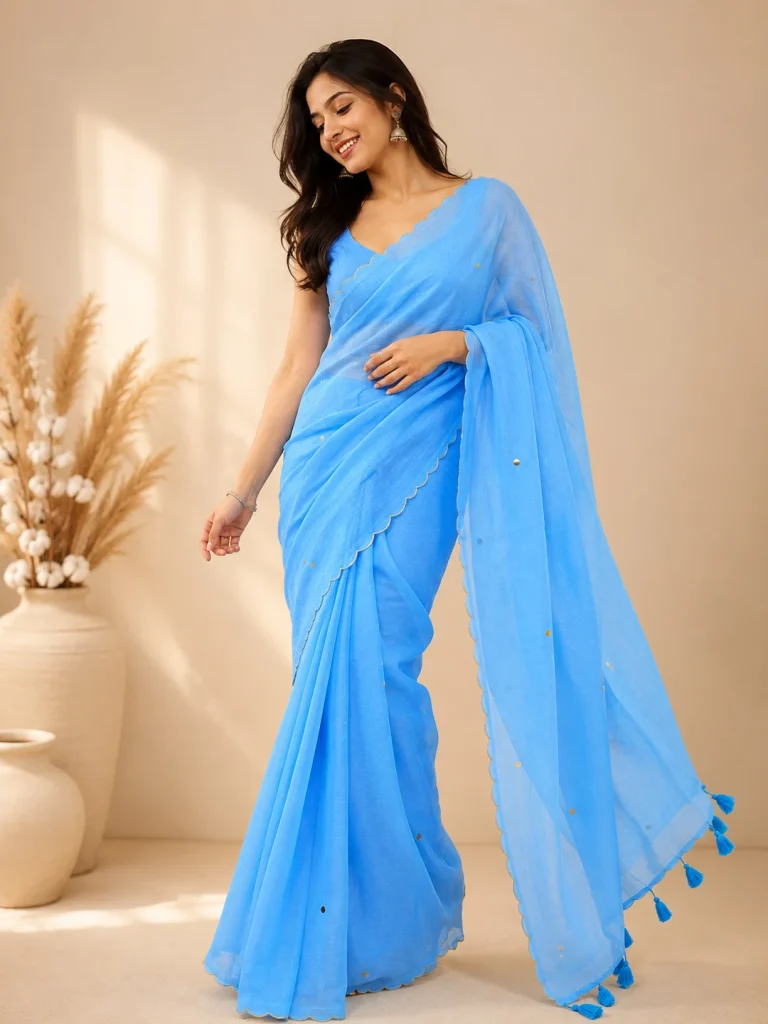
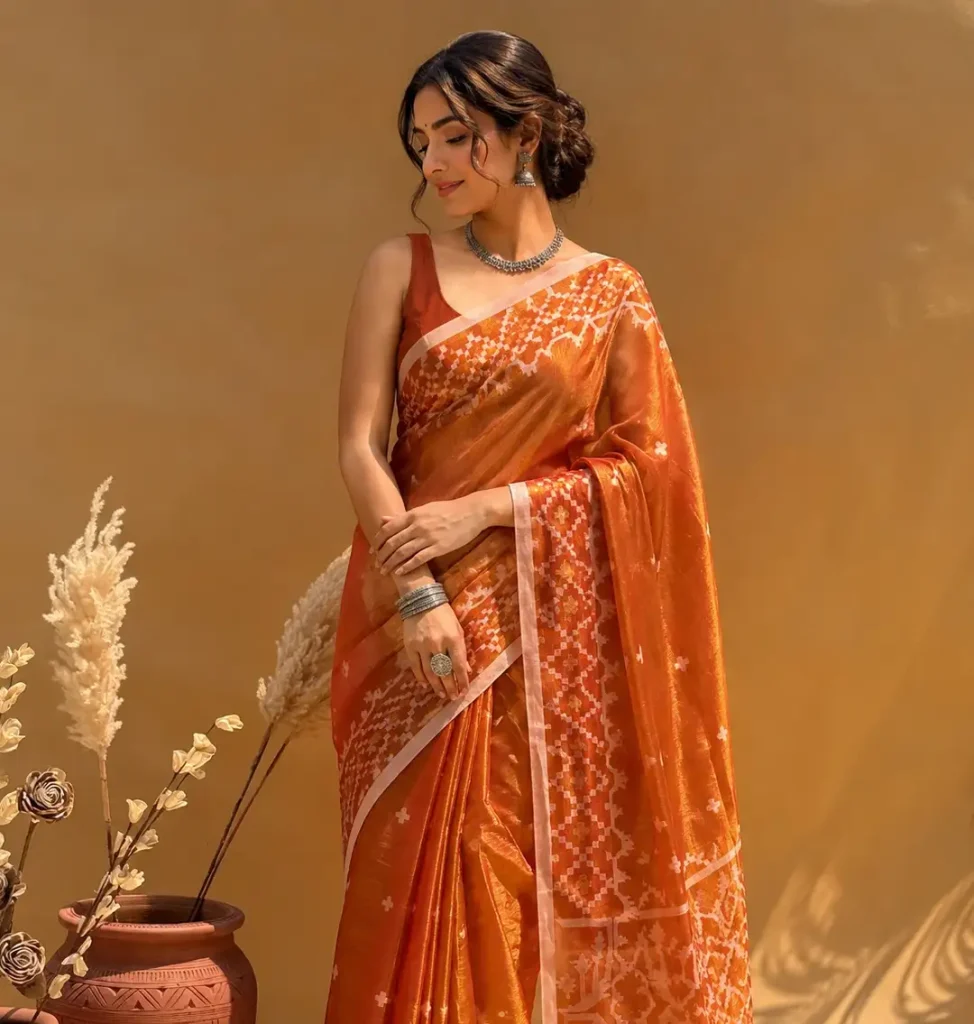
Morning: Pooja and Ayudha Puja
- Choose a lighter mul cotton or cotton silk saree.
- Keep jewellery minimal.
- Plan your attire around the muhurat, since the Dashami Tithi during the Ashwin month is considered highly significant in the Hindu calendar and many households time their pooja around it rather than the clock.
Afternoon: Family Gatherings and Lunches
- A silk or Banarasi saree gives you room to dress up a little more.
- A statement border blouse or simple gold jewellery elevates the look without overdoing it.
Evening: Ravan Dahan and Cultural Events
- Richer fabrics and bolder colours work best.
- A black saree or a deep-toned silk saree carries the drama of the occasion well under evening lighting.
Practical Styling Tips
- Pin your pallu if you expect to be standing or walking for long stretches at temple visits or Ramleela grounds.
- Choose block heels or comfortable flats over statement footwear for a long day.
- Keep a light dupatta or stole on hand for cooler early mornings.
- Avoid overly delicate fabrics if your plans include Ayudha Puja, since handling tools or offerings can snag them.
Choosing Dussehra Festival Sarees You Will Wear Again
The best Dussehra special sarees rarely stay limited to one occasion.
- A well-chosen Banarasi saree can return for a wedding reception.
- A silk saree in a versatile shade can be worn for another festival or family function later.
- A cotton silk saree, often bought for comfort, tends to get reused for smaller poojas throughout the year.
Instead of buying purely for one day, look for a weave and colour combination you can genuinely see yourself wearing again. It makes the investment worthwhile long after Vijayadashami has passed, and it fits neatly with the spirit of the festival, which is ultimately about renewal.
Final Thoughts on Dussehra Special Sarees 2026
Choosing the right Dussehra special sarees comes down to knowing your day rather than chasing trends. Whether you lean toward a classic silk saree, a comfortable cotton silk saree for a long day out, or a bold black saree for the evening festivities, the goal is the same: a drape that feels considered from the morning pooja through to the last celebration of the night. Explore Siakari’s festive collection to find Dussehra sarees that combine handloom character with everyday wearability, so this year’s Vijayadashami look still has plenty of life left in it after the festival ends.
Find the Right Saree for Every Festival
Frequently Asked Questions About Dussehra Special Sarees
What is Dussehra and why is it celebrated?
Dussehra, also called Vijayadashami, is a Hindu festival celebrating the victory of good over evil. It marks Lord Rama’s defeat of the demon king Ravana and, in many regions, Goddess Durga’s victory over the demon Mahishasura, and it falls on the tenth day after Navratri.
Which saree is best for Dussehra celebrations?
Silk sarees, Banarasi sarees, and cotton silk sarees are among the most popular choices for Dussehra special sarees, since they balance festive richness with practical comfort across a long day of rituals and gatherings.
What colours are considered auspicious for Dussehra sarees?
Red, mustard, gold, and green are traditionally associated with Dussehra festival sarees, though pink, black, and maroon have become equally popular for modern festive dressing.
Can I wear a lightweight saree for Dussehra instead of silk?
Yes. A mul cotton saree or tussar saree is a comfortable option for Dussehra sarees, especially if your day involves travel between the temple, family visits, and multiple events.
Are Dussehra special sarees suitable for other occasions later?
Absolutely. Versatile weaves like Banarasi and silk sarees purchased as Dussehra festival sarees can easily be reworn for weddings, other festivals, and family celebrations throughout the year.
Leave a Reply