
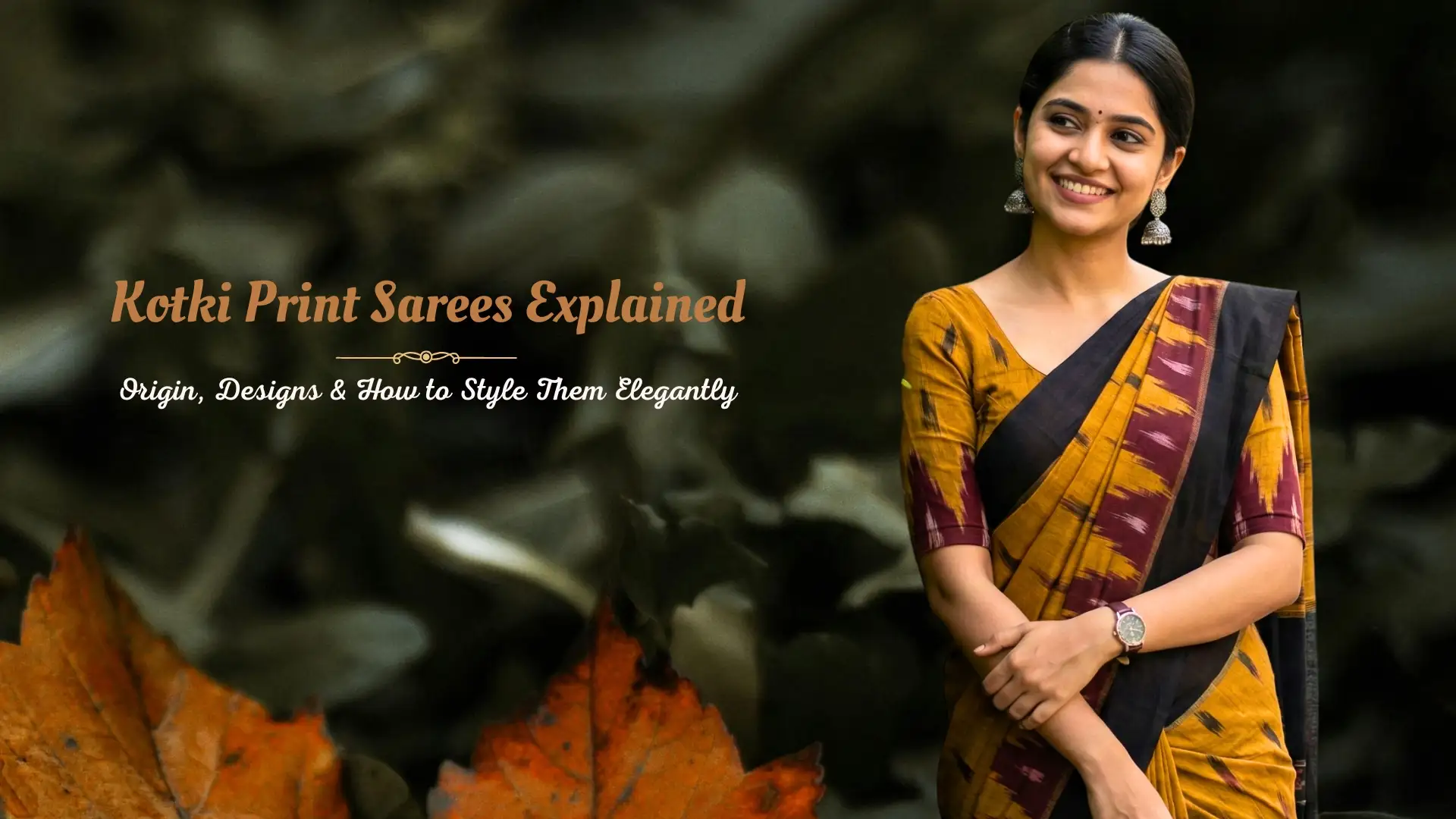
Sarees are the heart of Indian fashion, blending heritage, artistry, and personal style. Among the vast array of saree types, the kotki print saree has carved a niche for itself. Known for its delicate patterns and charming motifs, this saree style represents a beautiful combination of tradition and versatility.
Whether you’re looking for everyday elegance or festive vibrancy, understanding the history, design elements, and styling options of a kotki print saree can help you appreciate its timeless appeal and make the perfect choice when updating your wardrobe.
What is a Kotki Print Saree?
The kotki print saree is characterized by its small, repetitive motifs, usually printed on lightweight fabrics like cotton, silk, or blends. The patterns are often floral, geometric, or inspired by nature, offering a subtle yet visually appealing design.
Unlike heavy embroidery or intricate weaving, kotki prints rely on simplicity and understated elegance. This makes the kotki print saree suitable for both casual wear and semi-formal occasions. Women appreciate it for its light, breathable texture and ease of draping, making it ideal for daily wear or festive gatherings.
The subtlety of kotki prints means they can be paired with a wide variety of blouses, accessories, and footwear. Whether you choose to wear it with traditional gold jewelry or modern minimalistic pieces, a kotki print saree complements almost every style preference.
The Origin of Kotki Prints
Kotki printing has roots in traditional Indian textile crafts, particularly in regions known for block printing. Artisans used hand-carved wooden blocks to stamp motifs on fabrics for centuries, creating intricate, repetitive designs with incredible attention to detail.
Historically, these sarees were popular in North and West India, where breathable fabrics were essential for the hot climate. The wooden block printing technique ensured that each kotki print saree was unique, with slight variations in the print adding to its charm.
Over time, machine printing has made kotki prints more widely available, while modern designers continue to preserve the traditional hand-block style in premium collections. This dual availability allows women to enjoy both artisanal heritage and contemporary convenience.
Popular Fabrics for Kotki Print Sarees
One of the reasons the kotki print saree remains popular is the variety of fabrics it can be made from. Each fabric brings its own texture, drape, and feel:
- Cotton and Cotton Blend Saree: Ideal for daily wear, casual outings, or office wear. Light and breathable, cotton makes the saree comfortable for hot weather. Perfect for those looking for casual wear sarees or daily wear sarees.
- Linen Blend Saree / Buy Linen Saree: Offers an elegant drape with a crisp texture. Ideal for semi-formal gatherings or professional settings, this fabric ensures comfort without compromising on style.
- Viscose Silk Saree: Adds a luxurious feel for festive or ceremonial occasions. These fabrics enhance the print while maintaining comfort and elegance.
- Georgette Sarees: Flowing and lightweight, georgette kotki prints are ideal for evening parties or casual events. Their softness and fluidity make draping effortless.
Each fabric choice affects the overall look of the saree, allowing women to adapt it for casual, office, or festive settings.
Designs and Motifs
The charm of a kotki print saree lies in its patterns. Common motifs include:
- Floral Prints: Delicate flowers arranged in uniform patterns, giving a timeless feminine appeal.
- Geometric Shapes: Simple squares, dots, or lines that create a modern yet traditional look.
- Nature-Inspired Motifs: Leaves, vines, birds, or abstract patterns inspired by local flora and fauna.
Borders and pallu designs often feature complementary prints or subtle contrasts. While the saree body carries repetitive motifs, the pallu may be slightly bolder, making the saree suitable for festive wear sarees and casual occasions alike.
Some designers also experiment with color-blocked borders, metallic thread detailing, or hybrid prints that blend traditional kotki patterns with contemporary aesthetics.
Styling a Kotki Print Saree Elegantly
A kotki print saree offers endless styling possibilities:
- Casual Day Look: Pair a cotton kotki print saree with minimal jewelry and comfortable sandals for a relaxed daytime outfit.
- Office or Semi-Formal: Linen or cotton blend fabrics styled with a contrasting blouse and subtle accessories make the saree professional yet elegant.
- Festive Look: Choose silk variants like buy tissue silk saree or viscose silk saree, add gold jewelry, and drape the saree traditionally for festivals or pooja ceremonies.
- Modern Twist: Layering with a belt, pairing with statement footwear, or draping differently can modernize the look without compromising tradition.
The beauty of a kotki print saree is its adaptability you can dress it up or down depending on your occasion.
Pairing with Blouses
Blouses play a key role in defining the look of a kotki print saree. Here are some options:
- Contrasting Blouse: Adds a modern twist and makes the prints pop.
- Matching Blouse: Keeps the look cohesive and traditional.
- Silk or Georgette Blouse: Ideal for festive events when paired with silk variants or banaras tissue sarees online.
- Cotton or Linen Blouse: Perfect for casual outings or office wear.
Experimenting with blouse textures, sleeve designs, and necklines can transform a simple kotki print saree into a statement outfit.
Occasions to Wear a Kotki Print Saree
The kotki print saree is extremely versatile:
- Daily Wear: Lightweight cotton variants make it ideal for everyday elegance.
- Festivals: Silk or tussar prints elevate the saree for celebrations.
- Pooja or Religious Ceremonies: Traditional motifs make it perfect for pooja sarees online.
- Work or Meetings: Linen blends or cotton blends offer professional sophistication without compromising style.
Its subtle patterns ensure it can be worn for both casual and ceremonial occasions.
Accessories and Footwear
Accessories can enhance a kotki print saree without overpowering it:
- Minimalist jewelry for casual or office wear.
- Traditional gold or temple jewelry for festive occasions.
- Clutches or handbags in complementary tones.
- Footwear like kolhapuri sandals, heels, or flats depending on the event.
The understated elegance of a kotki print saree allows for versatile accessorizing, making it suitable for multiple occasions.
Modern Twists on Kotki Prints
Contemporary designers have started experimenting with kotki print sarees, blending traditional motifs with modern fabrics and cuts. Silk-cotton blends, linen variations, and georgette adaptations make these sarees lighter, more drapable, and easier to style.
Some modern interpretations combine kotki prints with subtle embellishments, metallic threads, or designer borders, making them appealing to both traditionalists and fashion-forward buyers. This evolution ensures the kotki print saree continues to resonate with younger audiences without losing its traditional essence.
Buying Kotki Print Sarees Online
With e-commerce, shopping for the perfect kotki print saree has never been easier. Many women now prefer to buy sarees online India because it offers convenience, variety, and easy delivery.
Online stores provide curated collections, including cotton blend saree, bengal cotton sarees online, buy khadi saree online, and tussar silk saree online. You can compare fabrics, colors, prints, and pricing, and choose a saree that suits both your style and occasion whether for daily wear sarees, casual wear sarees, or festive wear sarees.
Caring for Your Kotki Print Saree
Proper care ensures the saree lasts for years:
- Cotton and Linen: Wash gently with mild detergent; air dry in shade.
- Silk Variants: Prefer dry cleaning to maintain sheen and color vibrancy.
- Storage: Fold carefully to avoid creases; store in cotton bags or saree covers.
- Ironing: Use low heat for silk; medium heat for cotton and linen blends.
Following these tips ensures your kotki print saree remains vibrant and elegant over time.
Why Kotki Prints Are Timeless
The kotki print saree has maintained its charm for generations because of its simplicity, versatility, and connection to Indian tradition. Unlike heavy embroidery or heavily adorned sarees, kotki prints are subtle, breathable, and easy to drape.
Their adaptability allows women to wear them in urban settings, offices, or rural festivals, making them a practical yet stylish wardrobe choice. The kotki print saree is a perfect example of how traditional Indian craftsmanship can remain relevant in modern fashion.
Final Thoughts
The kotki print saree is a perfect blend of tradition, elegance, and versatility. Its delicate prints, range of fabrics, and adaptability make it suitable for every occasion from casual daily wear to festive ceremonies.
Whether you prefer cotton blend saree for comfort, tussar silk saree online for festive occasions, or viscose silk saree for elegance, the kotki print offers a timeless appeal. When you buy sarees online India, exploring kotki prints ensures you have a versatile wardrobe staple that honors heritage while keeping style contemporary.
In a world of fast fashion, the kotki print saree reminds us that simplicity, artistry, and tradition never go out of style.
FAQs
What is the history of Kotki saree?
The kotki print saree has its roots in traditional Indian block printing, especially from regions known for hand-stamped textiles. Artisans carved wooden blocks to create delicate, repetitive motifs on lightweight fabrics like cotton and silk. Initially popular in North and West India, these sarees were valued for their breathability, comfort, and understated elegance. Over time, kotki prints evolved into machine-printed versions, making them widely available while retaining the charm of handcrafted patterns and cultural heritage.
How to look elegant and classy in a saree?
Looking elegant in a saree involves choosing the right fabric, color, and draping style. Fabrics like silk, georgette, or cotton blends enhance grace, while well-coordinated blouses and accessories elevate the look. Minimal, tasteful jewelry, neat hairstyles, and subtle makeup create a polished appearance. Attention to posture, confident draping, and matching footwear also add sophistication. A kotki print saree or any traditional saree can look both classy and modern when styled thoughtfully with complementary accessories and colors.
What is the difference between Katki and Sambalpuri?
A kotki print saree (sometimes spelled Katki) is known for small, repetitive printed motifs on fabrics like cotton or silk, created traditionally via block printing. In contrast, Sambalpuri sarees originate from Odisha and are handwoven with ikat technique, featuring intricate geometric or floral patterns directly dyed into threads before weaving. While kotki prints are light and subtle, Sambalpuri sarees are more textured, with vivid, handwoven designs. Both carry traditional heritage but differ in weaving method, fabric texture, and pattern complexity.
What are the 4 types of silk?
The four commonly recognized types of silk used in Indian sarees are:
- Mulberry Silk: Smooth, lustrous, and the most widely used in sarees like Kanjeevaram.
- Tussar Silk: Coarser texture, natural gold sheen, often used in tussar silk saree online.
- Muga Silk: Exclusive to Assam, golden-colored, highly durable, often used in traditional wear.
- Eri Silk: Soft and warm, usually handwoven, ideal for cotton-silk blends. Each type varies in texture, sheen, and weaving suitability.
Leave a Reply