
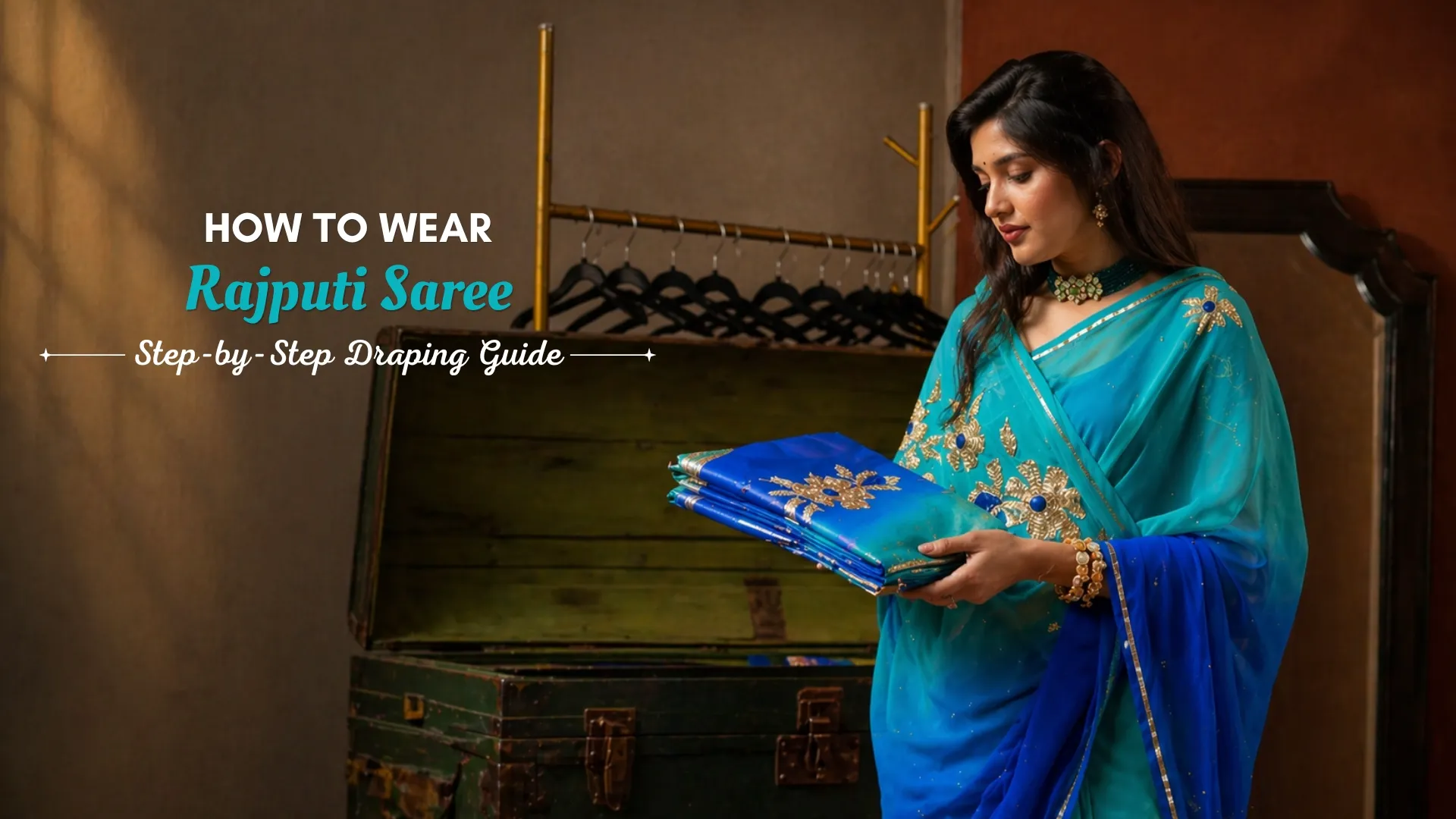
Wearing a Rajputi saree is more than just getting dressed it’s stepping into a living tradition that carries grace, pride, and royal heritage. The first time you try it, you may feel a little unsure because the drape is different from regular sarees. But once you understand the flow and logic behind it, everything starts falling into place beautifully.
If you’ve been searching for how to wear Rajputi saree, this guide will help you understand it slowly, step by step, in a simple and practical way almost like someone is standing next to you, helping you fix every pleat in front of a mirror.
Let’s begin this journey properly.
What Makes the Rajputi Saree So Special?
Before learning how to wear Rajputi saree, it’s important to understand why this style stands apart from other saree drapes.
The Rajputi saree style originates from Rajasthan’s royal and cultural traditions. It is designed not just for beauty, but also for dignity, structure, and ease of movement within traditional attire norms. Unlike modern drapes that flow loosely, this style is more structured and grounded.
Key Features That Define How to Wear Rajputi Saree
What makes it unique is:
- Pleats arranged in a more controlled and often back-focused manner
- A neatly placed pallu that enhances the regal appearance
- A silhouette that looks elegant yet strong
- A sense of tradition deeply tied to Rajasthani culture
Once you understand this, learning how to wear Rajputi saree becomes much easier because you know why each step exists.
Many women who explore ethnic fashion eventually experiment with different sarees while they buy sarees online India, and later discover that Rajputi draping offers something truly distinctive compared to other styles.
Styling Tip: Choose Colors That Reflect Rajasthani Royalty
When it comes to how to wear Rajputi saree and making a strong visual impression, color matters deeply. The Rajputi tradition is known for bold, rich tones think deep reds, royal blues, emerald greens, and warm saffron. For weddings and festivals, lean into these richer hues. If you’re wearing it for a daytime family event, softer pastels like blush pink or ivory with contrast borders can look equally regal without being too heavy.
Shop Authentic Rajputi Sarees
Understanding the Mindset Before Learning How to Wear Rajputi Saree
One of the most overlooked parts of learning how to wear Rajputi saree is mindset. This is not just a quick outfit change it’s a structured traditional drape that rewards patience.
Think of It as a Process
Instead of rushing, think of it as a process:
- You are building shape step by step
- Every fold has a purpose
- Balance matters more than speed
When you approach it calmly, learning how to wear Rajputi saree becomes surprisingly enjoyable rather than stressful.
Preparing Yourself Before You Start Draping
Preparation makes a huge difference in how smoothly the process goes. Before you even begin how to wear Rajputi saree, set up everything properly.
Clothing Basics for How to Wear Rajputi Saree
- Wear a fitted petticoat that sits firmly at your waist
- Choose a blouse that fits well around shoulders and bust
- Avoid loose inner layers that may shift while draping
Practical Setup
- Keep safety pins within reach
- Stand in front of a full-length mirror
- Wear comfortable footwear before starting
Comfort is important because learning how to wear Rajputi saree takes a little adjustment in the beginning.
If you are still building your ethnic wardrobe, many people prefer to buy georgette sarees or lighter fabrics first because they are easier to practice draping styles on before moving to structured traditional styles like Rajputi.
Styling Tip: Match Your Blouse to Elevate the Entire Look
The blouse you choose can completely transform how to wear Rajputi saree looks on you. A contrast blouse in a complementary color for example, a deep maroon blouse with a golden saree gives an instantly royal feel. Opt for elbow-length or three-quarter sleeves with mirror work, gota patti, or zari embroidery along the edges to stay true to the Rajasthani aesthetic. Avoid heavily padded or Western-cut blouses as they can break the traditional silhouette.
Designer Inspiration: For authentic Rajputi saree designs and styling references, explore the work of Anita Dongre, one of India’s leading designers known for her deeply rooted Rajasthani-inspired collections.
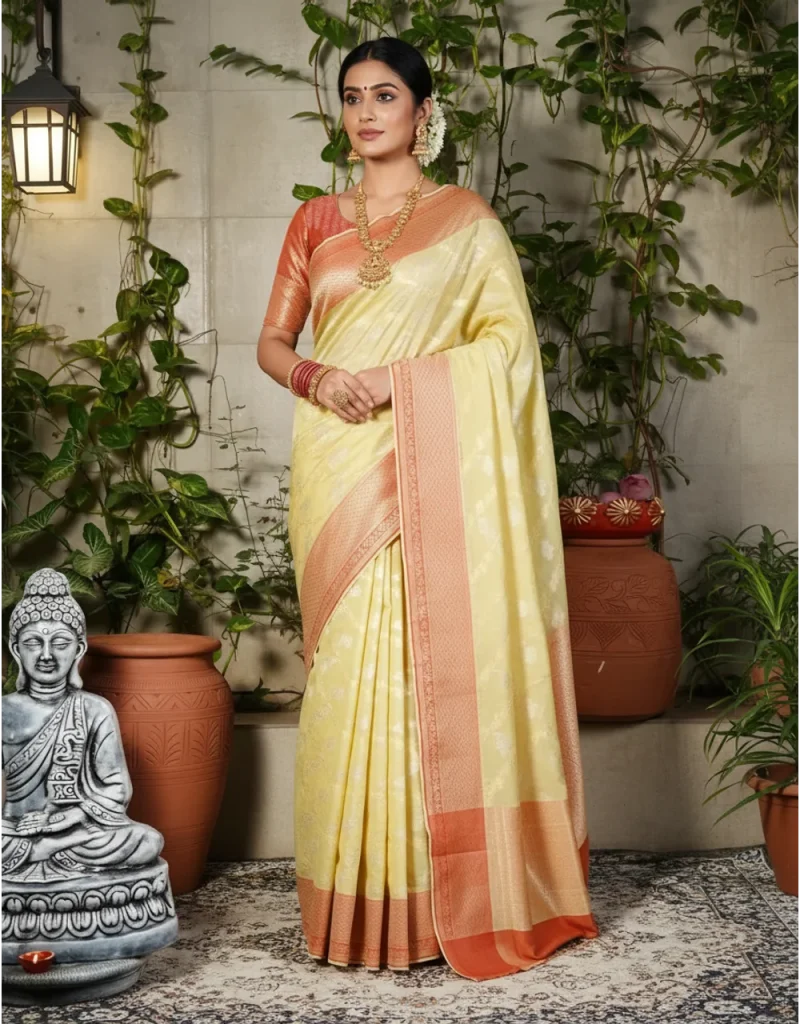
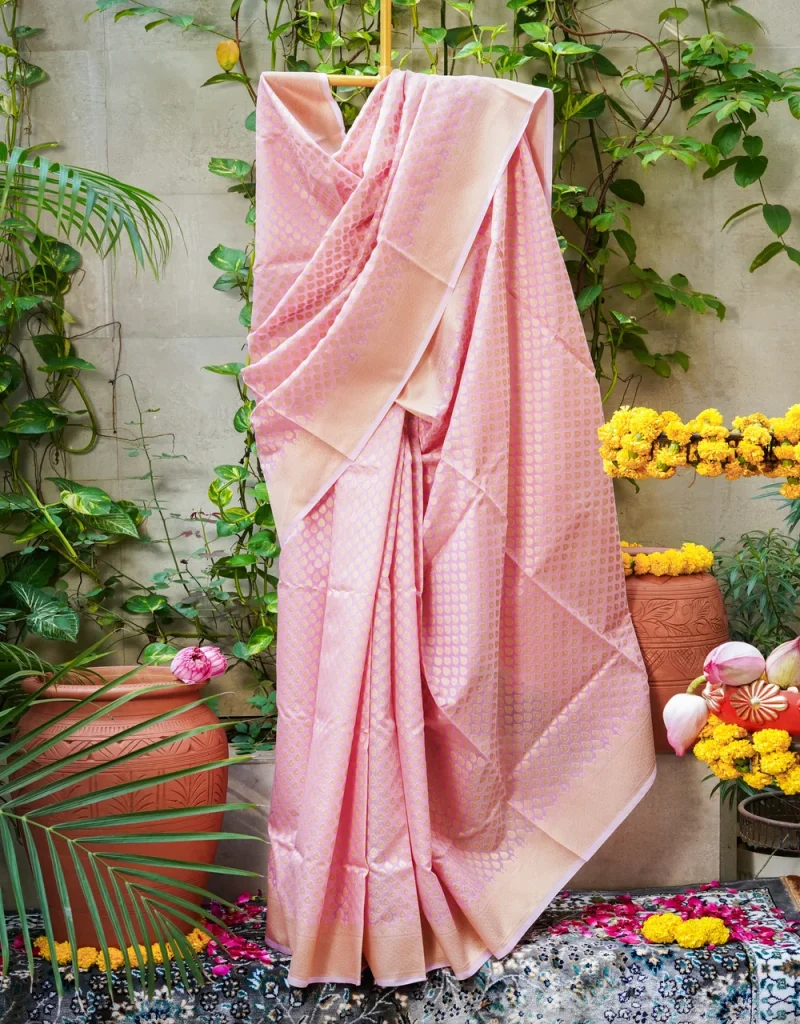
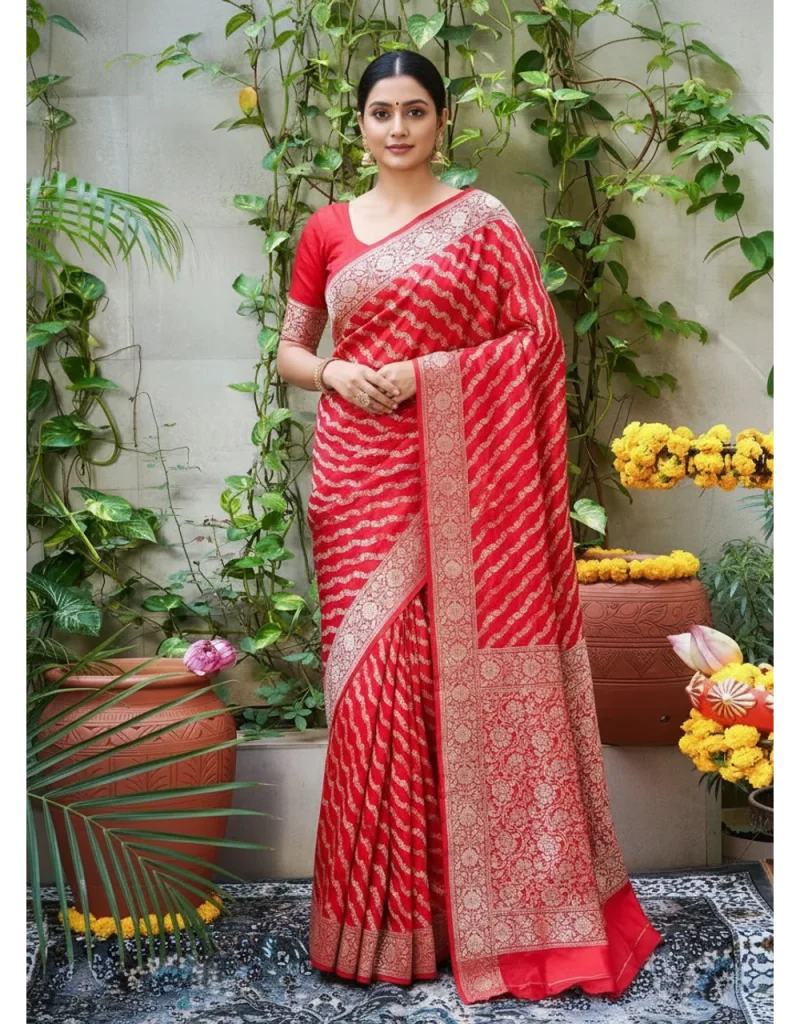
How to Wear Rajputi Saree: The Step-by-Step Draping Process
Now let’s get into the actual process of how to wear Rajputi saree, broken down clearly so every step is easy to follow.
Step 1: Starting the Base Tuck
Begin by holding the plain end of the saree. Start from the right side of your waist and tuck it neatly into the petticoat.
Wrap the saree once around your waist in a smooth circular motion. The bottom edge should just touch the floor lightly never drag heavily or sit too high.
This first step is the foundation of how to wear Rajputi saree, so don’t rush it. A stable base ensures everything else stays in place.
Step 2: Building the First Layer of Pleats
Now comes one of the most defining steps of how to wear Rajputi saree.
Take the remaining fabric and start forming small, even pleats. Unlike modern drapes where pleats fall in front, Rajputi pleats are structured differently.
Key Points for Pleating While Draping How to Wear Rajputi Saree
- Keep pleats uniform in width
- Do not make them too loose
- Hold them firmly before placing
These pleats are often guided toward the back or side depending on style preference.
This step shapes the entire structure of how to wear Rajputi saree, so patience is essential here.
Step 3: Securing the Back Structure
Once your pleats are ready, gently tuck them at the back waist. This is one of the most important parts of how to wear Rajputi saree, because it creates the signature Rajputi silhouette.
What to Check When Securing the Back
- The pleats are evenly spread
- They are securely tucked in
- They feel stable but not tight
You can use pins for extra support if needed.
This back structure is what gives the Rajputi saree its royal, composed appearance.
Step 4: Creating the Pallu Flow
Now take the remaining fabric and bring it over your right shoulder.
This is where how to wear Rajputi saree starts to look visually complete. The pallu should fall smoothly and not appear twisted or uneven.
Pallu Placement Options in How to Wear Rajputi Saree
Depending on preference, the pallu can:
- Fall straight for a clean look
- Be slightly pleated for a structured appearance
The key is maintaining balance and neatness.
Styling Tip: Use the Pallu as a Statement Piece
The pallu is the most visible part of how to wear Rajputi saree, so treat it as your canvas. If your saree has heavy embroidery or a rich border on the pallu, let it drape openly so the work is fully visible. You can also pin the pallu at the shoulder with a decorative brooch — a traditional kundan or meenakari brooch works beautifully and adds an extra layer of authenticity to the drape. Avoid tucking the pallu away at the back as it hides the most beautiful part of the saree.
Step 5: Front Adjustment and Final Balance
After the pallu is in place, gently adjust the front area. This step is often skipped, but it is essential in how to wear Rajputi saree.
Front Checks for How to Wear Rajputi Saree
- Smooth waistline
- Even pleats at the front
- Proper alignment of fabric
Small adjustments here make a big difference in the final look.
Step 6: Final Traditional Styling Touch
Once the draping is done, styling completes the look.
To enhance how to wear Rajputi saree, you can add:
- Traditional jewelry like chokers or long necklaces
- Bangles or kada sets
- Maang tikka for festive occasions
- A neatly tied bun or braid
The goal is not to overdo it but to complement the saree’s structure.
Many women who experiment with fabrics while they buy linen saree or other lightweight options later realize that Rajputi styling requires slightly more structured accessories.
Styling Tip: Layer Your Jewelry the Rajputi Way
Jewelry is not an afterthought in how to wear Rajputi saree it is half the look. The Rajputi style traditionally calls for layered, statement jewelry. Start with a heavy choker or a long raani haar, add a bajuband on the upper arm, stack glass or lac bangles from wrist to elbow, and finish with large jhumkas or chandbali earrings. Keep your rings minimal if your bangles are heavy. The idea is to look adorned but not cluttered every piece should feel intentional and connected to the regal spirit of the drape.
Brand Reference: For traditional Rajasthani jewelry to pair with how to wear Rajputi saree, browse collections at Tanishq, known for heritage-inspired Indian jewelry designs that complement royal drapes beautifully.
Find the Right Saree for Rajputi Draping
Choosing the Right Fabric for How to Wear Rajputi Saree
Fabric choice plays a huge role in learning how to wear Rajputi saree effectively.
Best Fabric Options
- Cotton blends for beginners
- Cotton silk saree options for a balanced festive look
- Buy silk saree options for festive and wedding looks
- Light georgette for practice or comfort
Exploring Tussar and Specialty Weaves
If you want to explore more textured options, you can buy tussar silk saree varieties, which offer a naturally structured drape that suits the Rajputi style well. A linen blend saree can also be a good transitional fabric if you prefer something structured but breathable.
The right fabric ensures that learning how to wear Rajputi saree becomes easier and more stable.
Styling Tip: Match Fabric Weight to the Occasion
Not every fabric suits every occasion when it comes to how to wear Rajputi saree. For summer weddings and daytime festivals, go with lighter fabrics like linen blends or soft cotton silk they drape well without making you feel heavy or warm. For evening ceremonies and winter celebrations, a rich silk or banarasi weave adds the right amount of weight and sheen that truly elevates the Rajputi look. Tussar silk sits beautifully in the middle it has enough body to hold pleats well and enough texture to look traditionally rich without being too formal.
Common Mistakes Beginners Should Avoid When Learning How to Wear Rajputi Saree
When learning how to wear Rajputi saree, many people face small challenges.
What to Avoid
- Loose or uneven pleats
- Incorrect pallu placement
- Over-accessorizing
- Weak petticoat grip
Even one small mistake can affect the final look, so take your time.
Styling Tip: Keep Makeup Balanced with the Heaviness of the Saree
One area many women overlook in how to wear Rajputi saree is makeup. A heavily embroidered or deeply colored Rajputi saree calls for makeup that enhances rather than competes. A classic look would be a bold lip in deep red or plum, kohl-lined eyes with a subtle shimmer, and a bindi that matches or complements the saree border. Avoid going overboard with contouring or glitter the saree already makes a statement on its own, and your makeup should frame your face gracefully, not overpower the drape.
When You Can Wear Rajputi Saree
The beauty of learning how to wear Rajputi saree is its versatility for traditional occasions.
Perfect Occasions for How to Wear Rajputi Saree
- Weddings
- Festivals
- Cultural programs
- Family ceremonies
It is especially popular in Rajasthani cultural events, where it reflects tradition and pride.
Styling Tip: Adapt the Look Based on the Occasion
How to wear Rajputi saree can look different depending on where you are wearing it. For a wedding as a guest, go with silk or banarasi in jewel tones with full traditional jewelry. If you are part of a cultural program or stage performance, prioritize comfort choose a lighter fabric and minimal but visible jewelry so your movements are easy and your look reads well from a distance. For a family ceremony at home, a simple cotton silk in muted tones with subtle gold jewelry strikes a warm and elegant balance without looking overdressed.
Practicing Makes Everything Easier
No one masters how to wear Rajputi saree in a single attempt.
Practice Tips for How to Wear Rajputi Saree at Home
- Try draping at home before events
- Use a mirror for better alignment
- Practice pleating slowly
- Repeat steps until comfortable
With time, how to wear Rajputi saree becomes second nature.
Building a Balanced Ethnic Wardrobe to Support How to Wear Rajputi Saree
A good wardrobe helps you experiment better with styles.
Start with These Wardrobe Essentials
- Everyday cotton or simple sarees
- Festive silk pieces
- Lightweight georgette sarees
Many people begin their journey by exploring options when they buy tissue silk saree, and later expand into traditional drapes like Rajputi.
This variety helps you understand different draping techniques, including how to wear Rajputi saree, more easily.
Explore More: For a curated range of ethnic sarees suitable for how to wear Rajputi saree practice and styling, check out FabIndia, a trusted brand offering handcrafted Indian textiles including silk, cotton, and linen weaves rooted in traditional craftsmanship.
Why Rajputi Saree Still Stands Out Today
Even in modern fashion, how to wear Rajputi saree remains relevant because it connects deeply with heritage.
What How to Wear Rajputi Saree Represents
- Cultural pride
- Traditional elegance
- Timeless beauty
- Structured grace
It is not just fashion it is identity.
Styling Tip: Modernize Without Losing Tradition
You don’t have to look like a museum piece when you learn how to wear Rajputi saree today. Many modern women are pairing the traditional Rajputi drape with contemporary blouse cuts — think off-shoulder, halter neck, or a cape-style blouse in the same fabric. You can also experiment with printed or block-printed sarees in traditional Rajasthani motifs like leheriya or bandhani for a fresh yet rooted feel. The key is to keep the draping style authentic while allowing your personal style to speak through the blouse, accessories, and color story you build around it.
Final Thoughts on How to Wear Rajputi Saree
Learning how to wear Rajputi saree is a journey of patience, practice, and appreciation. At first, it may feel detailed and slightly complex, but once you understand the structure, it becomes smooth and natural.
Every pleat, every tuck, and every fold has meaning. And when everything comes together, the result is a graceful, royal look that stands out effortlessly.
So take your time, practice slowly, and enjoy the process. Because once you truly understand how to wear Rajputi saree, you’re not just wearing a saree you’re carrying forward a beautiful tradition with confidence and pride.
Quality Rajputi Sarees at Every Budget
FAQs
What is special about a Rajputi saree drape?
A Rajputi saree drape is known for its royal and structured style inspired by Rajasthani tradition. Unlike regular sarees, it features back pleats and a neatly arranged pallu that creates an elegant silhouette. Learning how to wear Rajputi saree helps achieve a graceful and cultural look, often worn for weddings and festivals. It represents heritage, dignity, and timeless beauty, making it a popular choice for special traditional occasions.
What fabric is best for wearing a Rajputi saree?
The best fabrics for a Rajputi saree are silk, cotton blends, and lightweight georgette. These materials hold structure well and make draping easier. While learning how to wear Rajputi saree, beginners often prefer a cotton blend saree for comfort and practice. For festive occasions, silk gives a rich, royal finish. Choosing the right fabric ensures the drape stays neat, elegant, and comfortable throughout the event.
Is it difficult to learn how to wear Rajputi saree?
No, it is not very difficult, but it may take a little practice. Once you understand the steps, learning how to wear Rajputi saree becomes quite simple. The key is making neat pleats, securing them properly, and adjusting the pallu correctly. Practicing in front of a mirror helps a lot. After a few tries, the drape becomes easier and more natural, allowing you to achieve a perfect traditional look confidently.
Can Rajputi saree be worn for modern occasions?
Yes, a Rajputi saree can be styled for both traditional and modern occasions. While learning how to wear Rajputi saree, you can experiment with minimal jewelry and lighter fabrics for a contemporary touch. It is commonly worn at weddings, cultural events, and festive gatherings, but can also be adapted for themed parties. The versatility of this drape allows it to blend tradition with modern elegance beautifully.
Leave a Reply