
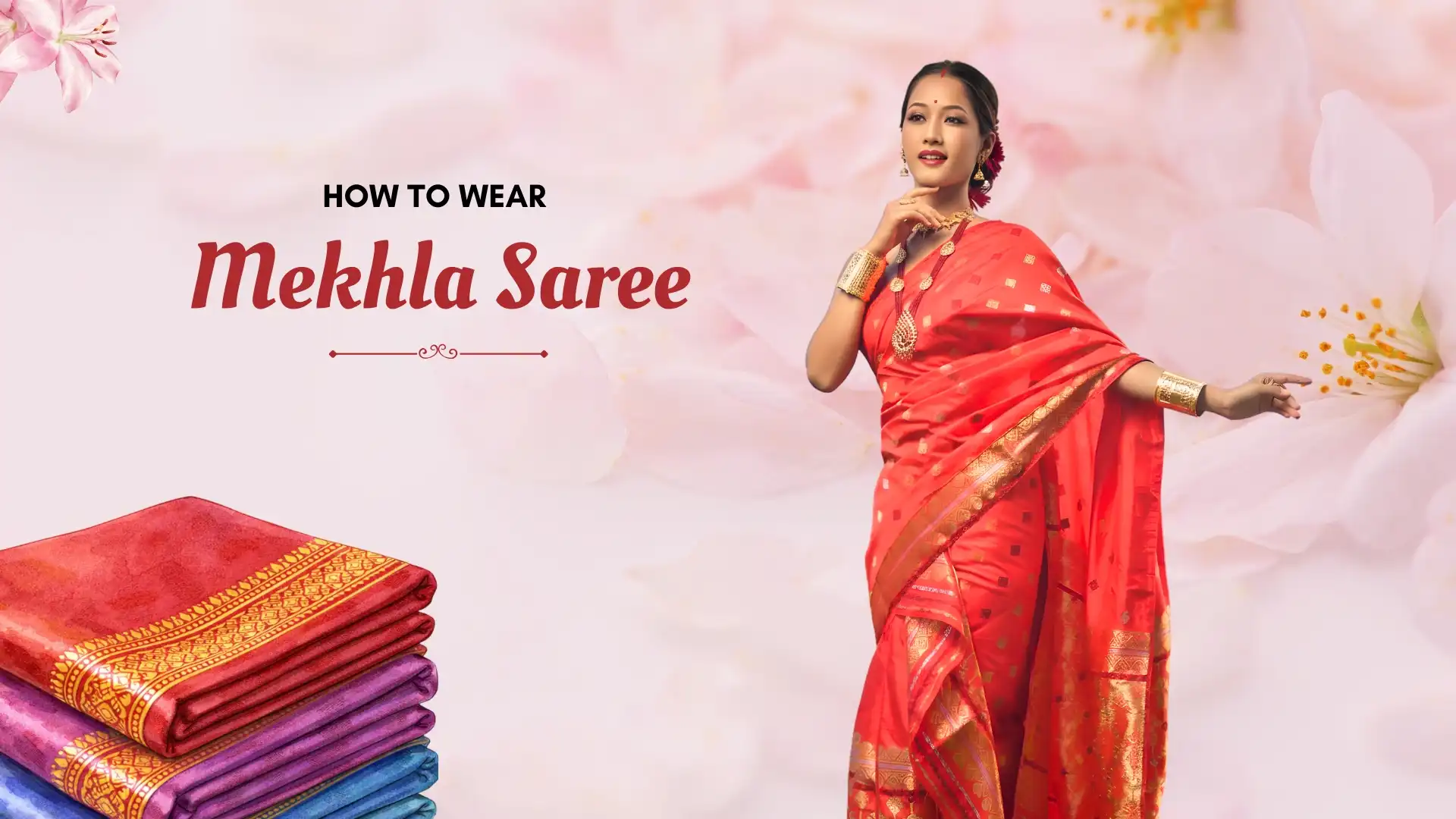
If you’ve recently discovered Assamese traditional wear and are curious about how to wear mekhla saree, you’re stepping into a world of quiet elegance and deep cultural meaning. The mekhla saree, commonly known as the mekhla chador, is not just an outfit it’s a reflection of Assam’s heritage, craftsmanship, and graceful way of dressing.
At first glance, many women feel unsure about how to wear mekhla saree because it doesn’t follow the usual saree draping style. There’s no long pallu flowing behind you and no multiple pleats falling from the waist. Instead, it comes as two beautifully coordinated pieces that wrap around the body in a structured yet fluid way.
This detailed guide will help you truly understand how to wear mekhla saree, whether you’re wearing it for the first time or looking to style it more confidently. Everything here is explained in a natural, practical, and realistic manner just like advice you’d get from someone who has worn it many times.
Understanding the Mekhla Saree Before Wearing It
Before learning how to wear mekhla saree, it’s important to know what makes it different from a regular saree.
A mekhla saree has two separate parts:
- Mekhla – the lower garment that wraps around the waist, similar to a skirt
- Chador – the upper drape worn over the blouse and shoulder
This two-piece structure is what gives the mekhla saree its clean lines and secure fit. Once you understand this construction, how to wear mekhla saree becomes far less intimidating.
Cultural Significance of the Mekhla Saree
Learning how to wear mekhla saree also means understanding its cultural roots. Traditionally worn by Assamese women, the mekhla chador is associated with festivals like Bihu, weddings, cultural ceremonies, and important life events.
The motifs woven into the fabric often represent nature, prosperity, and regional artistry. Wearing a mekhla saree is not about fast fashion it’s about honoring craftsmanship and tradition. This cultural depth is why many women feel a special connection once they learn how to wear mekhla saree properly.
Choosing the Right Fabric for Mekhla Saree
Fabric plays a huge role in how comfortable and confident you feel while learning how to wear mekhla saree.
Traditional Silk Mekhla Sarees
Silk is the most common fabric for mekhla sarees. It holds structure beautifully and creates a regal appearance. Silk mekhla sarees are ideal for weddings, festivals, and formal gatherings.
Cotton and Cotton Blends
For everyday wear or warm weather, cotton and blended fabrics work well. If you are someone who enjoys wearing a cotton blend saree, you’ll appreciate how breathable and easy cotton mekhla sarees feel.
Linen-Inspired and Blended Textures
Modern mekhla sarees often come in linen-inspired weaves. Women who like crisp drapes and usually buy linen saree styles often enjoy this variation. A linen blend saree texture in mekhla form looks elegant, minimal, and contemporary.
Choosing the right fabric makes learning how to wear mekhla saree much easier, especially for beginners.
Blouse Selection: The Foundation of the Look
The blouse is central to how to wear mekhla saree gracefully.
- A fitted blouse enhances the structure
- Traditional short sleeves or elbow-length sleeves work best
- Boat necks, round necks, and high necks look elegant
Avoid loose or oversized blouses, as they disturb the clean lines that make the mekhla saree so distinctive.
Step-by-Step Guide: How to Wear Mekhla Saree Correctly
Now let’s walk through how to wear mekhla saree step by step, slowly and clearly.
Step 1: Wearing the Mekhla (Lower Part)
Wrap the mekhla around your waist like a skirt. Some mekhla sarees come with stitched pleats, while others require manual adjustment. Ensure the fabric sits evenly around your waist. Secure it using a knot, drawstring, or safety pin.
This step is crucial in how to wear mekhla saree, as it determines comfort and balance.
Step 2: Adjusting the Length
The mekhla should ideally fall just above the ankle. Too long, and it drags; too short, and it loses its elegance. Adjust and secure before moving on.
Step 3: Draping the Chador
Wrap the chador around your upper body, covering the blouse. Bring one end over your shoulder. Unlike a saree pallu, the chador is spread wide and smooth, not pleated.
This is where how to wear mekhla saree begins to feel natural rather than technical.
Step 4: Securing the Draping
Use minimal pins to keep the chador in place. The goal is stability, not stiffness.
How Mekhla Saree Feels Once Worn Properly
One of the biggest surprises women experience after learning how to wear mekhla saree is how secure it feels. Unlike a regular saree, there’s no constant adjusting. You can walk, sit, and move freely, which is why many women prefer it for long events.
Common Mistakes Beginners Make
When learning how to wear mekhla saree, beginners often make these mistakes:
- Treating the chador like a saree pallu
- Over-tightening the mekhla at the waist
- Wearing an ill-fitted blouse
- Over-accessorizing
Avoiding these mistakes helps you truly understand how to wear mekhla saree gracefully.
Traditional vs Modern Ways to Wear Mekhla Saree
Traditional Styling
Traditional styling focuses on classic silk fabrics, minimal jewelry, and authentic draping. This approach respects the roots of how to wear mekhla saree.
Modern Styling
Modern interpretations include crop blouses, subtle belts, and contemporary colors. Even women who regularly buy sarees online india for modern designs enjoy experimenting with updated mekhla styles.
Both approaches are valid the key is comfort and confidence while following how to wear mekhla saree.
Mekhla Saree for Different Occasions
Weddings
Silk mekhla sarees with rich motifs are ideal. Gold jewelry completes the look.
Festivals and Cultural Events
Stick to traditional draping. Knowing how to wear mekhla saree authentically adds cultural respect.
Casual or Semi-Formal Wear
Light fabrics and minimal accessories work well. Some women who usually buy georgette sarees enjoy softer, flowing mekhla versions for semi-formal events.
Accessories That Enhance Mekhla Saree
Accessories should complement, not overpower.
- Traditional earrings
- Simple bangles
- Minimal necklaces
Balanced styling is essential in how to wear mekhla saree.
Footwear Choices
Comfortable footwear is important.
- Flats or juttis for traditional looks
- Block heels or wedges for modern styling
Good footwear supports posture and confidence while wearing the mekhla saree.
Hair and Makeup Tips
Hair and makeup should enhance the elegance of the outfit.
- Low bun or braided bun for traditional styling
- Soft waves for modern looks
Makeup should be balanced either bold eyes or bold lips, not both.
Mekhla Saree Compared to Regular Saree
After learning how to wear mekhla saree, many women find it easier than wearing a regular saree. It stays in place, feels secure, and allows free movement. That’s why women who value comfort often choose mekhla sarees for long events.
Buying the Right Mekhla Saree
Women who enjoy exploring handloom fashion often transition from sarees they already love. Those who buy khadi saree online, or prefer soft silks and blends, usually look for similar comfort and texture in mekhla sarees. Even those who buy tissue silk saree designs appreciate the subtle shine of silk mekhla sarees.
Why Learning How to Wear Mekhla Saree Is Special
Learning how to wear mekhla saree is not just about fashion it’s about cultural appreciation. Each fold and wrap reflects generations of tradition. Once you wear it confidently, it feels empowering rather than complicated.
Final Thoughts
The mekhla saree is a beautiful blend of structure, comfort, and cultural richness. While it may feel unfamiliar at first, understanding how to wear mekhla saree is a rewarding journey.
Take your time. Choose the right fabric. Focus on comfort and balance. Whether styled traditionally or with a modern twist, the mekhla saree carries a quiet elegance that never goes unnoticed.
Once you truly learn how to wear mekhla saree, it stops being an outfit you try and becomes an outfit you belong in.
FAQs
How to wear mekhla saree for the first time without feeling confused?
If you’re wearing it for the first time, understanding how to wear mekhla saree starts with knowing it has two parts the mekhla (bottom) and the chador (upper drape). Wrap the mekhla around your waist like a skirt and secure it comfortably. Then drape the chador smoothly around your upper body and over one shoulder. Keep the drape simple, use minimal pins, and avoid pleating the chador like a saree pallu. Take it slow comfort comes first.
What type of blouse works best with a mekhla saree?
The blouse plays a big role in how to wear mekhla saree gracefully. A well-fitted blouse is always the best choice because it supports the structured look of the outfit. Traditional round necks, boat necks, or high neck blouses pair beautifully with mekhla sarees. Short sleeves or elbow-length sleeves look elegant and balanced. Avoid loose or oversized blouses, as they can disturb the clean lines that make the mekhla saree look refined and polished.
Can mekhla saree be styled in a modern way?
Yes, absolutely. While tradition is central to how to wear mekhla saree, modern styling is very much possible. You can pair it with a contemporary blouse, add a slim waist belt, or choose subtle colors instead of heavy traditional motifs. Footwear like block heels and minimal jewelry also add a modern touch. The key is to keep the drape traditional while experimenting gently with accessories and blouse designs to suit today’s style preferences.
Is mekhla saree more comfortable than a regular saree?
Many women find that once they learn how to wear mekhla saree, it feels more comfortable than a regular saree. Since the mekhla is worn like a skirt and the chador is wrapped securely, there’s less need for constant adjustment. It allows easy movement, makes sitting and walking comfortable, and stays in place for long hours. This is why mekhla sarees are often preferred for weddings, festivals, and cultural events that last all day.
Leave a Reply