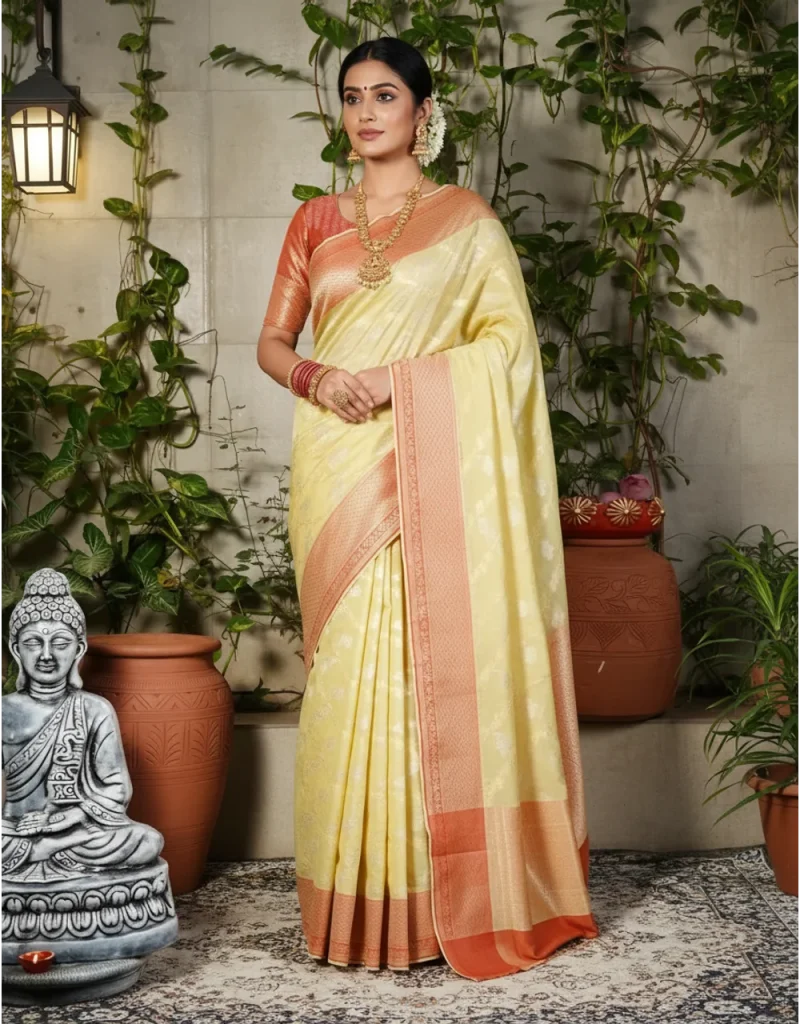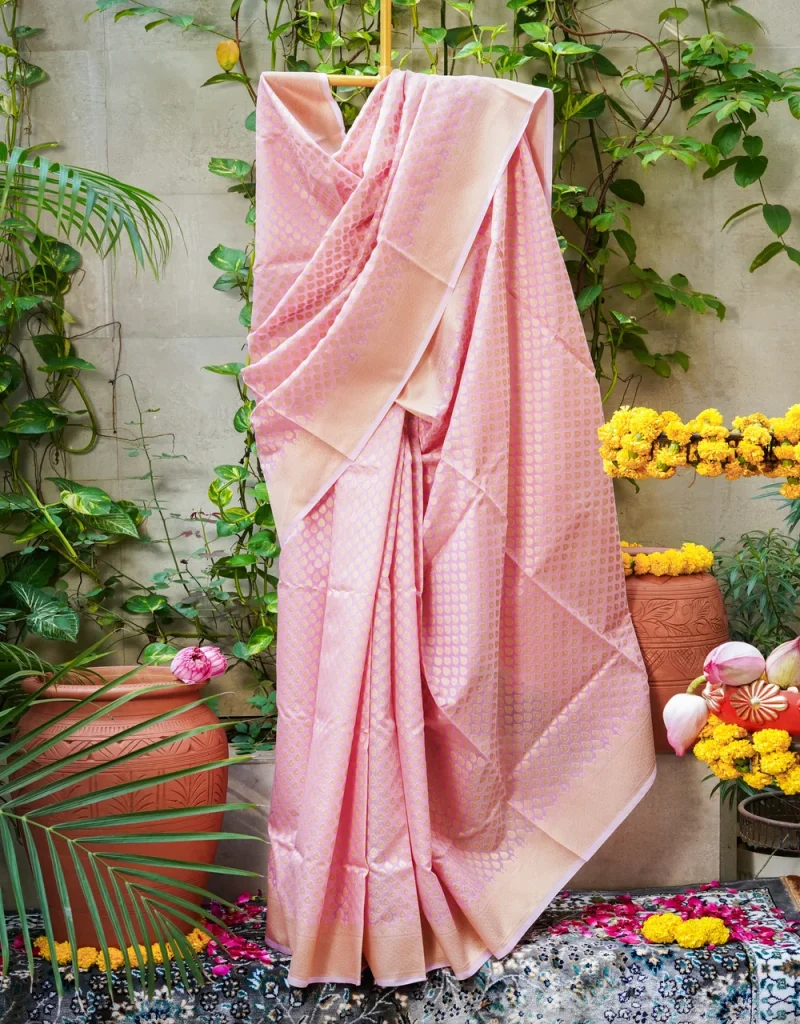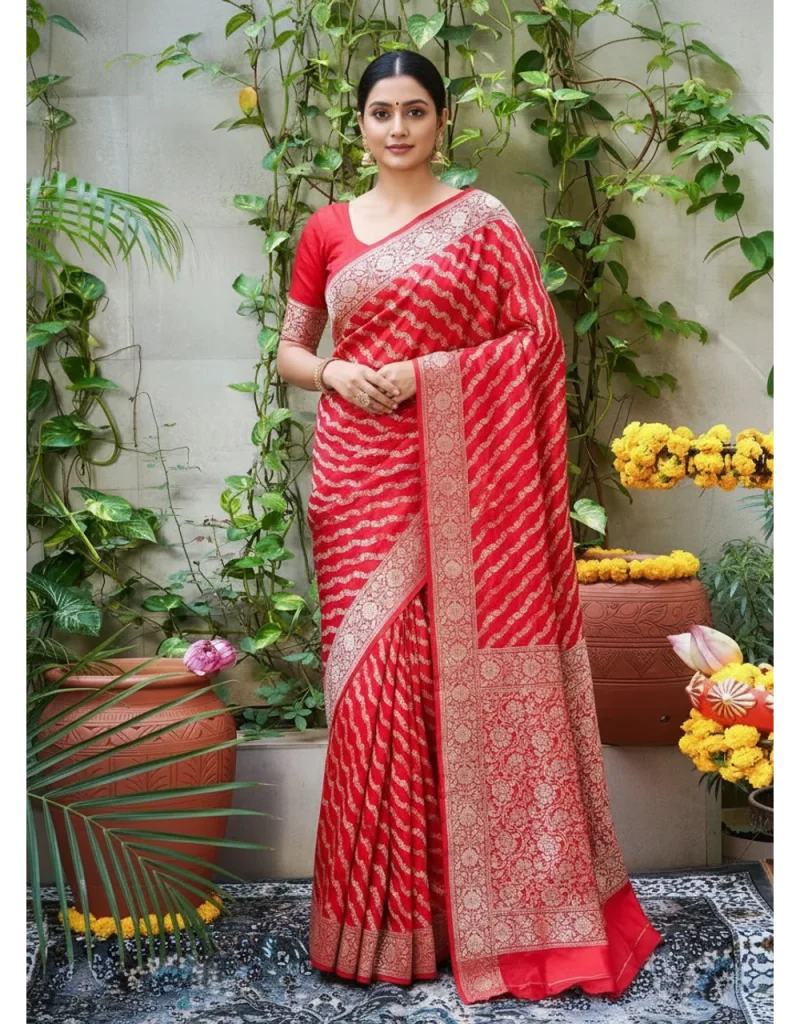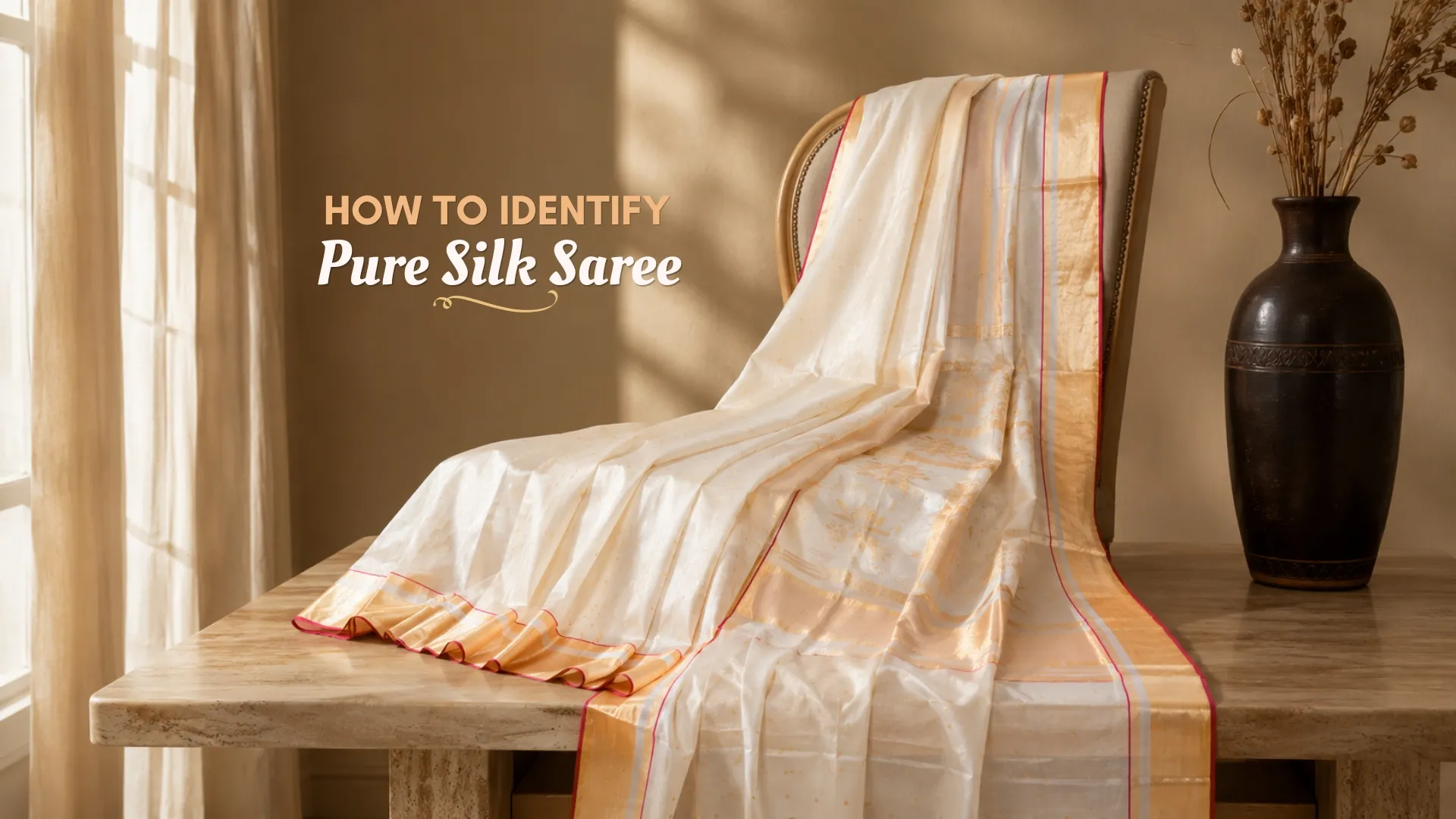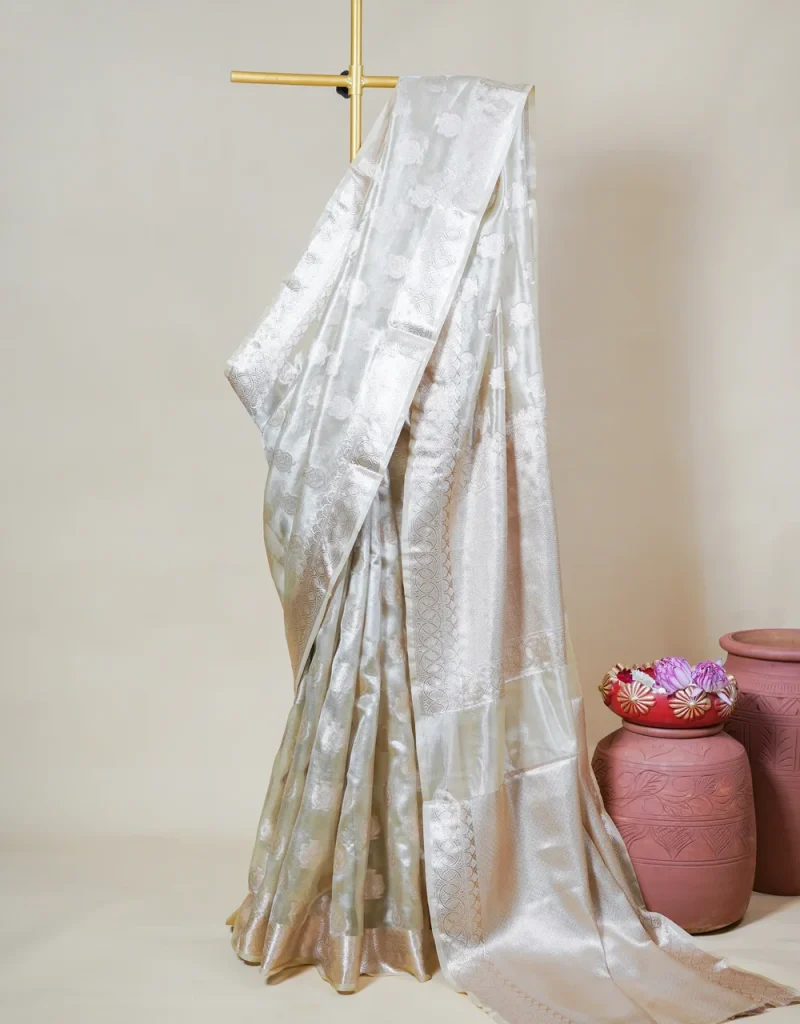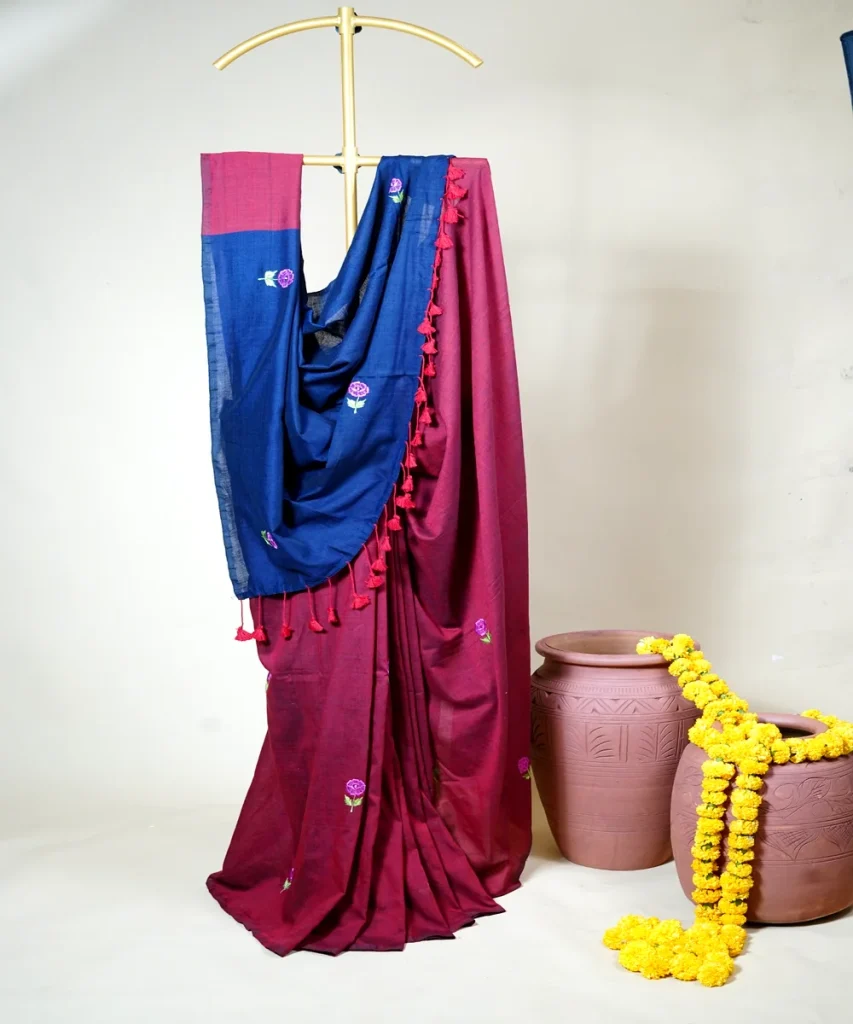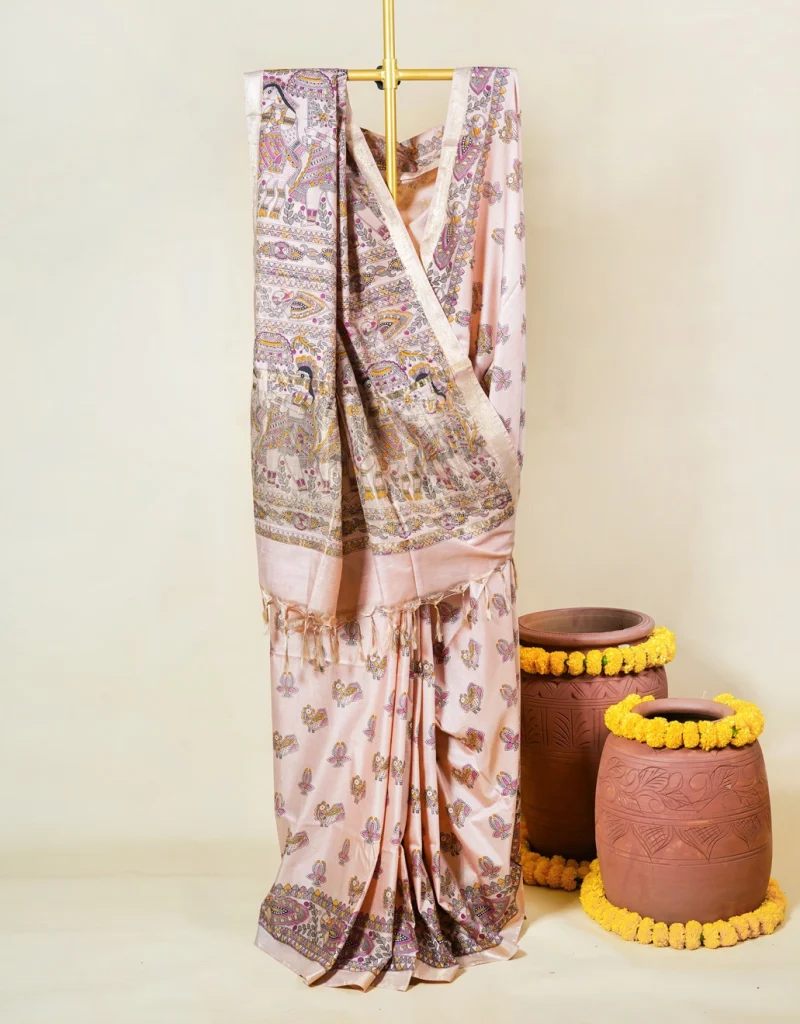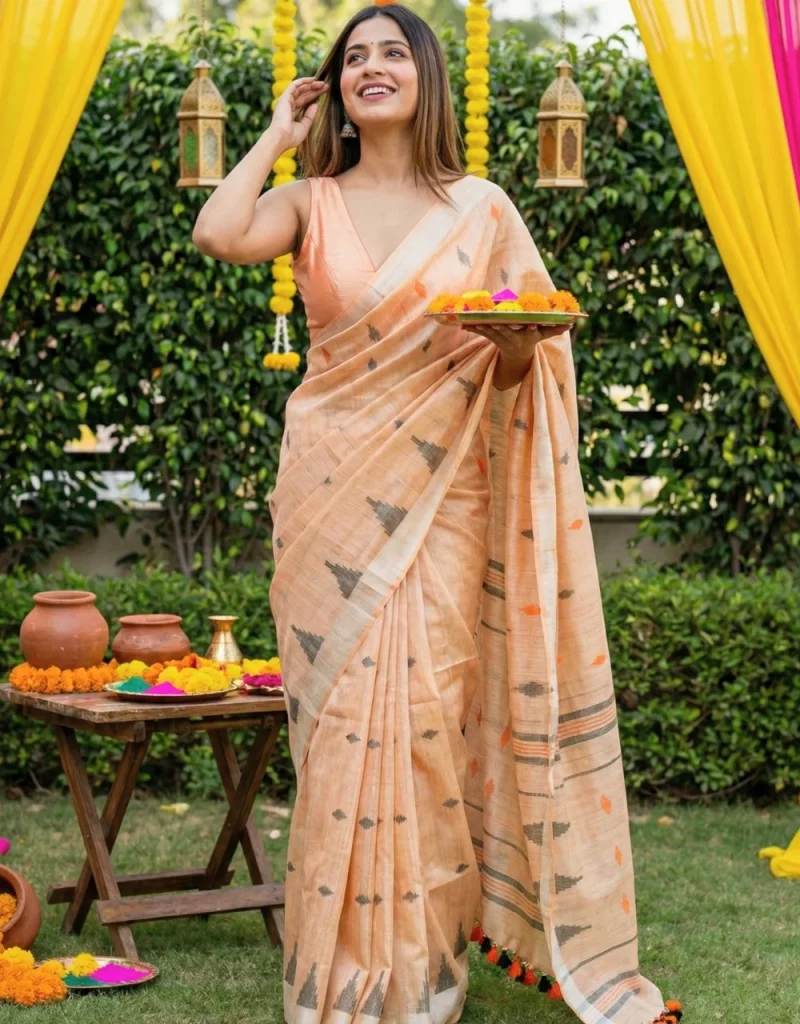
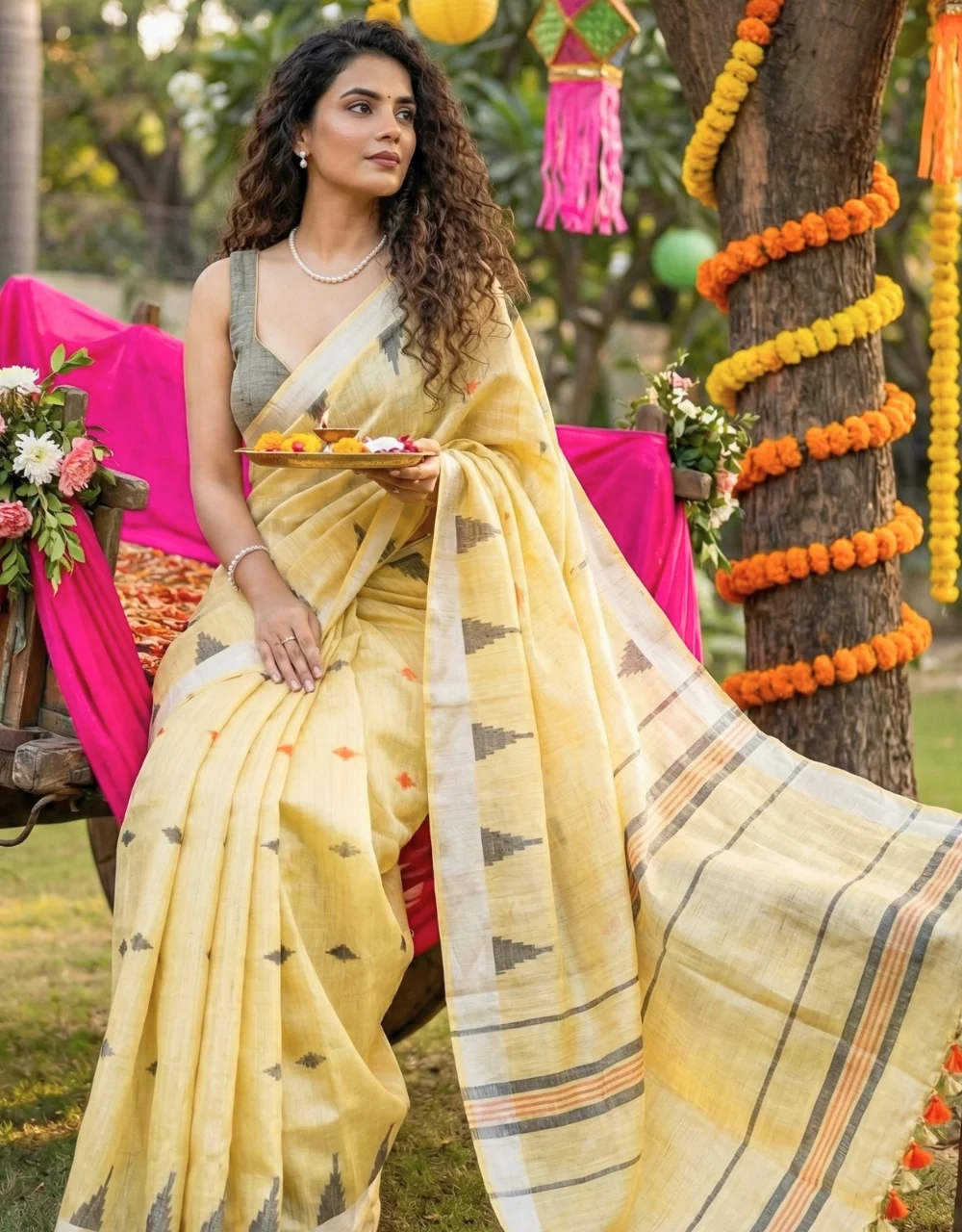
India’s handloom tradition is one of the richest textile traditions in the world. Across different regions, generations of artisans have developed unique weaving techniques, motifs, fabrics, colours, and finishing styles. The result is an extraordinary variety of sarees, each carrying a piece of its region’s culture and history.
For anyone who appreciates Indian textiles, learning about the Types of Handloom Sarees is a wonderful way to understand the craftsmanship behind the garment. From the luxurious Banarasi saree of Uttar Pradesh to the lightweight Kota Doria of Rajasthan, every weave has its own identity.
The beauty of the handloom sarees lies not only in their appearance but also in the process behind them. Handloom weaving requires patience, precision, and considerable skill. In many weaving communities, techniques have been passed down from one generation to another.
This guide explores 15 traditional Indian sarees, their origin and history, what makes each one distinctive, and how you can care for your handloom collection.
1. Banarasi Saree
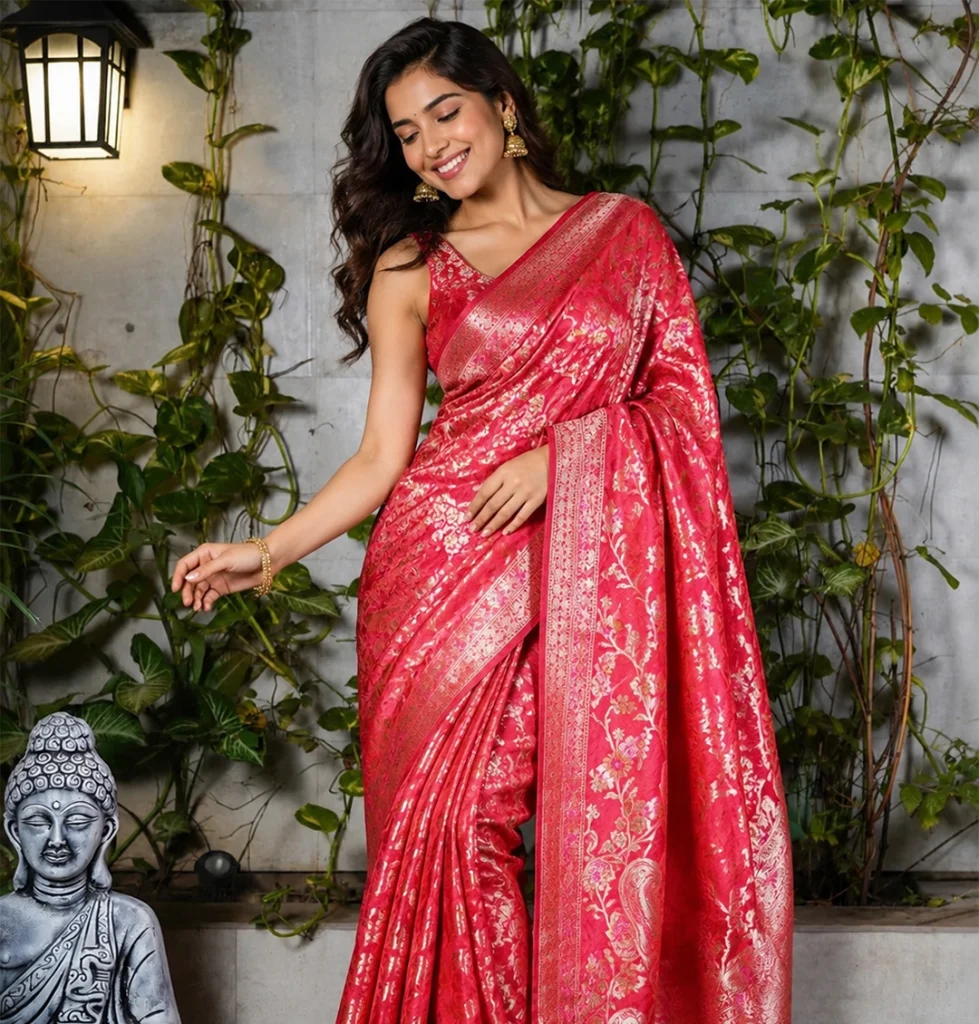
Among the most celebrated Types of Handloom Sarees, Banarasi sarees are known for their luxurious appearance, intricate patterns, and beautiful zari work. They originate from Varanasi, traditionally known as Banaras.
Origin & History
The weaving tradition of Banaras developed over centuries, with silk weaving becoming particularly prominent during the Mughal period. Persian-inspired designs blended with Indian motifs, creating the elaborate aesthetic associated with Banarasi textiles today.
What Makes It Distinctive
- Rich silk fabric with a luxurious drape
- Intricate zari and brocade work
- Mughal inspired floral and paisley motifs
- Elaborate borders and pallus
- Traditionally associated with weddings and festive occasions
Banarasi sarees remain one of the most sought after choices for bridal and occasion wear.
2. Kanjeevaram Saree
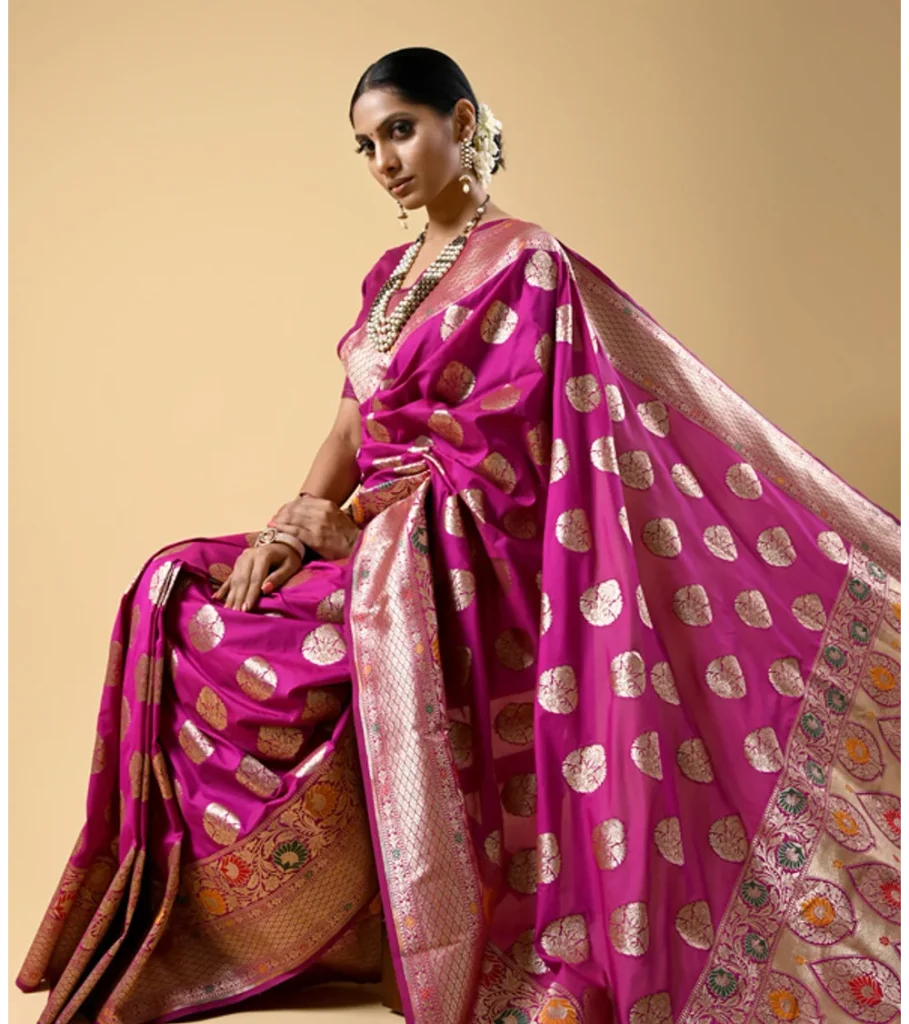
Kanjeevaram sarees are among the most recognisable Types of Handloom Sarees from South India. They originate from Kanchipuram in Tamil Nadu and are traditionally woven with mulberry silk and zari.
Origin & History
Kanchipuram has a long-standing silk weaving tradition. The craft is closely associated with the Devanga and Padmasali weaving communities, who brought and developed their weaving skills in the region.
What Makes It Distinctive
- Strong, rich silk fabric
- Contrasting zari borders and pallus
- Traditional temple, peacock, floral, and geometric motifs
- Excellent durability
- Strong association with South Indian weddings and festivals
A Kanjeevaram is particularly valued for its ability to retain its beauty for generations.
3. Chanderi Saree
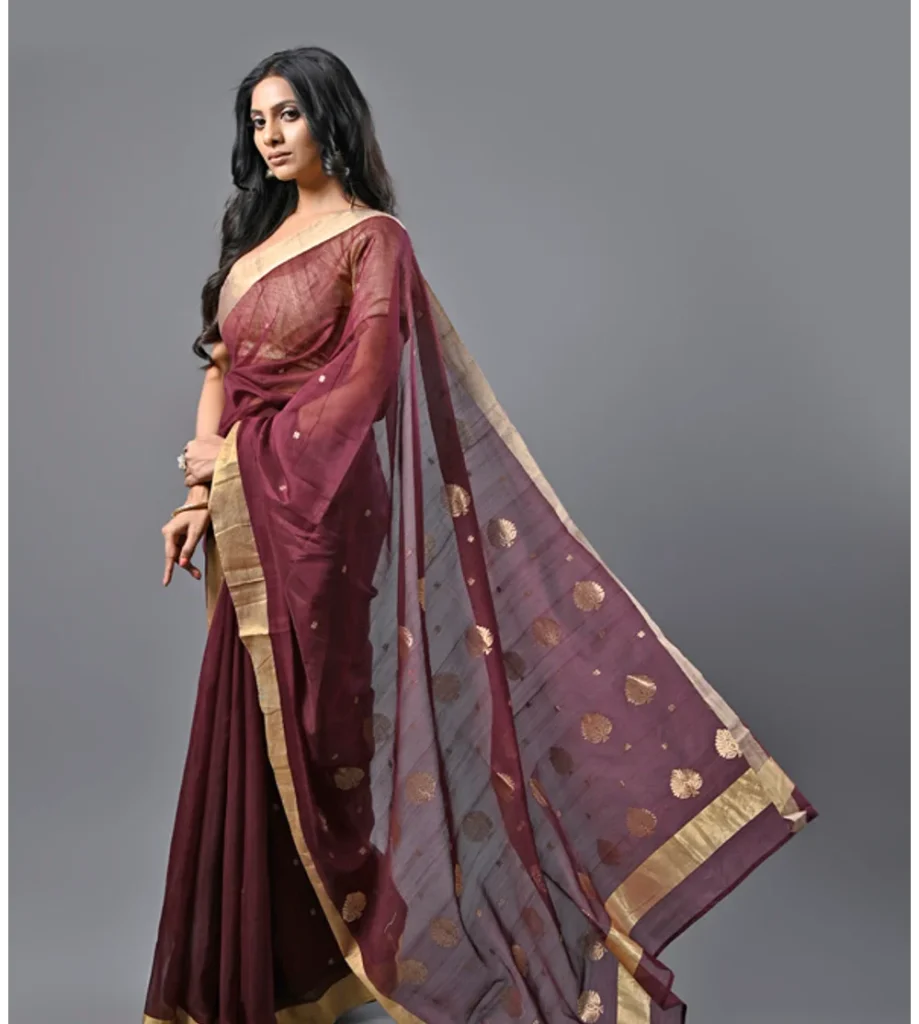
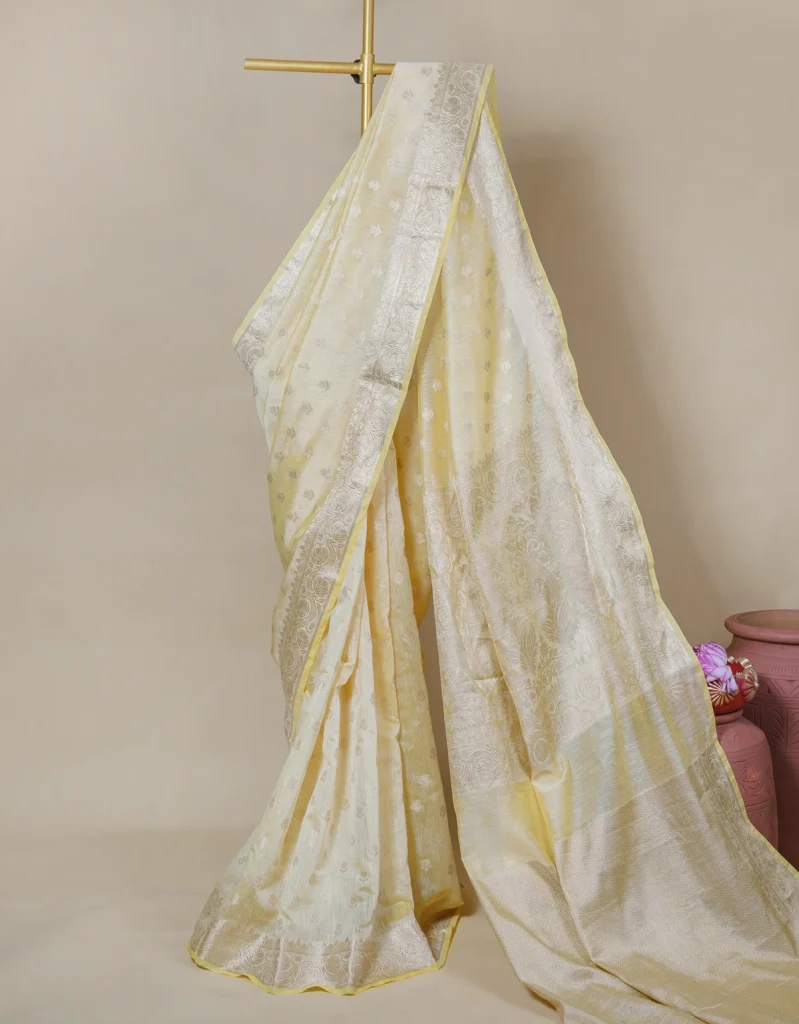
Chanderi is one of the most elegant Types of Handloom Sarees, especially popular among people who prefer lightweight and breathable fabrics.
Origin & History
Chanderi weaving comes from the historic town of Chanderi in Madhya Pradesh. The tradition dates back several centuries and developed under royal patronage, helping the region become known for fine textiles.
What Makes It Distinctive
- Lightweight and airy texture
- Traditionally made with silk, cotton, or silk cotton blends
- Delicate zari work
- Subtle motifs and elegant borders
- Slightly sheer appearance
Chanderi sarees are suitable for festive occasions as well as sophisticated everyday dressing.
4. Maheshwari Saree
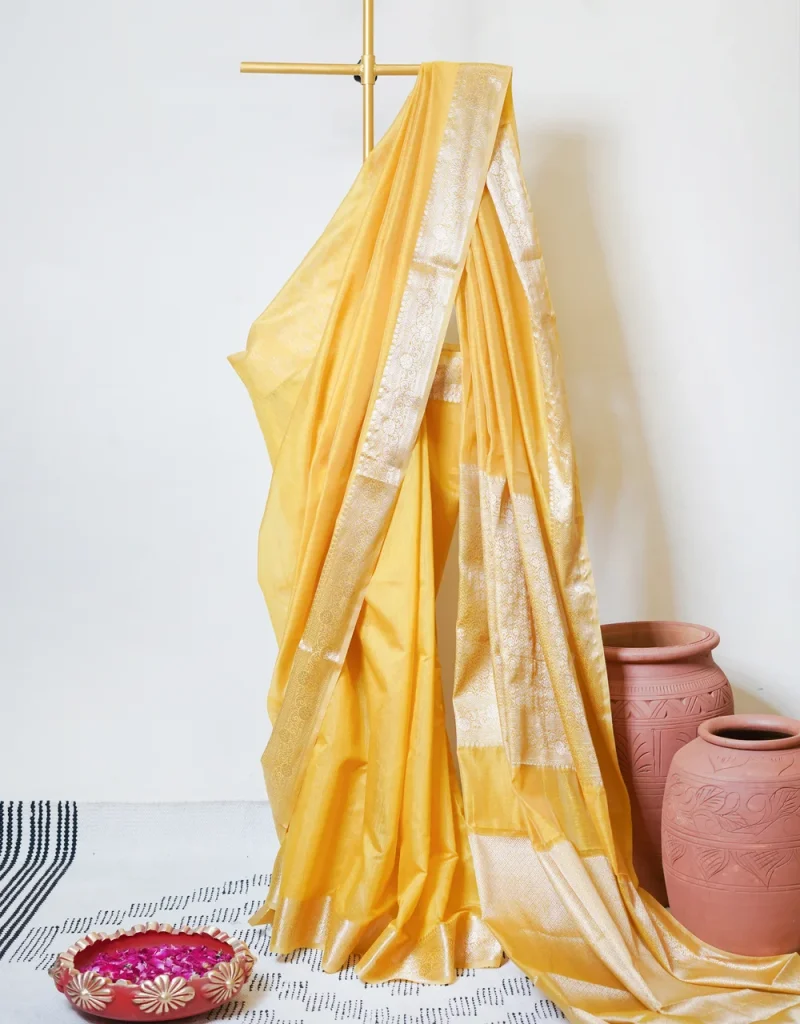
Maheshwari sarees are another beautiful example among the Types of Handloom Sarees originating from Madhya Pradesh. They come from Maheshwar, a town known for its historic textile tradition.
Origin & History
The development of Maheshwari weaving is strongly associated with Ahilyabai Holkar, the celebrated ruler of the Holkar dynasty. The tradition received royal support and developed into a distinctive weaving style.
What Makes It Distinctive
- Lightweight construction
- Cotton, silk, or silk cotton fabrics
- Characteristic striped or checked borders
- Elegant pallus
- Geometric and traditional motifs
- Comfortable drape
Maheshwari sarees work beautifully for both formal and semi formal occasions.
5. Jamdani Saree
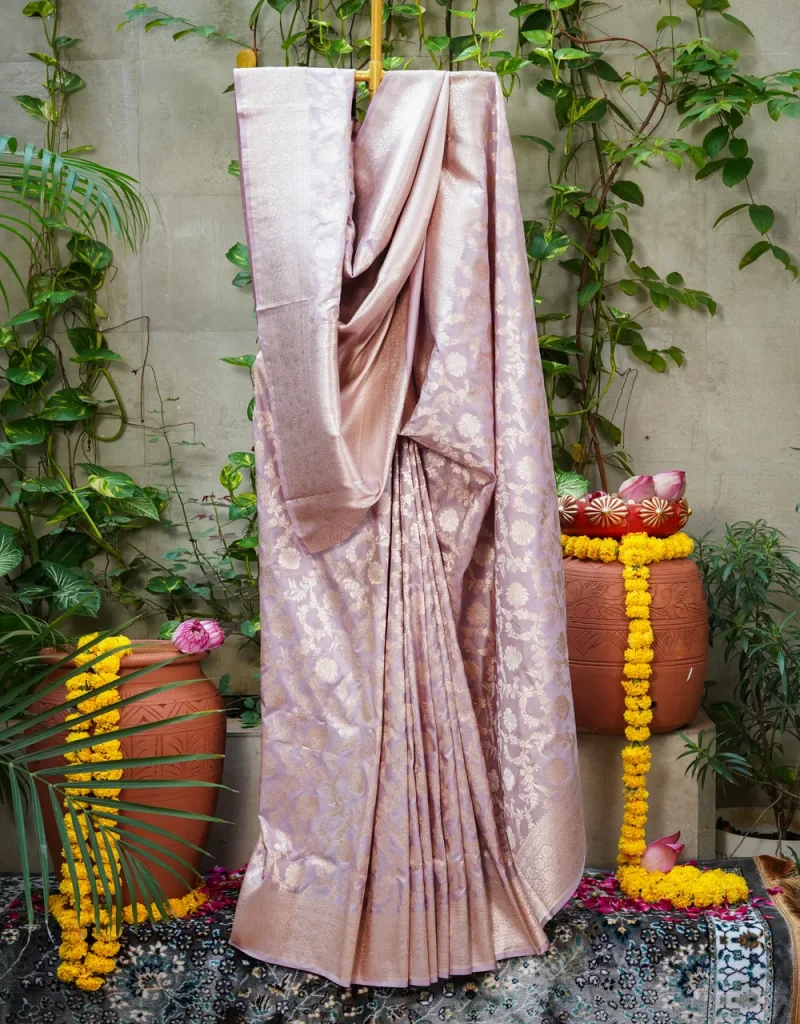
Jamdani is one of the most intricate Types of Handloom Sarees, admired for its delicate motifs and detailed weaving technique.
Origin & History
The Jamdani tradition is historically associated with the Bengal region, including present day Bangladesh and West Bengal. The craft developed around fine muslin and later became renowned for supplementary weft motifs woven directly into the fabric.
What Makes It Distinctive
- Extremely detailed handwoven motifs
- Lightweight and breathable texture
- Floral and geometric patterns
- Motifs appear to float on the fabric
- Requires considerable time and artisan skill
Jamdani is an excellent choice for someone who appreciates subtle craftsmanship rather than heavy embellishment.
6. Tant Saree
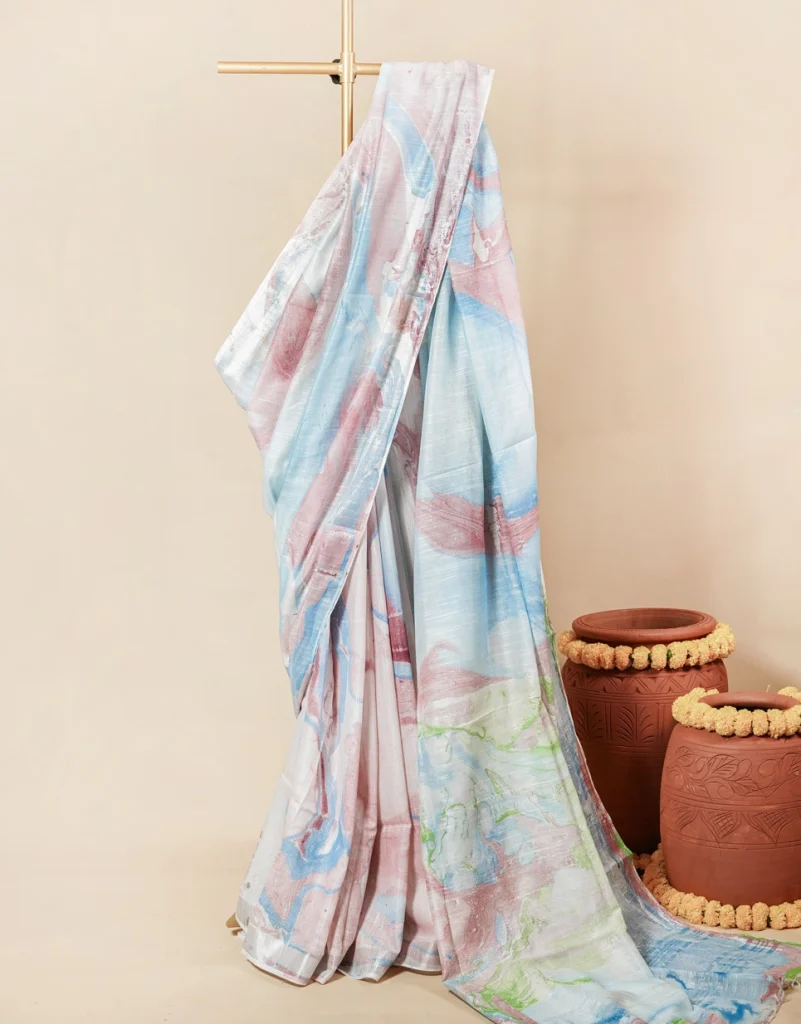
Among the most comfortable Types of Handloom Sarees, Tant is a traditional Bengali cotton saree known for its lightweight texture.
Origin & History
Tant weaving has deep roots in Bengal and has traditionally been associated with local weaving communities. The sarees became popular as practical everyday clothing because of their breathable cotton construction.
What Makes It Distinctive
- Lightweight cotton
- Breathable and comfortable
- Crisp texture
- Colourful borders
- Traditional floral and geometric motifs
- Ideal for warm and humid weather
Tant sarees are perfect for everyday wear, office dressing, and casual festive occasions.
7. Tussar Saree
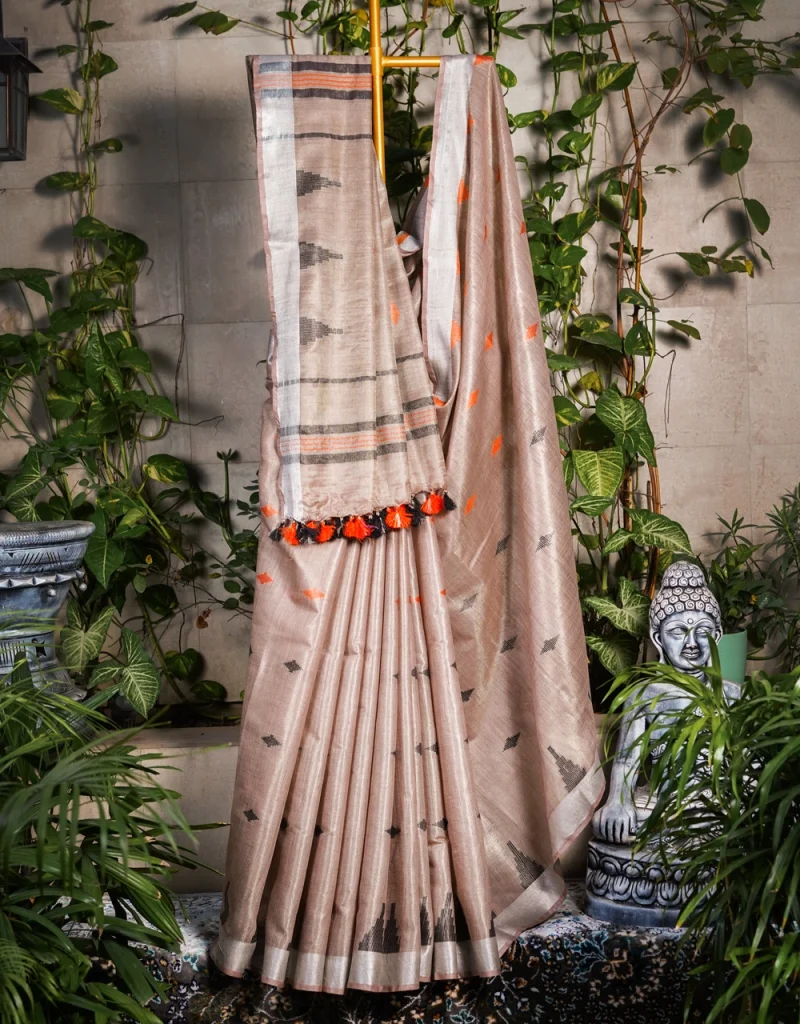
Tussar sarees are an earthy and naturally textured option among the Types of Handloom Sarees. Tussar silk is produced in several Indian states, including Jharkhand, Bihar, Odisha, West Bengal, and Chhattisgarh.
Origin & History
Tussar silk has been used in India for centuries. Indigenous communities have traditionally collected and processed wild silk cocoons, developing regional weaving traditions around the naturally textured fibre.
What Makes It Distinctive
- Naturally textured silk
- Subtle, earthy sheen
- Comfortable and breathable feel
- Organic-looking surface
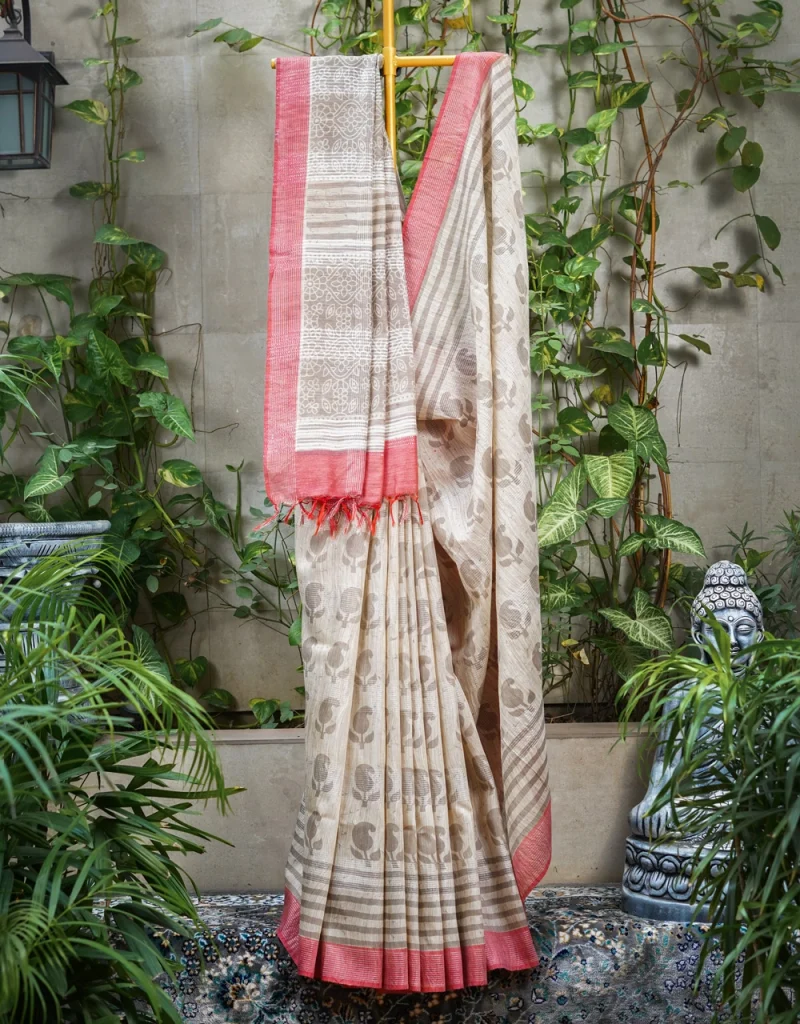
- Beautiful with hand-painted, printed, or woven motifs
Tussar sarees are particularly appealing to those who prefer understated luxury and natural textures.
8. Sambalpuri Saree
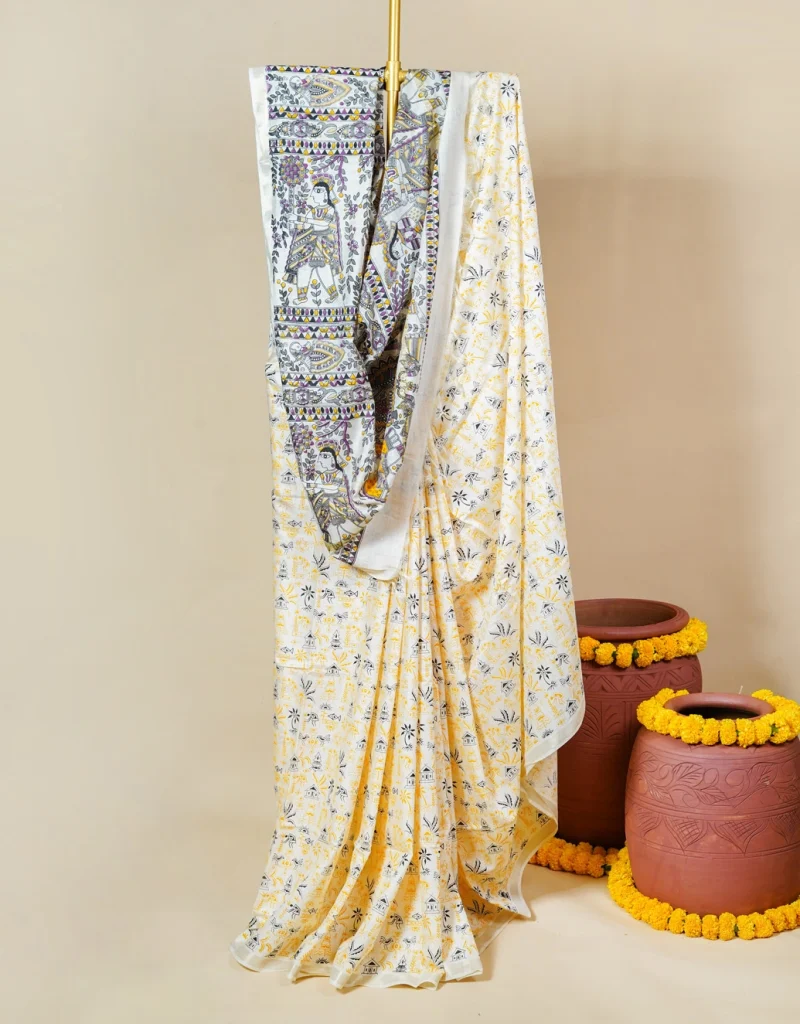
Sambalpuri sarees are distinctive Types of Handloom Sarees from Odisha, famous for their traditional motifs and ikat technique.
Origin & History
Sambalpuri weaving developed in western Odisha and has been preserved by generations of local weaving communities. The region’s ikat tradition is particularly recognised for its intricate tie and dye process.
What Makes It Distinctive
- Traditional ikat weaving
- Shankha, chakra, floral, and geometric motifs
- Vibrant colours
- Patterns created through resist dyeing
- Strong connection with Odishan culture
The designs make Sambalpuri sarees instantly recognisable.
9. Paithani Saree
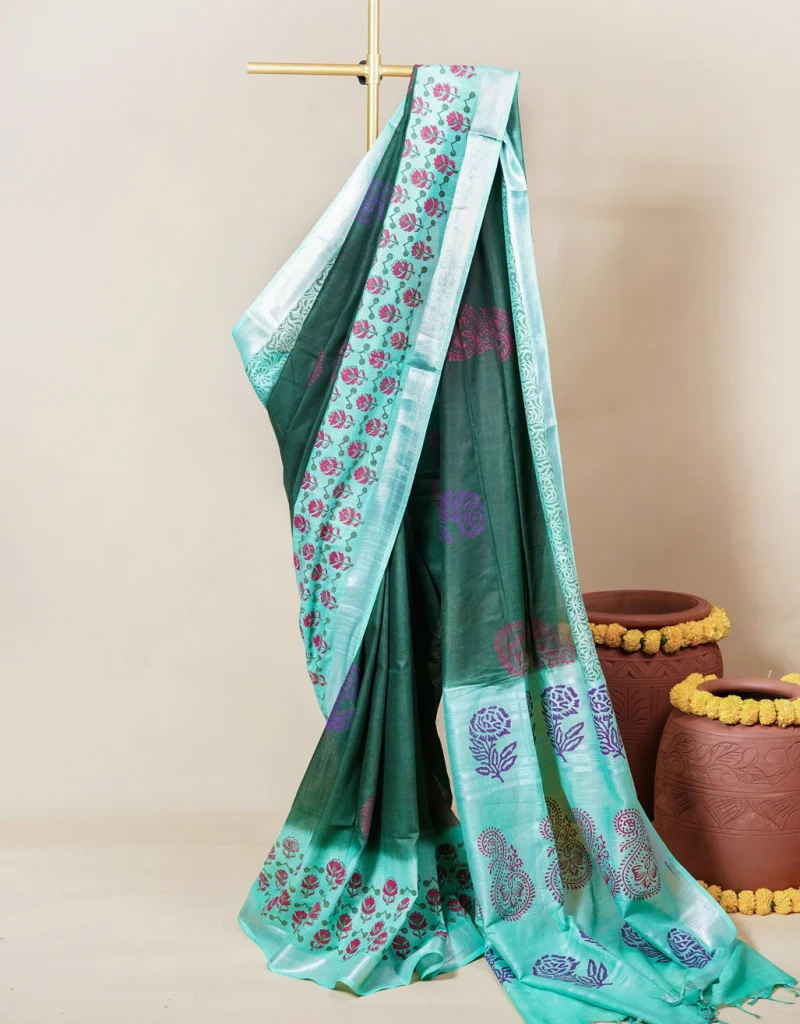
Paithani sarees represent one of Maharashtra’s most luxurious Types of Handloom Sarees. They are traditionally woven in silk and zari and are particularly famous for their elaborate pallus.
Origin & History
Paithani weaving is associated with Paithan in Maharashtra and has a history going back many centuries. The tradition developed under royal patronage and became associated with elaborate silk and zari craftsmanship.
What Makes It Distinctive
- Rich silk fabric
- Elaborate zari work
- Peacock and floral motifs
- Vibrant colour combinations
- Intricately woven pallu
- Traditional Maharashtrian identity
Paithani sarees are especially popular for weddings and significant celebrations.
10. Kota Doria Saree
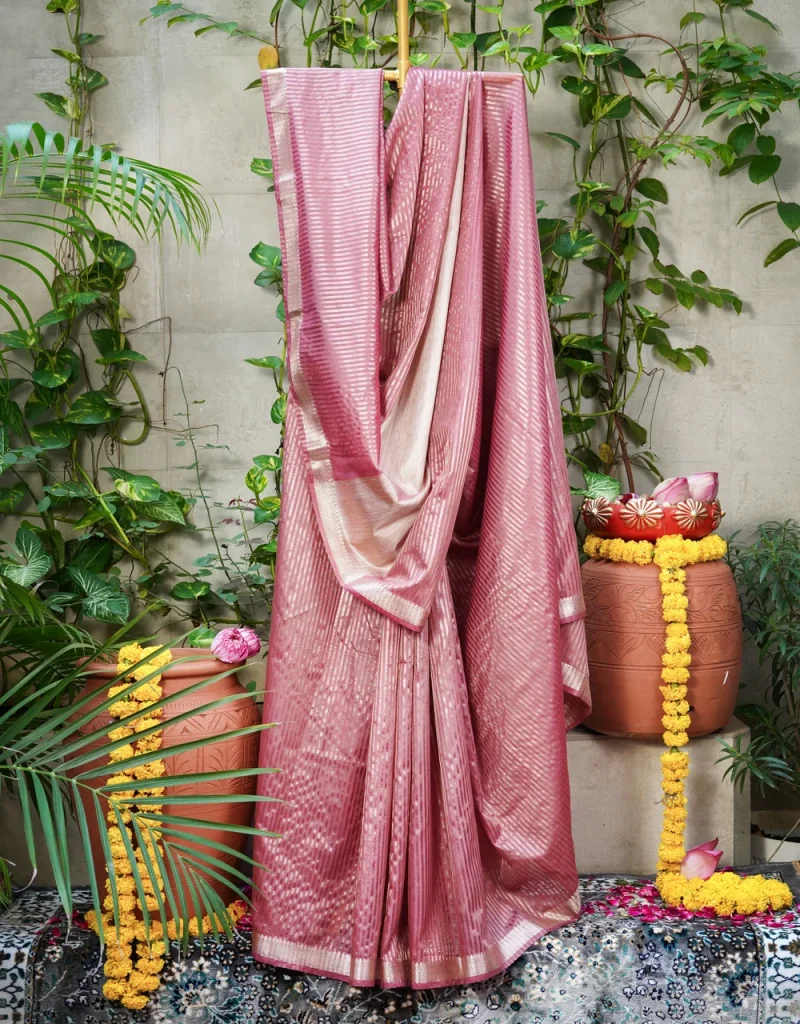
Kota Doria is among the lightest Types of Handloom Sarees, making it especially suitable for summer.
Origin & History
Kota Doria is associated with Kota in Rajasthan. The weaving tradition developed around a lightweight fabric designed to remain comfortable in the region’s warm climate.
What Makes It Distinctive
- Extremely lightweight fabric
- Characteristic square check pattern called khat
- Airy and breathable construction
- Available in cotton, silk, and blends
- Suitable for everyday and summer wear
Its delicate texture makes Kota Doria a practical yet elegant choice.
11. Kasavu Saree
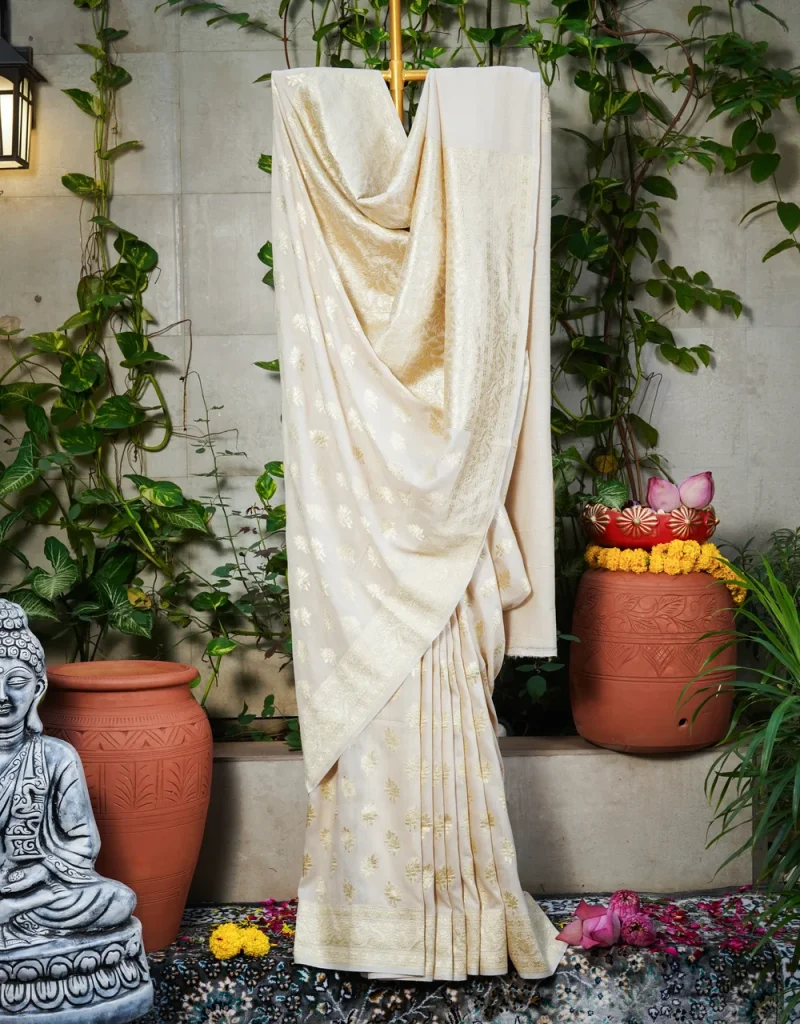
Kasavu sarees are an iconic example of the Types of Handloom Sarees associated with Kerala. Their understated appearance makes them instantly recognisable.
Origin & History
Kasavu developed as part of Kerala’s traditional clothing culture. The sarees became particularly associated with festivals, weddings, and cultural occasions.
What Makes It Distinctive
- Cream or off white base
- Traditional golden zari border
- Minimalist aesthetic
- Lightweight and comfortable
- Strong association with Kerala festivals and weddings
The simplicity of a Kasavu saree is precisely what gives it its timeless appeal.
12. Ilkal Saree
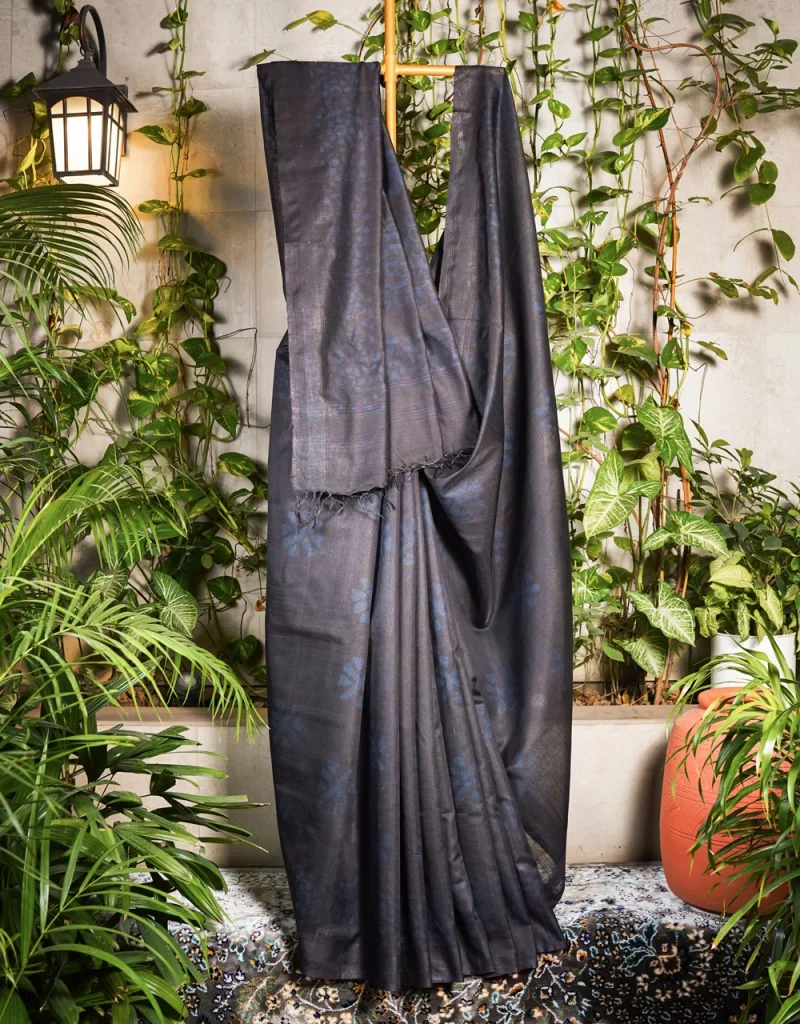
Ilkal sarees are distinctive Types of Handloom Sarees from Karnataka, traditionally woven using cotton and silk.
Origin & History
The tradition comes from Ilkal in northern Karnataka, where weaving has been an important local craft for generations.
What Makes It Distinctive
- Distinctive contrasting pallu
- Traditional borders
- Cotton and silk combinations
- Geometric designs
- Traditional Tope Teni technique joining the pallu and body
Ilkal sarees offer a beautiful balance between regional tradition and everyday practicality.
13. Baluchari Saree
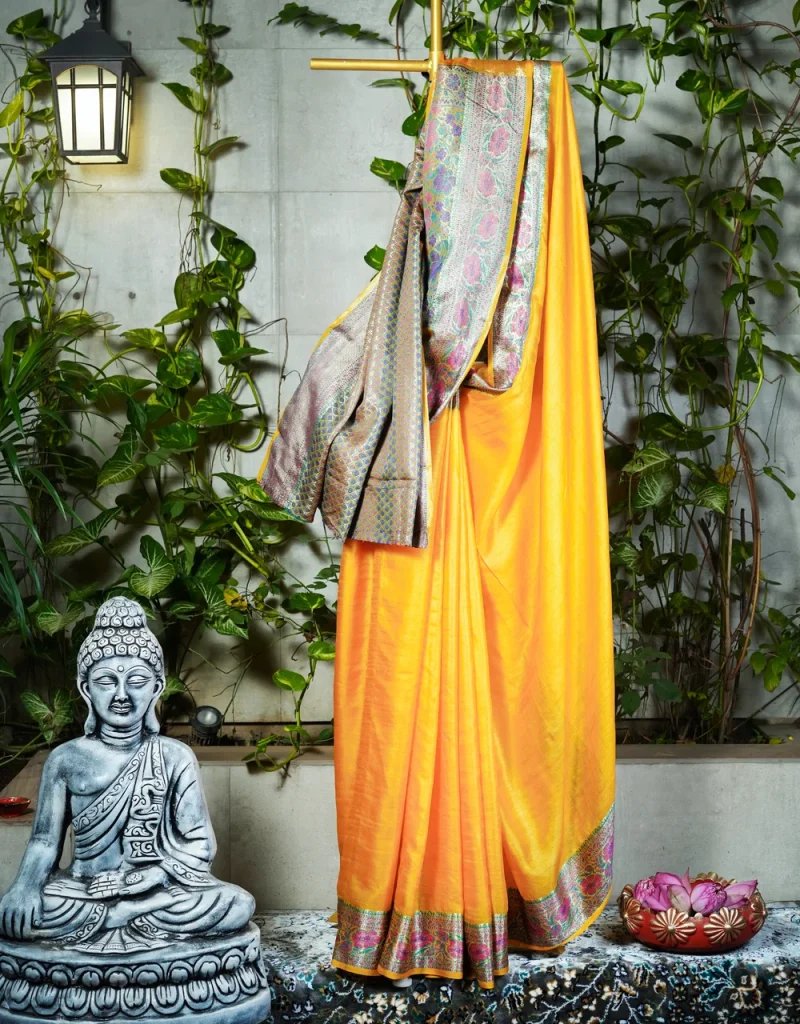
Baluchari sarees are among the most artistic Types of Handloom Sarees, particularly famous for their storytelling motifs.
Origin & History
Baluchari weaving is associated with Bengal, particularly the Murshidabad region. The tradition became known for elaborate figurative motifs inspired by mythology, historical scenes, and traditional life.
What Makes It Distinctive
- Narrative motifs
- Elaborate pallu and borders
- Mythological and historical scenes
- Detailed silk weaving
- Strong storytelling element
A Baluchari saree can almost be viewed as a woven piece of art.
14. Bhagalpur Silk Saree
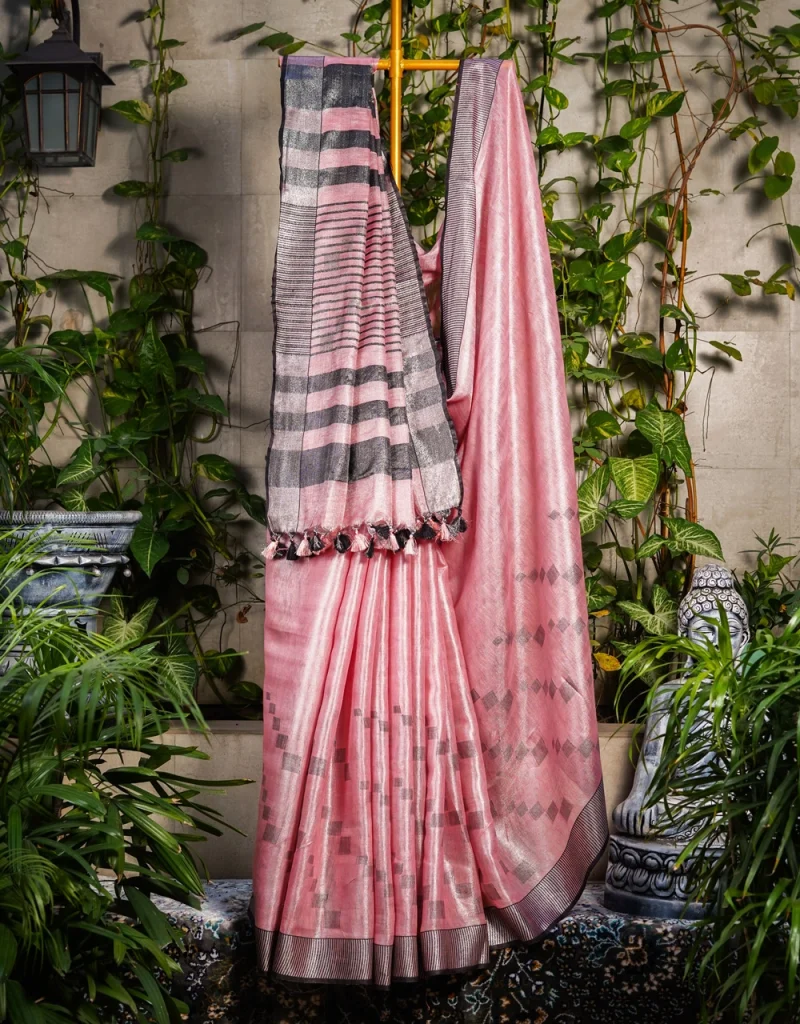
Bhagalpur silk is an important silk weaving tradition from Bihar and represents another beautiful category among the Types of Handloom Sarees.
Origin & History
Bhagalpur has been a significant silk-producing and weaving centre for generations. The region is particularly associated with Tussar and other silk varieties.
What Makes It Distinctive
- Natural silk texture
- Earthy appearance
- Durable fabric
- Handwoven character
- Traditional and contemporary designs
If you appreciate silk sarees with a handcrafted and natural feel, Bhagalpur silk is worth exploring.
15. Muga Silk Saree
Muga silk is one of the most distinctive Types of Handloom Sarees from Assam and is famous for its naturally golden appearance.
Origin & History
Muga silk has deep roots in Assam’s textile heritage. The silk is produced from the Muga silkworm and has traditionally been associated with Assamese ceremonial and cultural clothing.
What Makes It Distinctive
- Natural golden sheen
- Strong and durable silk
- Traditional Assamese motifs
- Develops greater lustre with age
- Associated with special occasions
Its natural golden tone gives Muga silk a character unlike many other Indian textiles.
How to Choose Between Different Types of Handloom Sarees
With so many handloom saree options, the right choice depends on your personal style, occasion, weather, and comfort.
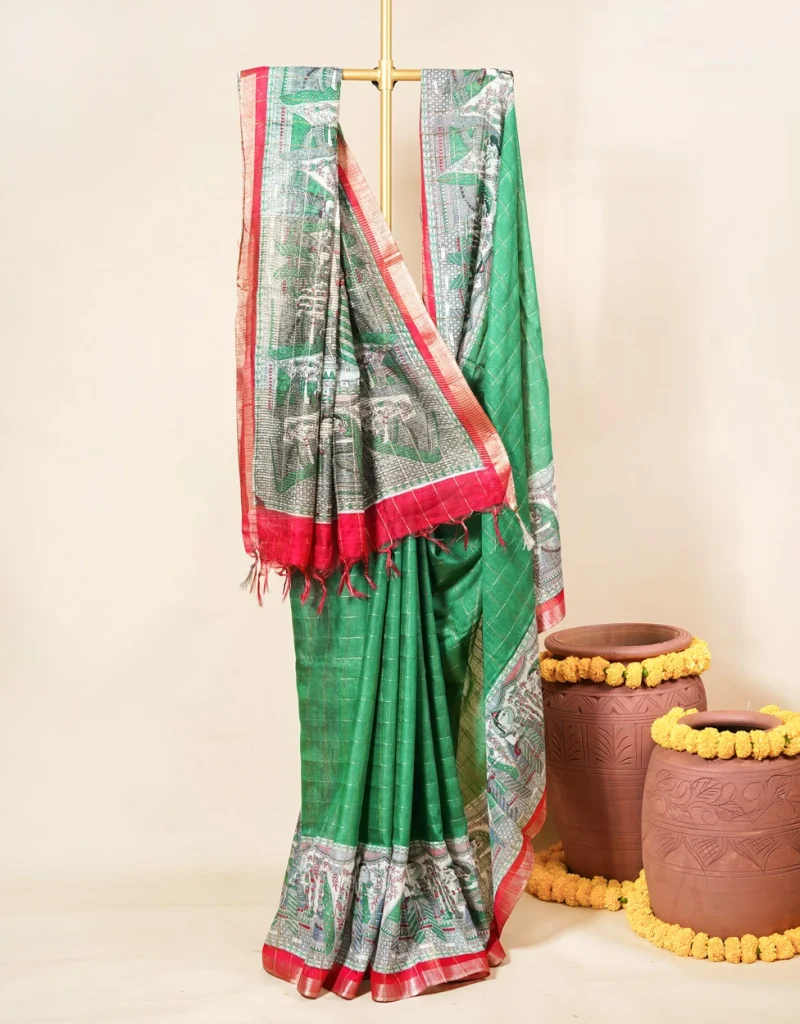
For weddings and grand celebrations, Banarasi, Kanjeevaram, Paithani, and Muga silk can make beautiful choices. For everyday wear, Tant, Kota Doria, Maheshwari, and Chanderi offer lightweight comfort.
If you want the softness of cotton combined with the richness of silk, cotton silk sarees are a versatile option. They can work for festive occasions without feeling as heavy as some traditional silk varieties.
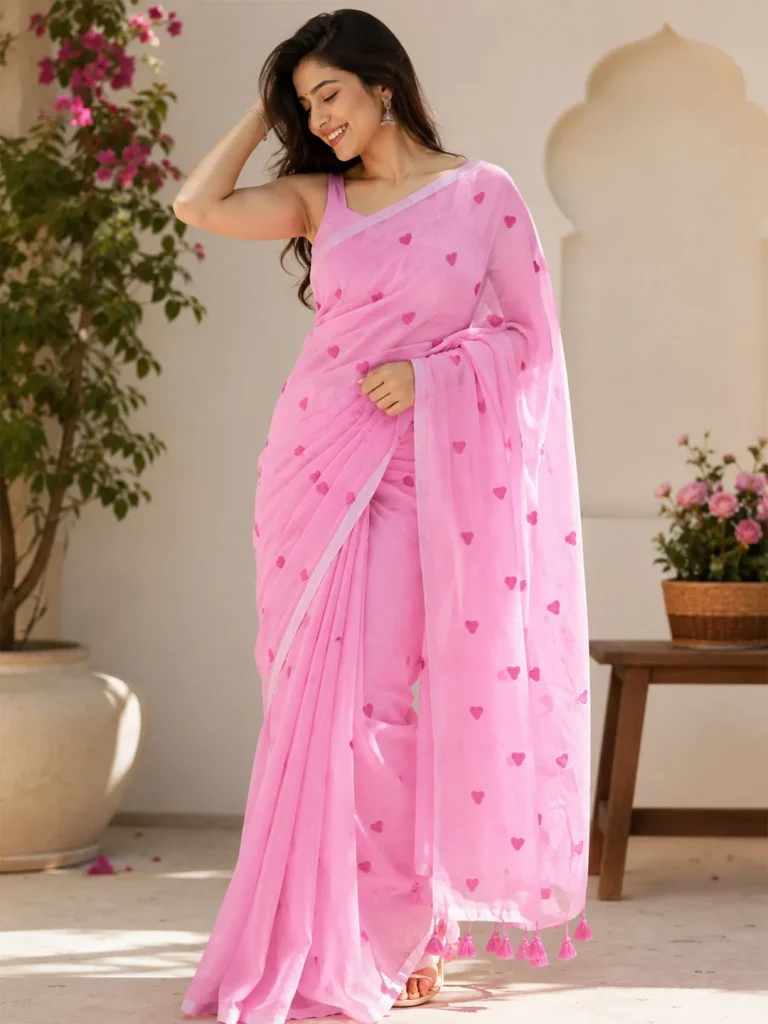
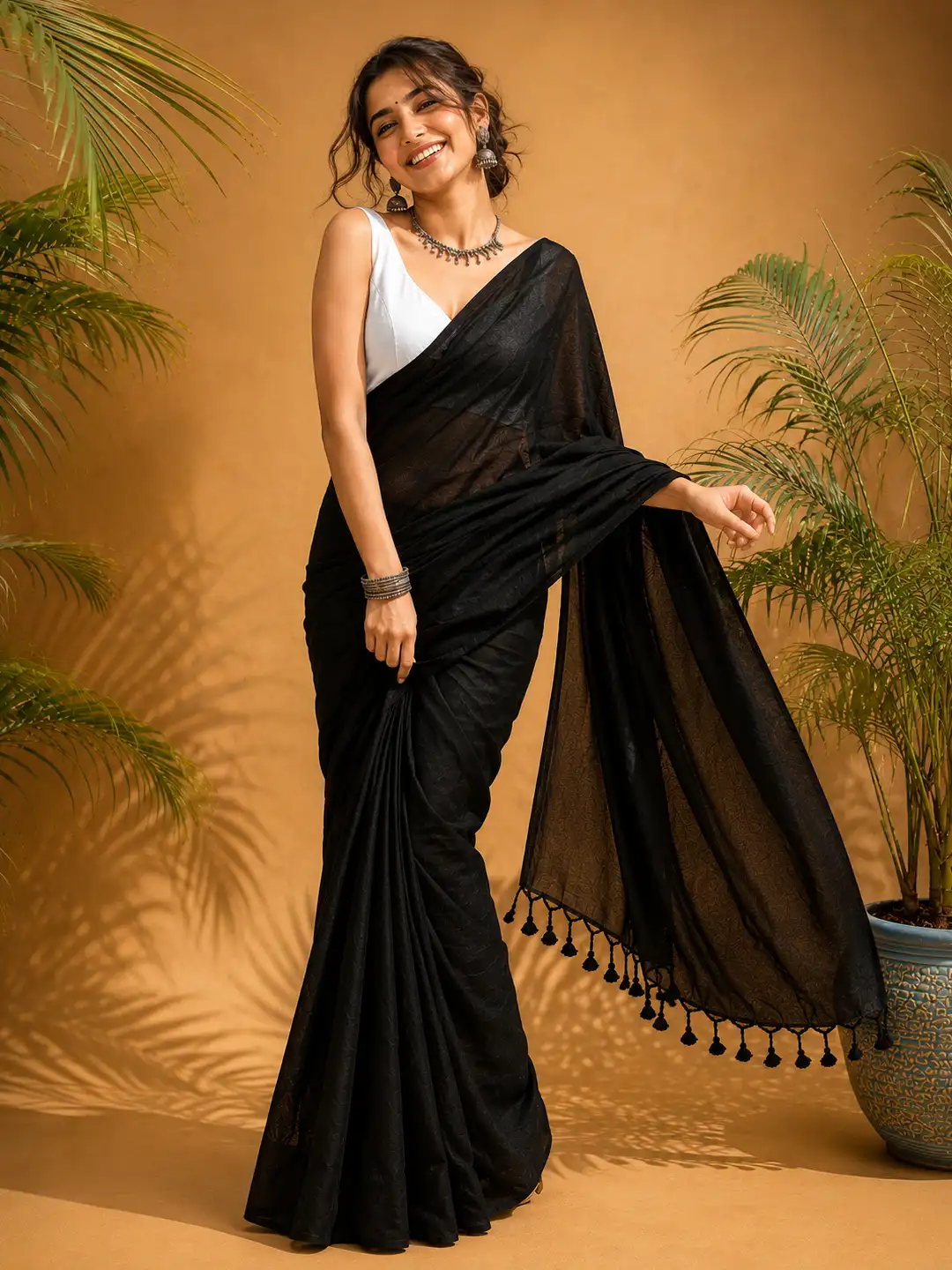
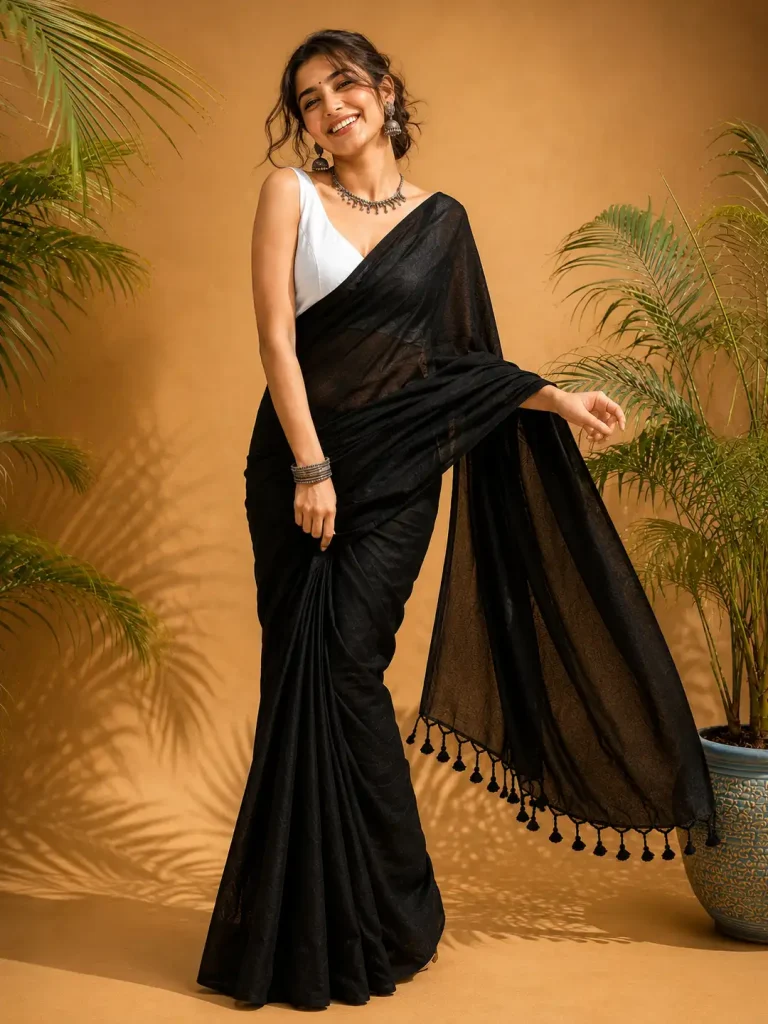
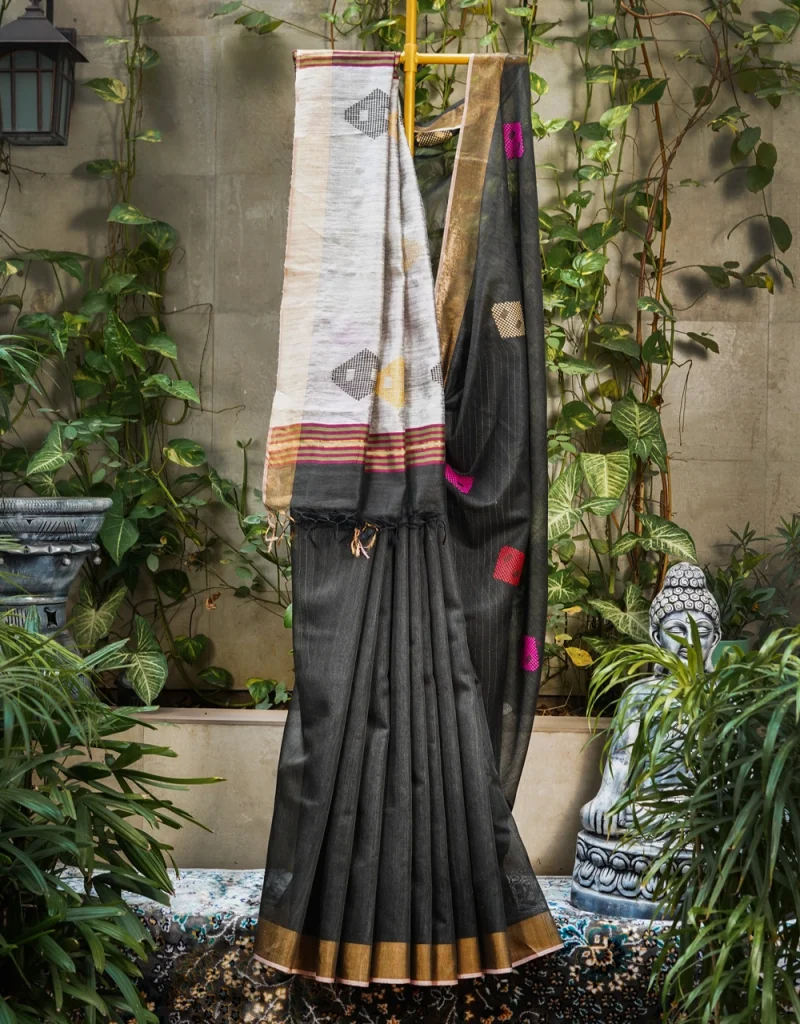
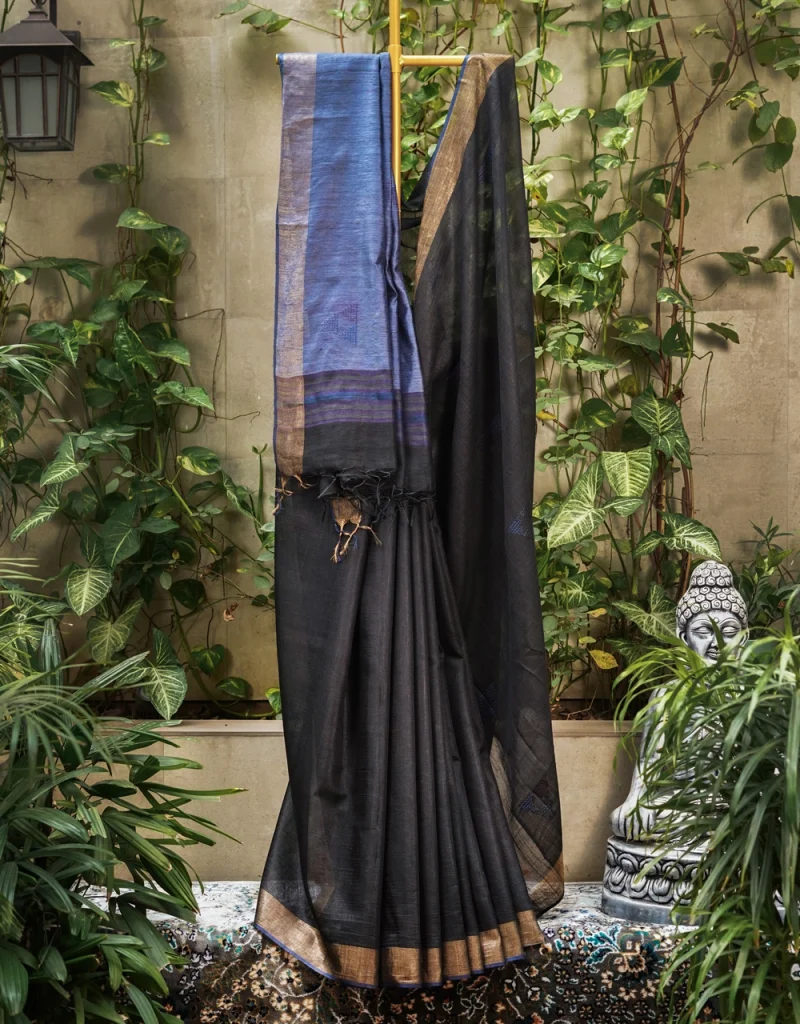
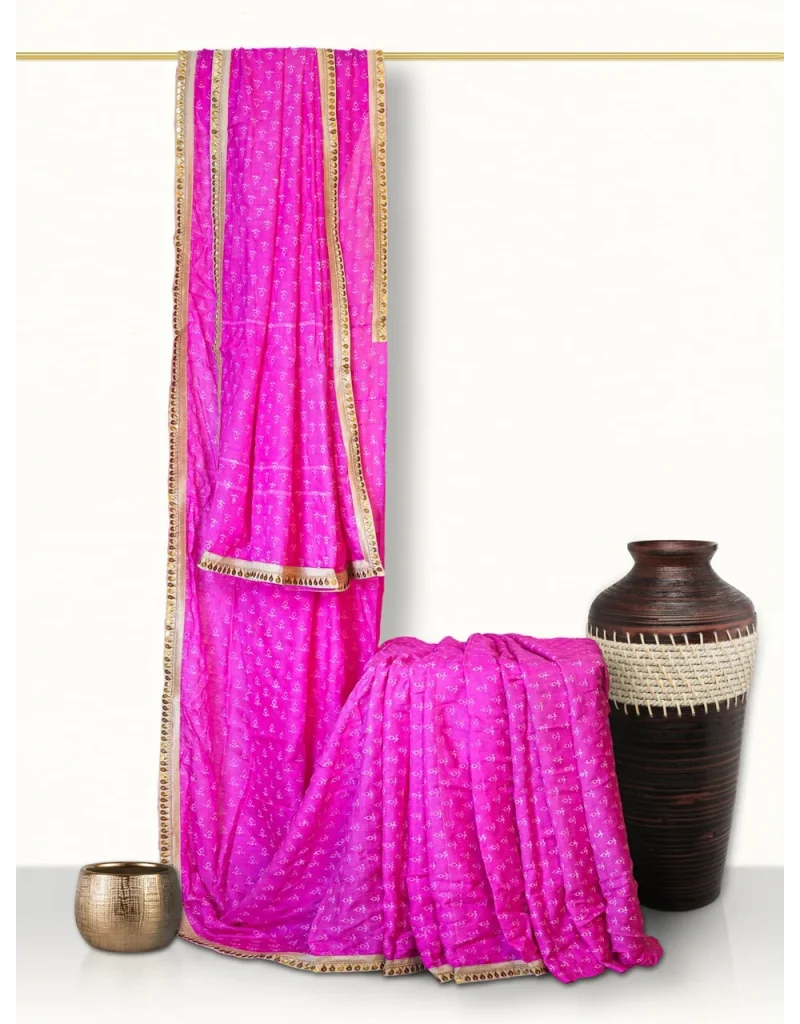
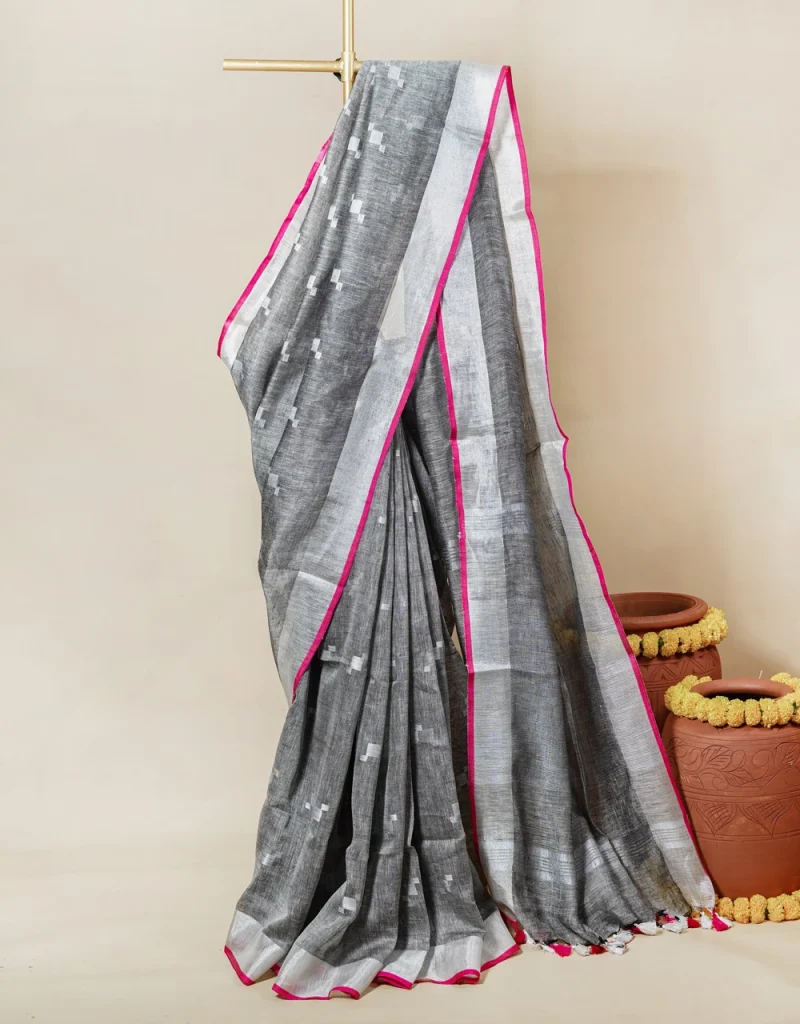
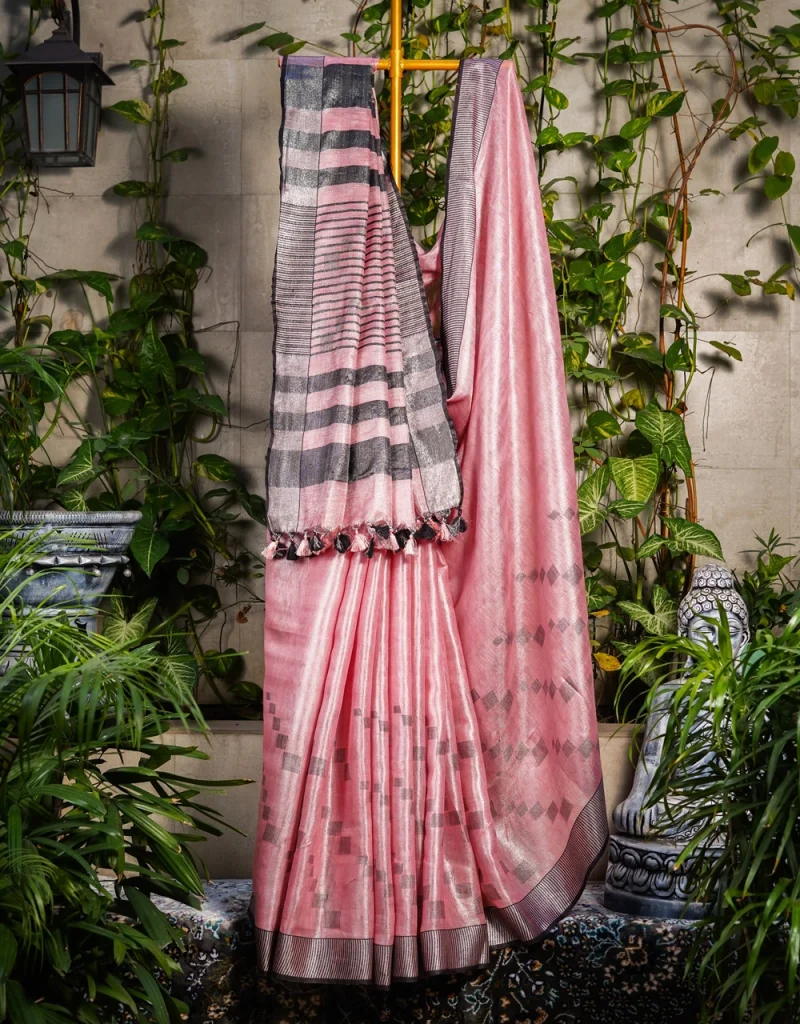
Colour can also influence the overall look. A pink saree can create a soft, graceful appearance, while a black saree can offer a more contemporary and sophisticated look.
For a breathable everyday option, a well-made cotton saree can be an excellent wardrobe staple.
How to Care for Handloom Sarees
Knowing about handloom sarees is only part of preserving them. Proper care is equally important because handwoven fabrics can be delicate.
1. Follow the right washing method
Always check the fabric and zari before washing. Many silk handlooms are best entrusted to professional dry cleaners.
2. Avoid harsh detergents
Strong chemicals can affect the colour, texture, and shine of handloom fabrics.
3. Keep them away from direct sunlight
Prolonged exposure can cause colours to fade, particularly in richly dyed sarees.
4. Fold them carefully
Refold your sarees occasionally to prevent permanent creases from forming in the same place.
5. Store silk separately
Use breathable cotton saree bags rather than plastic covers for long term storage.
6. Take care of zari
Zari can lose its lustre when exposed to moisture, perfume, or harsh chemicals. Allow the saree to air before storing it.
7. Handle delicate fabrics gently
Fine Jamdani, Chanderi, and other lightweight handlooms should be handled carefully to avoid pulls or snags.
Proper storage and gentle handling can help your handloom sarees retain their beauty for many years.
Why Choose Handloom Sarees?
The appeal of the Types of Handloom Sarees goes beyond fashion. Each saree represents a combination of regional identity, artisan skill, traditional knowledge, and textile craftsmanship.
Handloom also offers remarkable variety. You can find lightweight cottons for summer, textured silks for special occasions, understated weaves for everyday wear, and elaborate designs for weddings.
More importantly, choosing handloom helps sustain traditional weaving communities and keeps centuries-old techniques alive.
Final Thoughts
The diversity of Handloom Sarees reflects India’s incredible textile heritage. From the elaborate zari of Banarasi and Kanjeevaram sarees to the lightweight charm of Kota Doria and Tant, each weave offers something different.
The 15 Types of Handloom Sarees covered here are only a glimpse into India’s enormous handloom landscape. Every region has its own weaving traditions, artisan communities, motifs, and techniques waiting to be explored.
Whether you are shopping for a wedding, building an everyday wardrobe, or simply appreciating Indian craftsmanship, understanding the story behind a saree can make the experience much more meaningful.
After all, when you choose one of these handloom sarees, you are not simply choosing a garment. You are choosing a piece of craftsmanship, culture, and history, one that can be cherished and passed down for generations.
Find Your Perfect Match
Frequently Asked Questions
What are the most popular Types of Handloom Sarees?
Some of the most popular includes Banarasi, Kanjeevaram, Chanderi, Maheshwari, Sambalpuri, Paithani, Kota Doria, Jamdani, and Tussar sarees. Each has its own weaving method, fabric, motifs, and regional identity.
Which handloom saree is best for weddings?
Banarasi, Kanjeevaram, Paithani, Muga silk, and Baluchari sarees are excellent choices for weddings. The best option depends on your preferred fabric, colour, level of embellishment, and regional style.
Which handloom saree is best for summer?
Lightweight options such as Tant, Kota Doria, Chanderi, and Maheshwari are particularly comfortable in warm weather because of their breathable construction.
Are handloom sarees difficult to maintain?
Not necessarily. The care depends on the fabric and weaving technique. Silk and delicate handlooms may require professional cleaning, while some cotton sarees can be easier to maintain. Always follow the care instructions specific to the saree.
How can I identify a genuine handloom saree?
Look for information about the weaver, weaving technique, fabric, and authenticity certification where applicable. The Handloom Mark is one recognised way of identifying genuine handwoven products in India.
Are handloom sarees suitable for modern styling?
Absolutely. Handloom sarees can be styled with contemporary blouses, belts, statement jewellery, jackets, or minimalist accessories. This makes them suitable for both traditional and modern wardrobes.