
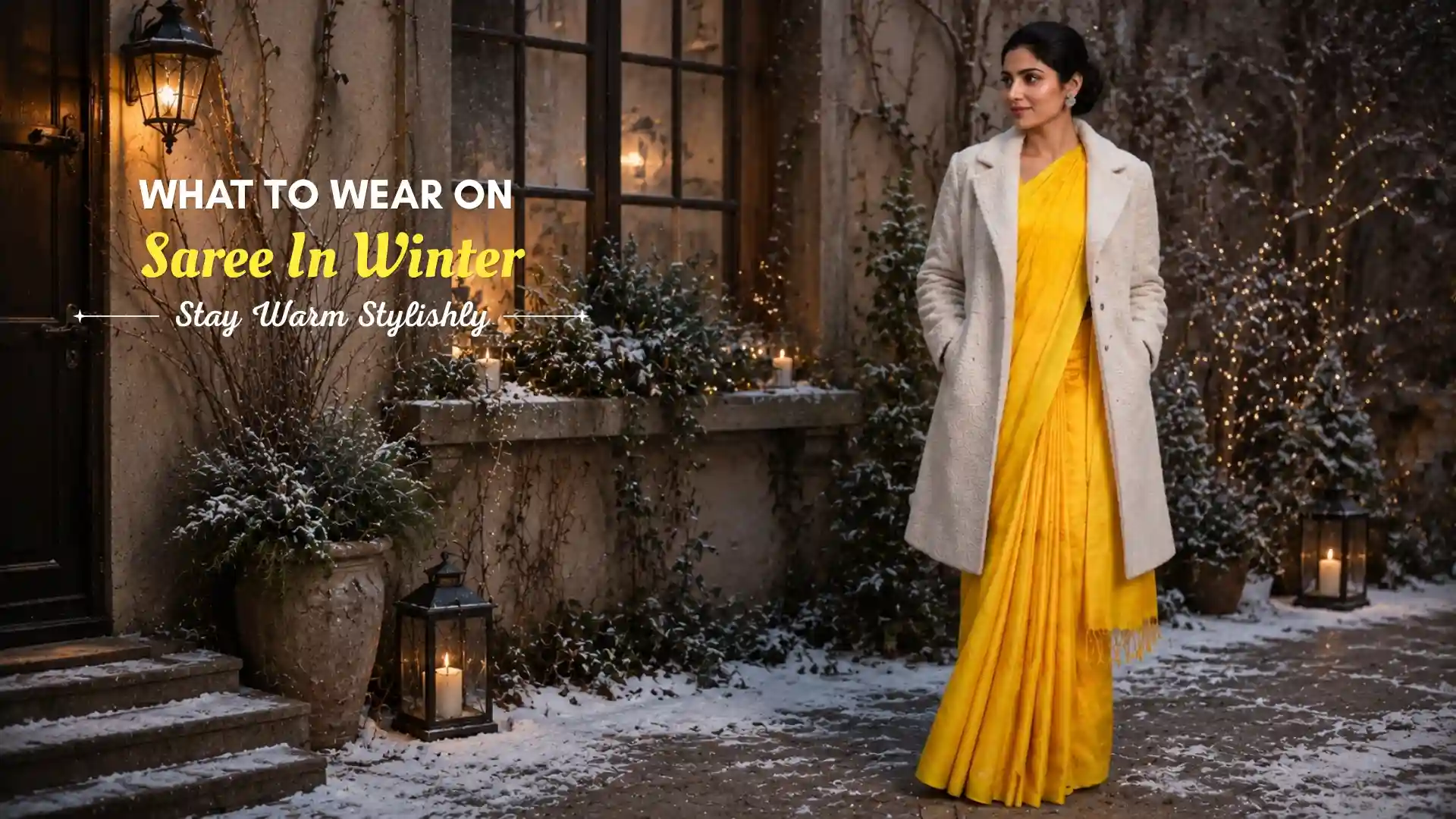
Winter is not the season to abandon your saree it is the season to wear it better. The question of what to wear on saree in winter has a surprisingly rich answer, and once you understand it, you will look forward to draping your saree on the coldest mornings rather than dreading it.
From blouses and blazers to thermal layers hidden underneath, winter saree styling is about working with the cold rather than fighting it. At Siakari, we believe every saree in your wardrobe deserves a twelve-month life and this guide will show you exactly how to make that happen.
What to Wear on Saree in Winter: Your Complete Layering Guide
The foundation of knowing what to wear on saree in winter is understanding that layering works differently with a saree than with western outfits. You are not just adding a coat on top you are thinking about what goes under the blouse, what replaces the blouse, what wraps over the pallu, and what draping style traps the most warmth.
Every layer is a decision, and every decision can look intentional and stylish.
complete your winter saree look with Siakari
Start with the Right Inner Layer
The smartest thing you can do when figuring out what to wear on saree in winter is to invest in your invisible layers. A fitted thermal top in the same colour as your blouse slips underneath it without showing, and it adds genuine warmth through the coldest hours of the day.
When you want to wear a saree in winter without bulk, this is your secret weapon. Thermal leggings worn as your underpetticoat liner keep your legs warm without any visual compromise.
No one will know, and you will be genuinely comfortable.
Full-Sleeve and High-Neck Blouses
Your blouse is the closest layer to your skin, which makes it the most powerful tool in your winter saree wardrobe. When thinking about what to wear on saree in winter, a full-sleeve blouse in velvet, brocade, or raw silk does double duty it keeps your arms covered and elevates the entire look.
High-neck and boat-neck blouses a silhouette championed consistently in Harper’s Bazaar India’s deep-dive on saree seasonality reduce the exposed area around your collarbone and chest, making a significant difference in how warm you feel.
For a deeply traditional look, try a full-sleeve blouse in the same zari as your saree border.
Jackets, Blazers, and Outerwear: What to Wear on Saree in Winter for Occasions
Outerwear is where winter saree styling becomes genuinely exciting. When you know what to wear on saree in winter as an outer layer, you can transform the same saree into three different looks for three different occasions.
Structured Blazers for the Office
A tailored blazer is perhaps the most versatile answer to what to wear on saree in winter for women who work. A well-fitted blazer in charcoal grey or deep navy worn over a silk saree with a simple blouse creates an effortless formal look.
You can buy sarees online India that are specifically designed for professional settings understated weaves and muted tones that pair beautifully with structured western outerwear.
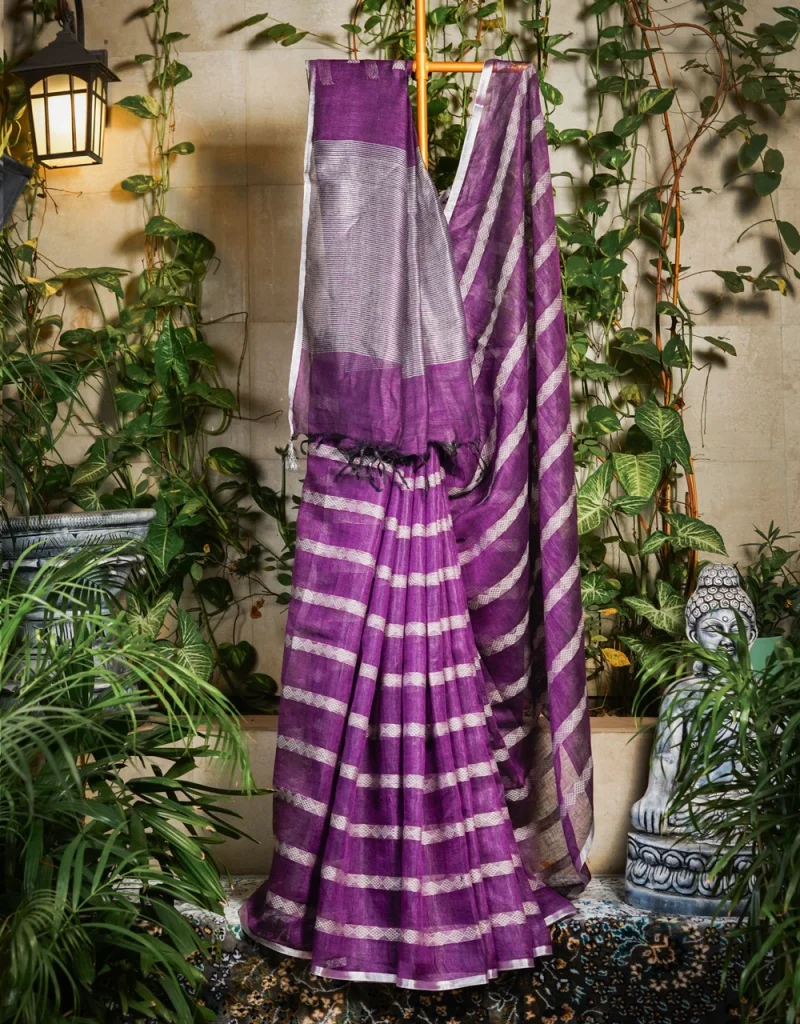
Embroidered Jackets for Weddings
If you have ever wondered what to wear on saree in winter for a wedding, an embroidered jacket is your most elegant answer. The jacket should be cropped or hip-length and ideally in a complementary fabric to your saree.
The Sabyasachi Autumn/Winter 2025 collection showcases exactly this baroque embroidered jackets layered over rich silk, with zardosi and velvet detailing that sets the benchmark for festive winter dressing in India, and the look translates beautifully to everyday saree wearers too.
If you are wearing a cotton silk saree in a deep jewel tone, a sherwani-style embroidered jacket over it feels genuinely regal.
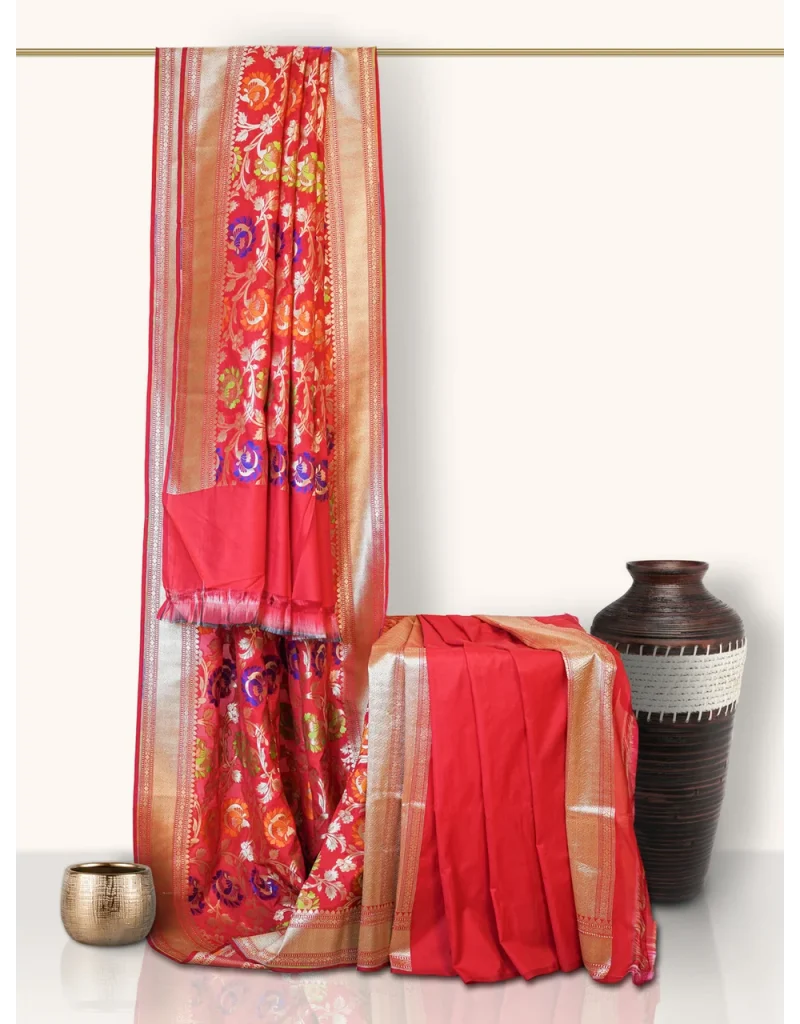
Cardigans and Shawls for Casual Days
For relaxed days at home or low-key family gatherings, you do not need the formality of a blazer. A long waterfall cardigan draped over your shoulders softens the look and adds warmth without structure.
A pashmina or cashmere stole is the most classic answer to what to wear on saree in winter it works with everything from a buy silk saree to a simple cotton weave, and it can be adjusted freely as the temperature changes through the day.
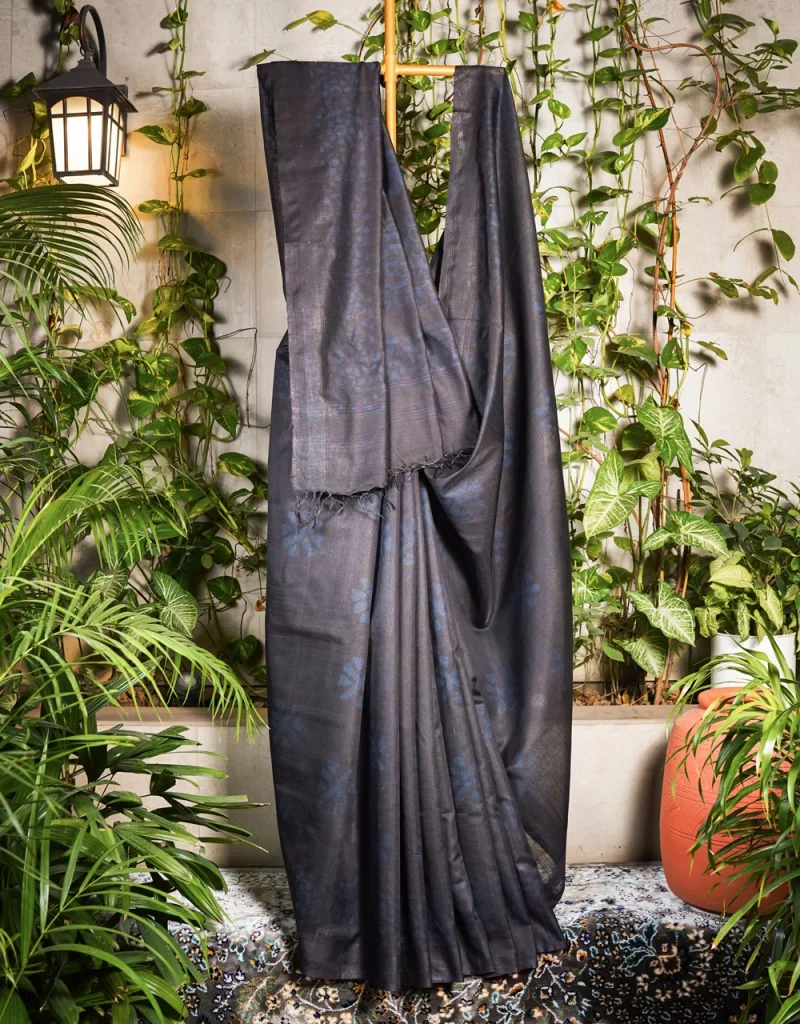
The Right Saree Fabrics for Winter
Before layering, you need to make the right fabric choice because what to wear on saree in winter starts with the saree itself. Not every fabric suits the cold.
Silk Sarees: The Winter Standard
Knowing what to wear on saree in winter always circles back to silk it is the most naturally warm fabric for sarees. Its tightly woven structure traps body heat and provides genuine insulation.
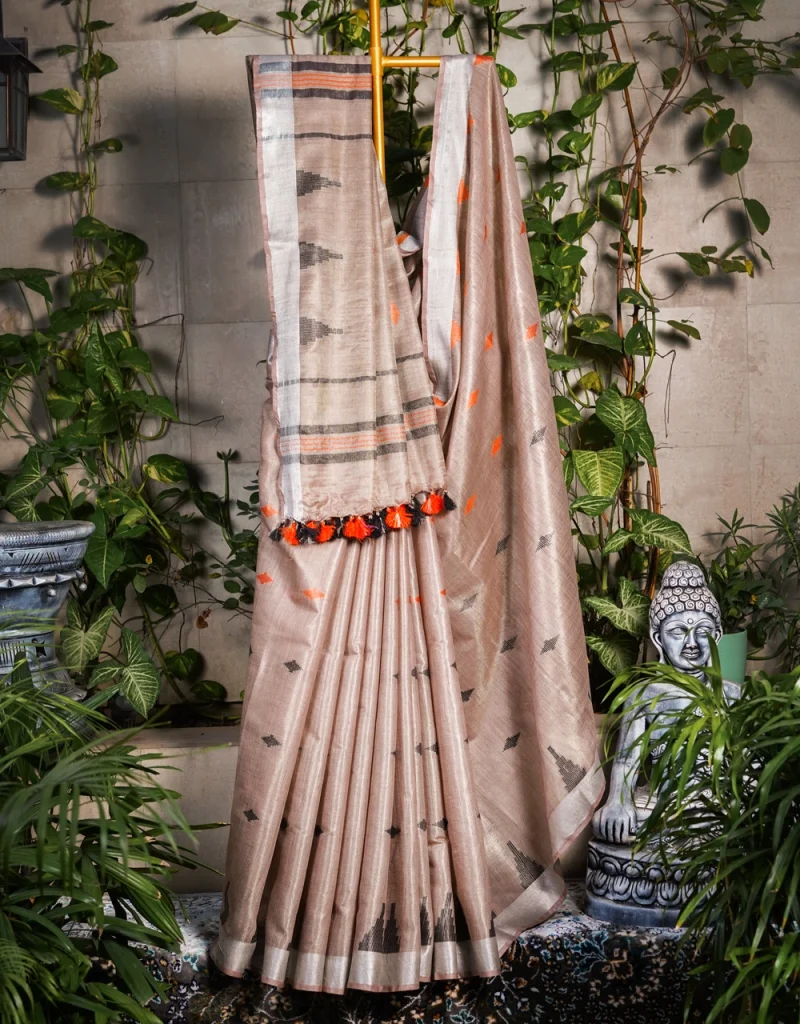
When you buy tussar silk saree, you are choosing a fabric that feels substantial and warm on the body, with a beautiful earthy texture that lends itself perfectly to winter styling.
Banarasi silk and Kanjivaram silk are equally ideal their heavy weave provides coverage, and their zari work reflects light beautifully against winter’s low golden sun.
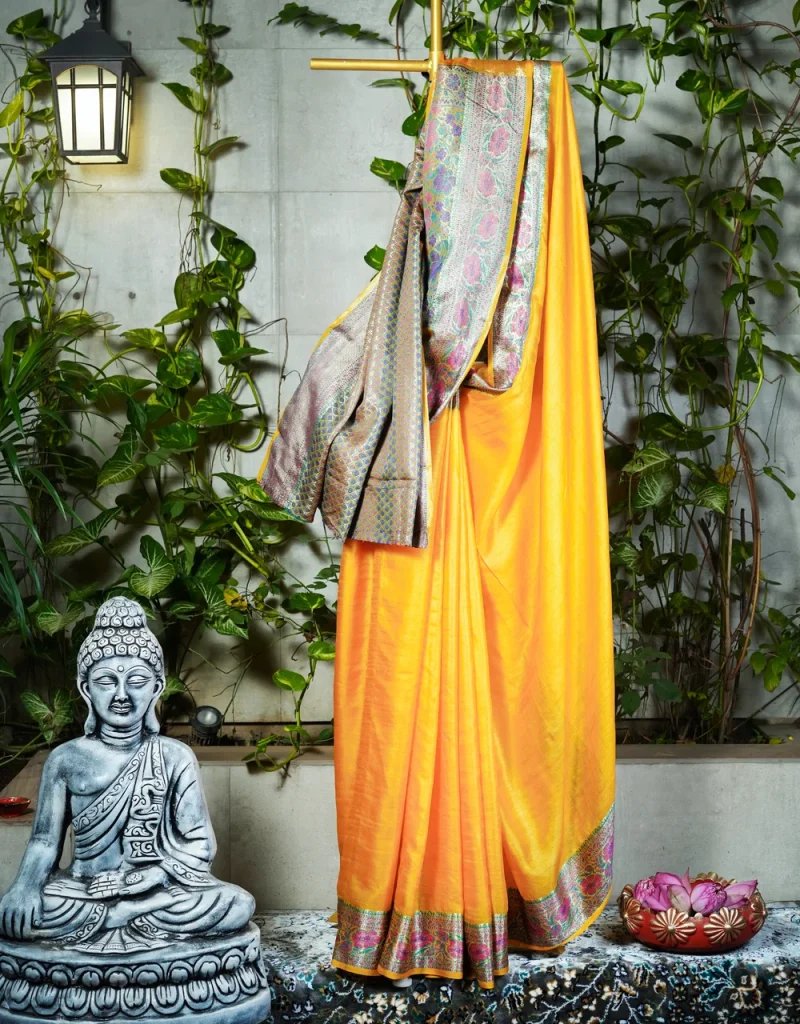
Tissue Silk for Festive Occasions
For those who want shimmer and warmth together, a buy tissue silk saree answers the question of what to wear on saree in winter for festive evenings perfectly. Tissue silk has a luminous quality that catches light magnificently, and paired with a velvet or brocade blouse, it creates a look that feels intentionally dressed for winter’s grandeur.
Linen and Linen Blends for Milder Winters
In regions where winter is mild, deciding what to wear on saree in winter becomes easier with a buy linen saree linen is a temperature-regulating fabric that keeps you comfortable when the mornings are cool but the afternoons are warm.
A linen blend saree in a rich mustard, deep olive, or brick red gives you both seasonal colour and fabric versatility. For the slightly cooler Rajasthani winters, this works beautifully for daytime occasions when you want to stay stylish without overdressing.
Winter Colour Palettes and Draping Styles for Sarees
Most blogs stop at layering but knowing what to wear on saree in winter also means understanding which colours and draping styles complete the seasonal picture.
Winter Colours That Photograph and Feel Right
Choosing what to wear on saree in winter is as much a colour decision as a fabric one deep, rich hues like emerald green, burgundy, deep plum, midnight blue, brick terracotta, and forest green feel seasonally right and photograph beautifully in winter light.
As Harper’s Bazaar India’s editorial on India Couture Week, banarasi and silk sarees are the go-to for winter gatherings because the body of the fabric provides genuine warmth and Taneira’s winter workwear guide on mastering formal saree draping makes the same case for jewel tones in winter settings.
Avoid very light pastels and whites for outdoor winter events they photograph well but offer zero visual warmth.
What Each Winter Colour Says About Your Saree
Not all deep colours work the same way, and understanding what each one brings to a winter look helps you dress with more intention.
Deep red and burgundy are the most instinctively wintery choices rich, festive, and deeply flattering against Indian skin tones. A burgundy Banarasi or tussar saree in this shade reads celebratory without effort.
Midnight blue and navy feel poised and sophisticated, making them ideal for formal winter occasions and office settings. They photograph exceptionally well in natural winter light and pair cleanly with gold jewellery.
Emerald green and forest green carry the warmth of the season and work across occasions from casual family gatherings to wedding receptions. They are especially striking in silk, where the sheen deepens the colour further.
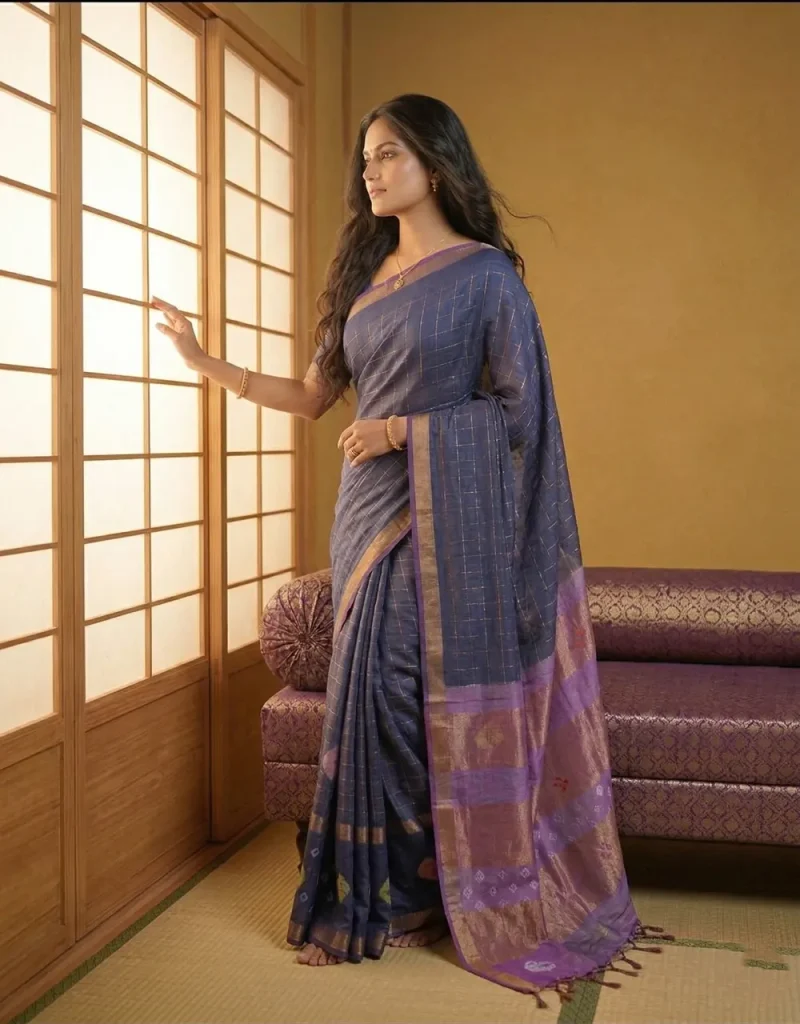
Deep plum and purple have a quiet luxury to them that suits evening events and winter weddings. In tissue silk or Kanjivaram, plum is one of the most photogenic shades of the season.
Brick terracotta and mustard are the earthy alternatives, rooted in Rajasthani craft tradition and perfectly suited to the mild Udaipur winter. They pair beautifully with linen and tussar textures.
Black is a year-round staple but in winter it becomes something more deliberate. A black silk saree with a heavily embroidered or zari blouse is one of the most striking looks for winter evenings, effortlessly dramatic without any extra layering required.
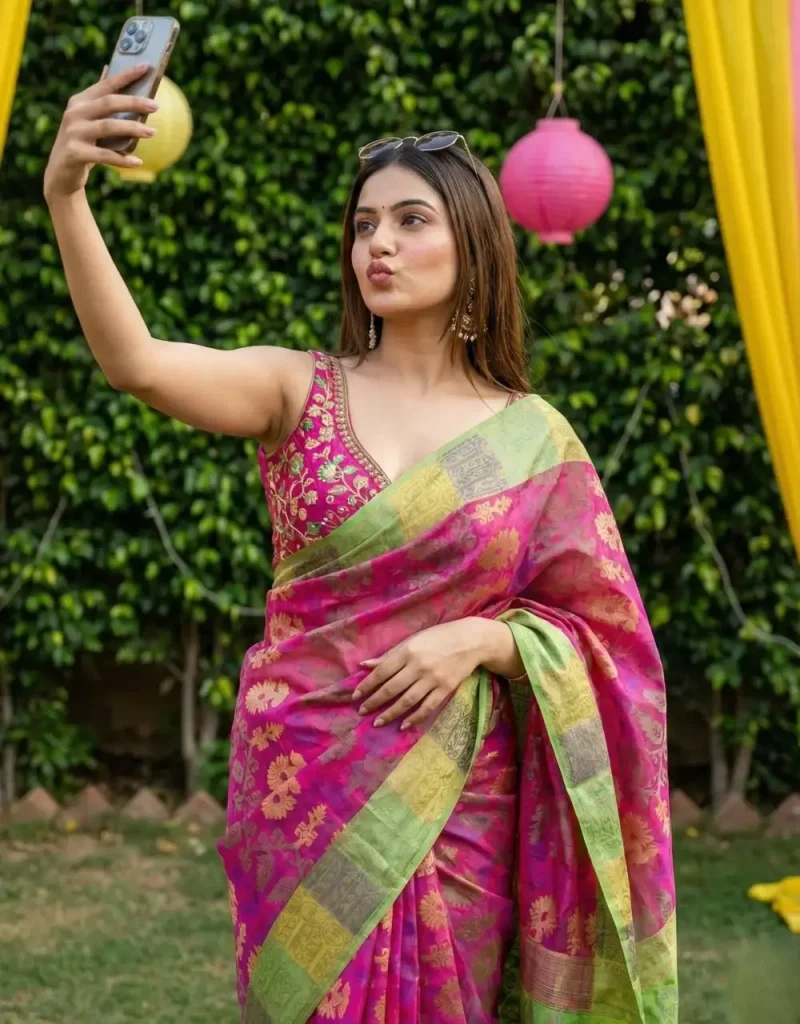
Pink works in winter when it leans deep rather than light. Dusty rose, fuchsia, and rani pink hold their own in winter settings, especially in silk or tissue silk where the richness of the fabric anchors the colour. Avoid pale baby pink for outdoor events as it loses its depth against winter’s natural light.
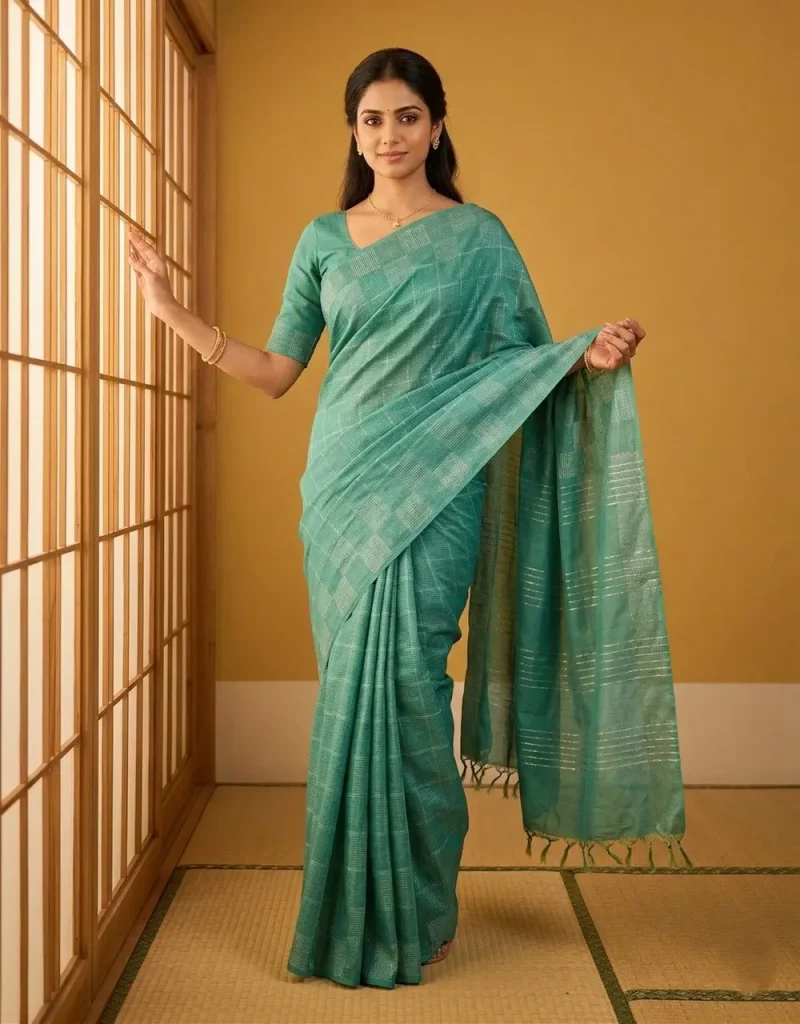
Draping Styles That Provide Extra Coverage
The way you drape your saree affects how warm you stay and this is a gap that most guides on what to wear on saree in winter do not address.
The Gujarati-style drape, where the pallu is brought forward over the chest instead of being thrown over the shoulder behind you, provides an extra layer of fabric over your torso and effectively acts as a built-in shawl.
The double pallu drape where you bring the pallu around the shoulders twice creates a wrap-like effect that is both warm and visually dramatic. The seedha pallu style, traditional to Maharashtra and parts of North India, keeps more fabric in front of the body and reduces exposure considerably.
Once you understand these draping styles, you realize you already own everything you need to stay warm and stylish.
Occasion-Specific Guide: What to Wear on Saree in Winter
The answer to what to wear on saree in winter changes depending on where you are going and this is where Siakari’s guide goes further than most.
For Winter Weddings
For a winter wedding, what to wear on saree in winter comes down to a heavy silk or tissue silk saree in a jewel tone, layered with an embroidered jacket or a structured blazer. Opt for a velvet or brocade full-sleeve blouse to keep your arms warm through the ceremony.
Complete the look with ankle boots or block-heeled closed-toe shoes rather than open sandals, which will leave you cold and uncomfortable by the evening reception.
For the Office
At work, what to wear on saree in winter means understated silk or a linen blend saree in muted tones, paired with a well-fitted blazer as your outer layer. A high-neck blouse in a solid colour keeps the look clean and professional.
Skip heavy jewellery one statement pair of earrings is enough. You can buy sarees in clean prints and minimal weaves from Siakari that are specifically suited to professional winter dressing.
For Casual Family Occasions
For casual days, what to wear on saree in winter is refreshingly simple a cotton silk saree or a printed tussar, layered with a long cardigan, a stole in a contrasting colour, or even a simple fitted sweater tucked into the petticoat.
Keep your footwear warm with juttis lined with wool or closed leather chappals, which are both traditional and comfortable. Add a bindi and simple gold earrings, and you have a look that is completely effortless.
What Not to Wear on Saree in Winter
Just as important as knowing what to wear on saree in winter is knowing what to avoid because the wrong choices will leave you cold no matter how carefully you layer.
Chiffon and georgette sarees are beautiful but they offer no warmth if you are wondering what to wear on saree in winter and reach for either of these, you will be cold no matter how many layers you add on top.
Avoid very stiff organza in outdoor winter settings as it provides no insulation and can feel brittle in the cold. Do not skip inner thermal layers thinking a jacket will compensate the body loses most heat from the torso and legs, and a jacket alone cannot counter that.
And avoid open-toe sandals or strappy heels for outdoor winter occasions, no matter how beautiful they are with your saree.
Conclusion: Make Your Saree a Winter Staple
Now that you know exactly what to wear on saree in winter from thermal inners to draping styles, from silk fabric choices to embroidered jackets there is no reason to leave your saree in the cupboard until spring.
Winter is actually the most beautiful time to wear a saree, when the colours are richer, the fabrics feel more luxurious, and every gathering has a warmth and ceremony to it that the saree was made for.
Explore Siakari’s collection of silk, tussar, linen, and tissue silk sarees curated for every winter occasion, and dress the season in its full, elegant glory.
Upgrade your winter wardrobe with luxurious sarees
FAQ
What is the best fabric to wear on a saree in winter?
When thinking about what to wear on saree in winter, silk is the warmest and most versatile fabric choice. Tussar silk, Banarasi silk, and cotton silk all provide natural warmth. For festive occasions, tissue silk adds shimmer alongside insulation. Velvet sarees are extremely warm and work especially well for evening winter events.
Can I wear a sweater with a saree in winter?
Absolutely, a fitted turtleneck or high-neck sweater is one of the easiest answers to what to wear on saree in winter. Tuck it neatly into your petticoat for a seamless look, or wear one side of the sweater over the saree and let the pallu show on the other side for a contemporary Indo-Western finish.
What kind of jacket should I wear over a saree in winter?
For weddings and formal events, the best answer to what to wear on saree in winter as outerwear is a velvet or woollen embroidered jacket. For office looks, a structured blazer works best. For casual days, a long woollen cardigan or a cropped denim jacket adds warmth with a modern edge.
How do I stay warm in a saree without looking bulky?
The real trick to knowing what to wear on saree in winter without bulk is to layer underneath rather than only on top. Thermal inners and thermal leggings worn under your blouse and petticoat keep you genuinely warm without adding any visual weight. A full-sleeve blouse is another way to add warmth without any external layer at all.
Which draping style is warmest for winter?
When it comes to what to wear on saree in winter from a draping angle, the Gujarati-style forward pallu drape provides the most coverage it keeps extra fabric over your chest like a built-in shawl. The double pallu drape wraps around the shoulders and is equally warm. Both are practical for cold weather without requiring any additional outer layers.
Leave a Reply