
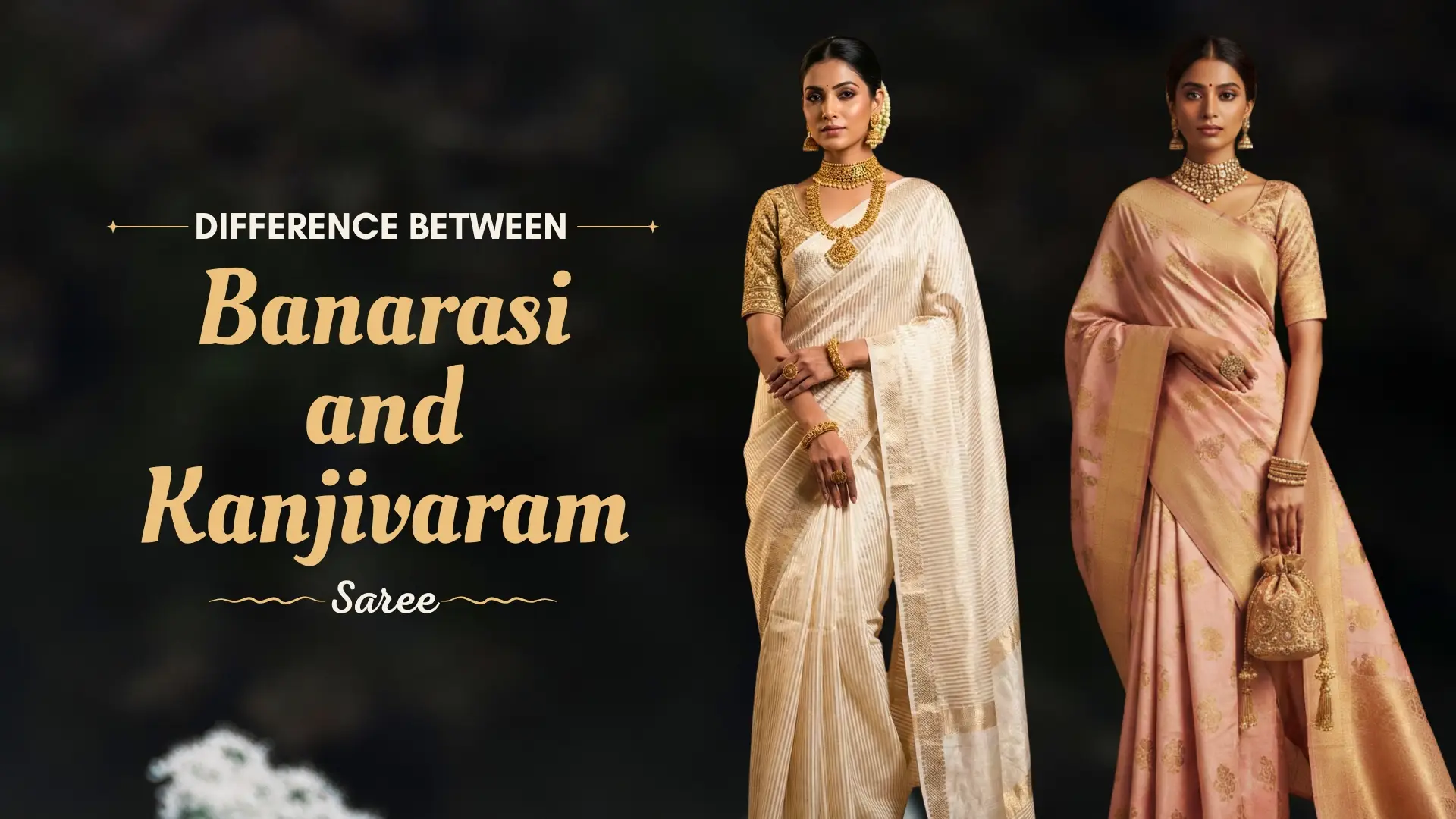
India has a long and beautiful relationship with sarees. Each region has its own weaving style, history, and signature look. Among the most admired silk sarees in the country are Banarasi and Kanjivaram sarees. Both are luxurious, traditional, and deeply connected to Indian culture. Yet, they are quite different in terms of weaving style, design, texture, and origin.
Many shoppers often wonder about the difference between banarasi and kanjivaram saree when choosing a saree for weddings, festivals, or special occasions. Understanding these differences not only helps you make a better purchase decision but also deepens your appreciation for the incredible craftsmanship behind these textiles.
In this detailed guide, we will explore the difference between banarasi and kanjivaram saree by looking at their history, fabric, weaving techniques, motifs, cultural significance, and styling possibilities.
The Rich History Behind Banarasi Sarees
Banarasi sarees originate from Varanasi, one of the oldest living cities in the world. The weaving tradition dates back several centuries and flourished during the Mughal era. Mughal influence brought intricate floral patterns, paisleys, and detailed brocade work into the designs.
Artisans in Varanasi developed advanced weaving techniques using silk threads combined with gold and silver zari. Over time, Banarasi sarees became a symbol of royalty and luxury. They were traditionally worn by brides and aristocratic families.
When discussing the difference between banarasi and kanjivaram saree, the historical influence of Persian and Mughal art is one of the defining elements of Banarasi designs.
Today, Banarasi sarees remain a staple for weddings and celebrations. Many women also explore modern variations when they buy sarees online India, where traditional patterns are blended with contemporary colors.
The Heritage of Kanjivaram Sarees
Kanjivaram sarees come from Kanchipuram in Tamil Nadu and are widely regarded as one of the finest silk sarees in India. The weaving tradition is believed to be more than 400 years old.
These sarees are made from pure mulberry silk and woven using a distinctive technique that creates strong, durable fabric. The borders and pallu are usually woven separately and then joined to the body of the saree with an interlocking method that makes them extremely sturdy.
When comparing the difference between banarasi and kanjivaram saree, the structural strength of Kanjivaram silk is often highlighted. The fabric feels heavier and more textured than Banarasi silk.
Kanjivaram sarees are deeply connected to South Indian culture and are an essential part of traditional bridal attire in Tamil Nadu.
Difference Between Banarasi and Kanjivaram Saree in Fabric
One of the most noticeable aspects of the difference between banarasi and kanjivaram saree is the fabric itself.
Banarasi sarees are usually made with fine silk and sometimes blended fabrics. The silk feels smooth and slightly lightweight compared to Kanjivaram silk.
Kanjivaram sarees, on the other hand, are woven from thicker mulberry silk threads. The fabric is denser, heavier, and has a rich texture that gives the saree a regal appearance.
While Banarasi sarees often feel delicate and flowing, Kanjivaram sarees have a structured drape that stands out beautifully during traditional ceremonies.
If you are looking for breathable everyday fabrics, options like a cotton blend saree or linen blend saree may feel more comfortable for daily wear.
Weaving Techniques: Craftsmanship at Its Finest
Another important aspect of the difference between banarasi and kanjivaram saree lies in their weaving techniques.
Banarasi sarees are famous for brocade weaving. Artisans use extra weft threads to create intricate designs on the fabric surface. This technique allows for detailed motifs like florals, vines, and paisleys.
Kanjivaram sarees follow a completely different weaving style. The body, border, and pallu are woven separately and then joined using a traditional interlocking method called “korvai.” This technique makes the saree incredibly strong and long-lasting.
Because of this craftsmanship, Kanjivaram sarees often last for generations when properly cared for.
Motifs and Design Differences
Motifs are another key factor in understanding the difference between banarasi and kanjivaram saree.
Banarasi sarees often feature:
- Floral vines
- Paisley patterns
- Mughal-inspired motifs
- Delicate brocade work
Kanjivaram sarees typically showcase:
- Temple borders
- Peacock designs
- Mythological symbols
- Geometric patterns
These design differences reflect the cultural influences of North and South India.
For women who prefer simpler prints for everyday use, styles like Bengal cotton sarees online or casual wear sarees provide elegant yet practical alternatives.
Zari Work: A Signature Feature
Zari work plays a major role in both saree types, but it contributes differently to the difference between banarasi and kanjivaram saree.
Banarasi sarees often feature intricate zari patterns woven throughout the fabric. The shimmering metallic threads create detailed brocade designs that give the saree a luxurious look.
Kanjivaram sarees use zari primarily in the borders and pallu. The contrast between the body and border colors is often dramatic and striking.
Both styles use real or tested zari depending on the price range and quality.
Weight and Texture Comparison
If you hold both sarees side by side, the difference between banarasi and kanjivaram saree becomes very clear in terms of weight.
Banarasi sarees are generally lighter and softer, making them easier to drape for long hours.
Kanjivaram sarees are heavier due to thicker silk threads and dense weaving. This gives them a grand appearance but also makes them slightly heavier to carry.
For everyday styling, many women prefer lighter fabrics like viscose silk saree or tussar silk saree online, which combine elegance with comfort.
Cultural Significance
The difference between banarasi and kanjivaram saree is also rooted in regional traditions.
Banarasi sarees are strongly associated with North Indian weddings. Brides often receive them as part of their bridal trousseau.
Kanjivaram sarees hold deep cultural significance in South India. They are worn during temple ceremonies, weddings, and important religious events.
Many families pass down Kanjivaram sarees through generations as heirlooms.
For spiritual occasions, women also explore options like pooja sarees online that maintain traditional aesthetics while offering lighter fabrics.
Occasions to Wear Banarasi vs Kanjivaram
Understanding the difference between banarasi and kanjivaram saree also helps in choosing the right saree for different occasions.
Banarasi sarees are perfect for:
- Weddings
- Receptions
- Festivals
- Evening events
Kanjivaram sarees are ideal for:
- Traditional ceremonies
- Temple visits
- South Indian weddings
- Cultural celebrations
For lighter celebrations, many women prefer festive wear sarees that combine traditional charm with easier draping.
Styling Banarasi Sarees
When styling a Banarasi saree, minimal accessories often work best because the saree itself is rich and detailed.
Popular styling ideas include:
- Pairing with a statement blouse
- Wearing traditional gold jewelry
- Keeping makeup classic and elegant
Modern shoppers who buy georgette sarees sometimes choose Banarasi-style patterns for a lighter contemporary look.
Styling Kanjivaram Sarees
Kanjivaram sarees are usually styled with traditional South Indian jewelry such as temple necklaces and gold bangles.
Hair accessories like jasmine flowers also complement the saree beautifully.
Blouses with elbow-length sleeves and contrast colors are common styling choices.
Many saree lovers explore other heritage fabrics as well, including when they buy khadi saree online or buy linen saree for a more minimal and breathable aesthetic.
Price Differences
Price is another factor when discussing the difference between banarasi and kanjivaram saree.
Banarasi sarees can range from affordable handloom blends to extremely expensive handcrafted pieces.
Kanjivaram sarees are often priced higher due to the use of pure silk and heavy weaving techniques.
However, both saree styles are available in various price ranges depending on silk quality, zari work, and craftsmanship.
Luxury variations such as Banaras tissue sarees online or buy tissue silk saree offer shimmering textures that elevate the traditional look.
Durability and Longevity
When cared for properly, both sarees can last decades.
However, the difference between banarasi and kanjivaram saree in durability comes from weaving strength.
Kanjivaram sarees are known for their exceptional durability because of thicker silk threads and strong weaving methods.
Banarasi sarees are slightly more delicate but still long-lasting when stored carefully.
Modern Adaptations
Today, designers are blending traditional weaving with modern fashion.
Banarasi motifs are being used on lightweight fabrics, while Kanjivaram patterns are appearing in contemporary color combinations.
These innovations allow younger generations to embrace traditional sarees in modern ways.
Even shoppers searching for daily wear sarees can now find designs inspired by these heritage textiles.
Why Both Sarees Remain Timeless
Despite changing fashion trends, the difference between banarasi and kanjivaram saree has never reduced their popularity.
Both sarees represent centuries of Indian craftsmanship, artistry, and cultural pride.
Banarasi sarees offer delicate elegance with intricate detailing.
Kanjivaram sarees deliver bold richness and unmatched durability.
Owning either one means owning a piece of Indian textile history.
Final Thoughts
Understanding the difference between banarasi and kanjivaram saree helps you appreciate the beauty and craftsmanship of these iconic Indian textiles.
Banarasi sarees bring Mughal-inspired elegance and intricate brocade weaving, while Kanjivaram sarees showcase strong silk structure and vibrant South Indian designs.
Both sarees are timeless investments that continue to hold cultural and emotional value across generations.
Whether you prefer the delicate charm of Banarasi silk or the regal grandeur of Kanjivaram silk, each saree tells a story of heritage, tradition, and artistry.
In the end, the difference between banarasi and kanjivaram saree is not about which one is better it is about celebrating two magnificent weaving traditions that make Indian fashion truly unique.
FAQs
How to identify Kanjivaram sarees?
You can identify an authentic Kanjivaram saree by its rich silk texture, heavy weight, and contrasting border and pallu. Traditional Kanjivaram sarees are woven using pure mulberry silk and real zari threads. One key sign is the interlocking technique used to join the border and body, which makes the saree very durable. The motifs often include temples, peacocks, and traditional patterns. Real Kanjivaram sarees also have a silk mark certification that confirms the authenticity of the fabric.
How to identify a real Banarasi saree?
A real Banarasi saree can be recognized by its intricate brocade work and detailed zari patterns. Authentic Banarasi sarees are usually handwoven and often feature Mughal-inspired motifs like florals, paisleys, and vines. You may notice slight irregularities in the weave, which indicate handloom craftsmanship. The backside of the saree typically shows loose threads from the weaving process. Genuine Banarasi sarees also carry a GI (Geographical Indication) tag that confirms they were made in Varanasi.
Which is costly, Banarasi and Kanjivaram?
Both Banarasi and Kanjivaram sarees can be expensive, but Kanjivaram sarees are generally costlier due to their thicker silk and heavy weaving technique. They are made using pure mulberry silk and often contain high-quality zari, which increases the price. Banarasi sarees also come in luxurious varieties with detailed brocade work, making them expensive as well. However, the final cost of both sarees depends on factors such as silk quality, zari content, weaving complexity, and the reputation of the artisan.
What are the 4 types of silk?
There are several types of silk used in textiles, but four commonly known varieties are mulberry silk, tussar silk, eri silk, and muga silk. Mulberry silk is the most widely used and is known for its smooth texture and durability. Tussar silk has a slightly rough texture and natural golden sheen. Eri silk is soft, warm, and eco-friendly. Muga silk, produced mainly in Assam, is famous for its natural golden color and exceptional strength.
Leave a Reply