
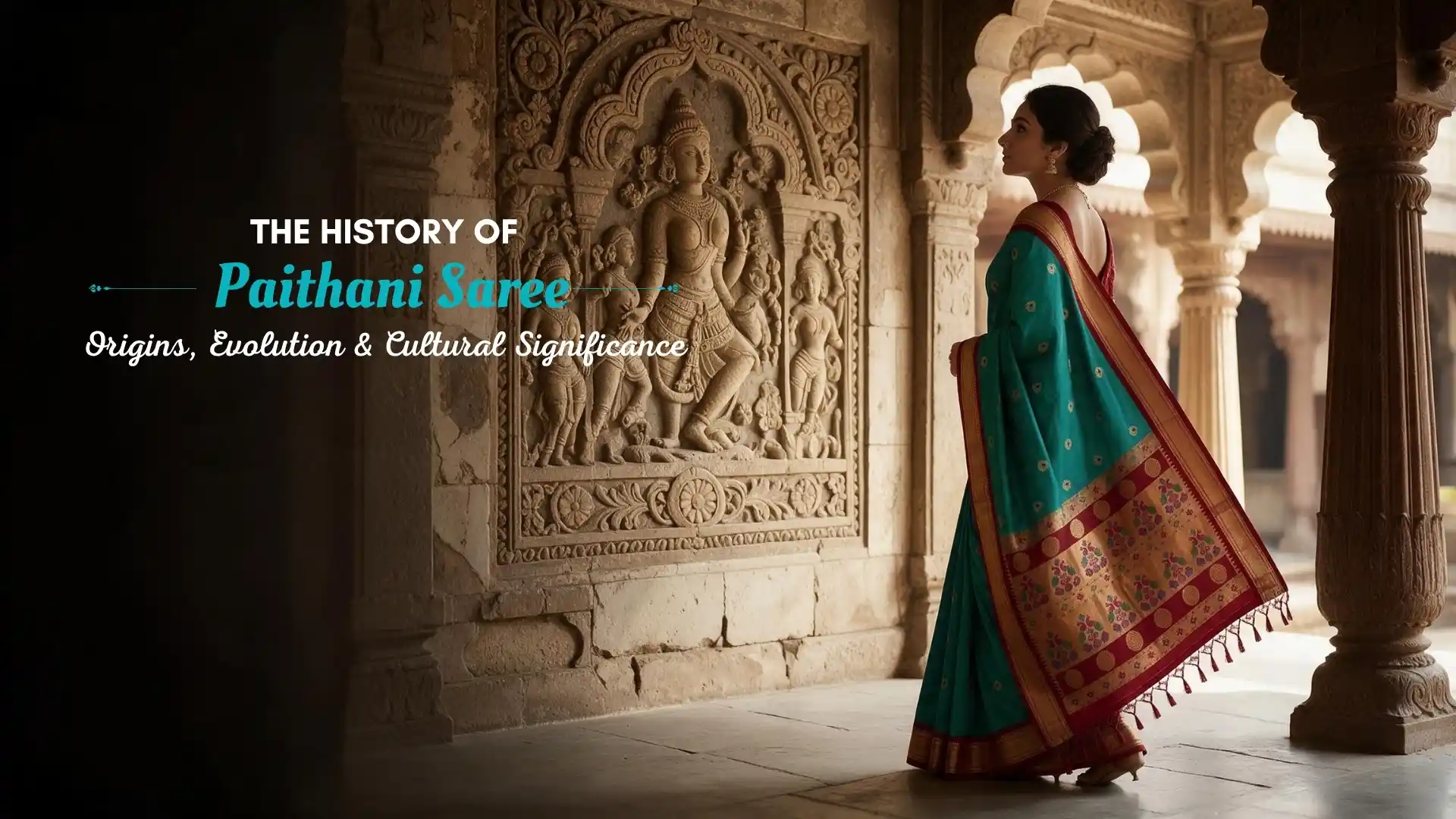
The history of Paithani saree stretches back more than 2,000 years, to a time when a small town on the banks of the Godavari was already weaving silk fine enough to be traded with the Greco-Roman world. Understanding the history of Paithani saree means going back to Satavahana-era trade routes, Peshwa courts, and the handlooms of Yeola that keep the tradition alive today. This guide traces that journey from origin to the present day, covering where the weave began, how it evolved, and why it remains so culturally significant.
What Is a Paithani Saree? A Quick Introduction Before Its History
Before getting into the history of Paithani saree, it helps to know what actually defines one. A Paithani is a handwoven silk saree, traditionally set apart by an oblique square-patterned border and a pallu woven with a peacock or floral motif in gold or silver zari. This distinct construction is exactly why the history of Paithani saree is so often discussed alongside its craftsmanship the two are inseparable.
The Meaning Behind the Name in Paithani Saree History
Paithani takes its name from Paithan, a town in present-day Maharashtra that was once known as Pratishthan, capital of the Satavahana dynasty. This origin point is the starting line for the entire history of Paithani saree. The saree was sometimes called “Dev Vastra,” or fabric of the gods, reflecting the reverence with which it was treated even in ancient times. Present-day Yeola, in Nashik district, is where most Paithanis are woven today, after weavers were relocated there under later rulers.
What Makes a Paithani Different from Other Silk Sarees
No account of the history of Paithani saree is complete without noting what sets its construction apart. Unlike a Banarasi saree weave, where the brocade pattern is created with extra warp threads running through the fabric, a Paithani’s border and pallu are woven separately using an interlocking tapestry technique and then joined to the body of the saree. This is why an authentic Paithani has no distinct “wrong side” the motif is visible on both faces of the fabric, a detail that instantly separates a handwoven piece from a printed or power-loom imitation.
The Origins of Paithani Saree: From Paithan to the Satavahana Empire
The origins chapter of the history of Paithani saree is tied directly to the Satavahana Empire, which ruled the Deccan region from roughly the 2nd century BCE to the 2nd century CE and actively encouraged trade in the fine textiles woven at Paithan.
Trade with the Greco-Roman World
An often-overlooked part of the history of Paithani saree is just how international its early trade was. Historical records suggest that Paithani silk, then referred to as cloth from “Baithana,” was considered among the finest fabrics of its time and was exchanged with Greek and Roman traders for gold. Cave inscriptions near the region from this period describe the weaving and dyeing industry in detail, showing just how established the craft already was two millennia ago.
The Ajanta Cave Influence on Paithani Motifs
The design language woven into this history of Paithani saree owes a lot to nearby Ajanta. Paithan’s proximity to the Ajanta caves left a visible mark on Paithani design, with motifs such as the lotus, the peacock-in-a-bangle pattern, and flowering vine borders believed to draw from the Buddhist paintings found there. Many of these same motifs are still woven into Paithani pallus today, largely unchanged in form.
Royal Patronage and the Peshwa Era in Paithani Saree History
While the Satavahanas gave Paithani its start, it was royal patronage many centuries later that added a defining chapter to the history of Paithani saree and turned it into a symbol of status rather than simply a trade commodity.
How Yeola Became the New Weaving Hub
A major turning point in the history of Paithani saree came during the 17th century, when the Peshwas of Maharashtra shifted many weavers from Paithan to Yeola, a town in the Nashik region. Over time, Yeola grew into the primary centre for Paithani weaving, a position it still holds the town and its surrounding villages are home to thousands of weaver families who continue the craft today.
Paithani as a Symbol of Status
The status attached to Paithani is one of the most repeated themes in the history of Paithani saree. Under Peshwa rule, these sarees moved firmly into royal wardrobes, worn by noblewomen as a marker of wealth and taste. Zari during this era was often pure gold mixed with copper for strength, making these sarees genuinely precious objects rather than purely decorative ones. This association with nobility carried into later eras too the Nizams of Hyderabad were also known to favour Paithani for their courts, further cementing its place across the Deccan.
Evolution of Paithani Weaving Techniques and Designs
The next stretch of the history of Paithani saree is really a story of craft evolving without losing its identity, since the essence of Paithani hasn’t changed much in two thousand years, but the fabric itself has.
From Cotton-Silk Blends to Pure Silk Fields
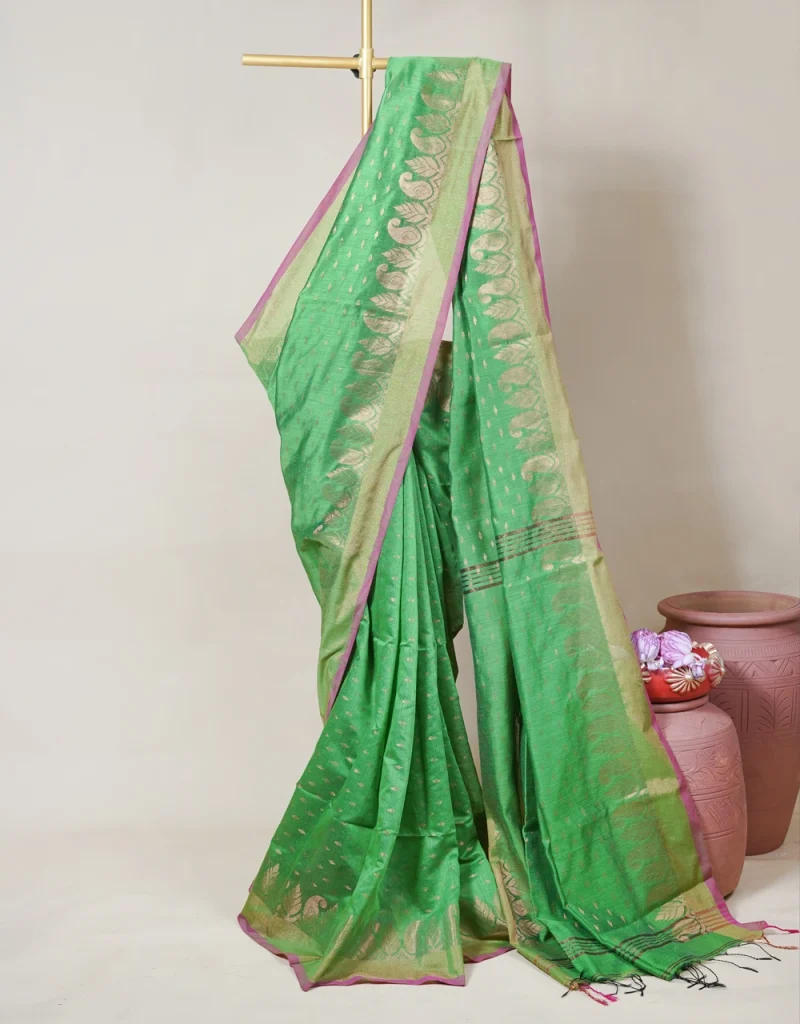
One detail often missing from casual retellings of the history of the Paithani saree is that early versions weren’t entirely silk. Older Paithanis often had a coloured, cotton muslin field with zari patterning worked into it, closer in spirit to a cotton silk sarees construction than a fully silk saree. It was only in the 19th century that fields woven entirely in silk became common, giving the Paithani the richer, more uniform drape most people associate with it today.
Iconic Motifs: Peacock, Lotus, and Asawali
Certain motifs recur across every stage of the history of Paithani saree the mor (peacock), the kamal (lotus), and the asawali flowering vine pattern that became especially popular in the Peshwa period. Each motif is woven, not printed or embroidered, using an interlocking weft technique that can take anywhere from several weeks to nearly two years to complete depending on the intricacy of the design.
Handloom vs Powerloom: A Modern Twist in Paithani Saree History
The most recent chapter in the history of Paithani saree is also its most challenging one, as the market has filled up with power-loom “semi-Paithani” sarees that replicate traditional motifs in synthetic yarns at a fraction of the price. These are not true Paithanis in the historical sense, and the price difference is stark a genuine handwoven piece typically starts many times higher than a power-loom copy, reflecting the months of skilled labour behind it.
Cultural Significance Rooted in Paithani Saree History
Beyond its craftsmanship, the cultural weight carried through the history of Paithani saree is part of why it remains so significant, particularly within Maharashtrian households.
A Bridal Heirloom Passed Through Generations
A recurring thread throughout the history of Paithani saree is its role as a bridal heirloom. A Paithani is still one of the most common heirloom gifts in Maharashtrian weddings, often bought and saved for years before being passed from mother to daughter. Because the silk and zari are built to last, many families own Paithanis that are decades old and still worn for weddings, naming ceremonies, and festivals like Gudi Padwa.
Paithani Alongside Other Iconic Indian Weaves
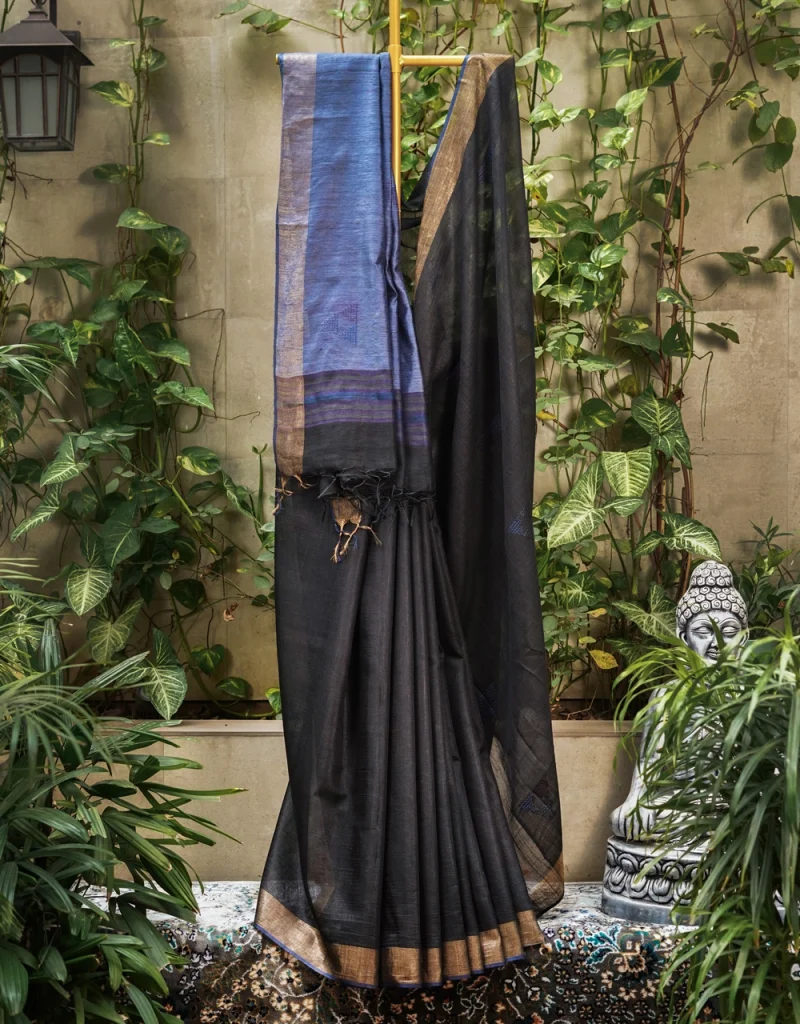
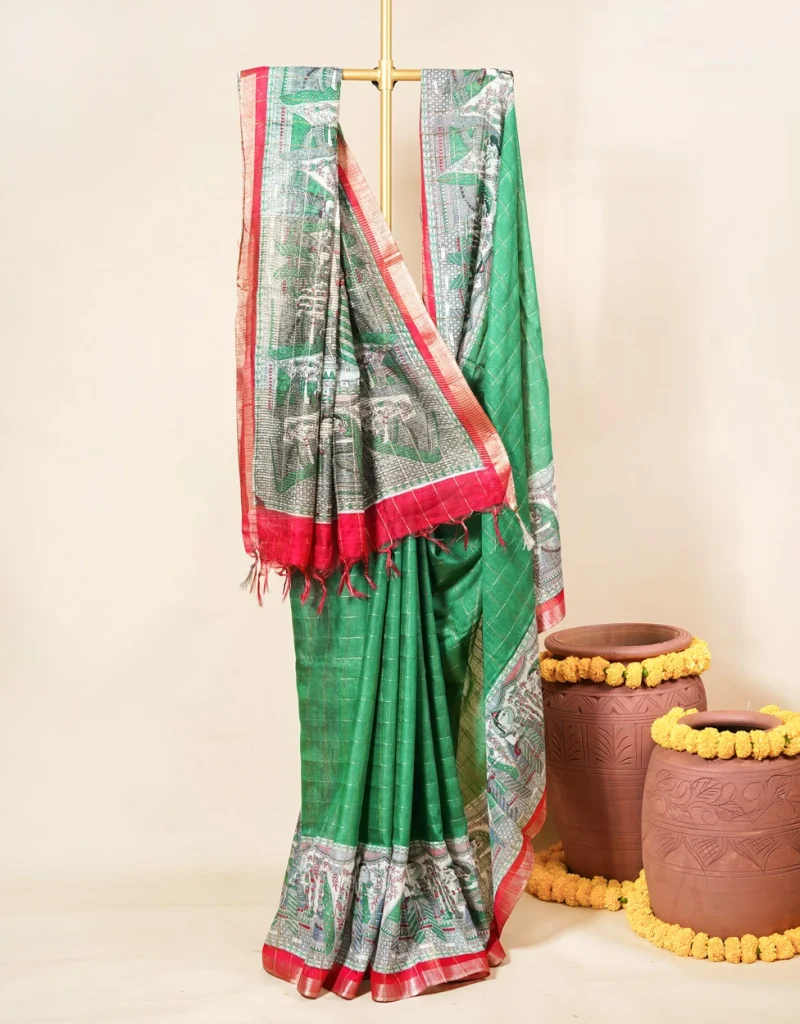
Placing the history of Paithani saree next to other regional traditions helps show just how distinct it really is. Paithani sits within a much larger map of India’s weaving heritage, alongside weaves like tussar sarees from the east and silk saree traditions from the south. If you’re building a wardrobe around India’s handloom heritage, exploring a mul cotton saree alongside a Paithani, or even contrasting it against something as versatile as a pink saree or a striking black saree, is a good way to appreciate how differently each region approaches silk, colour, and border work.
How to Identify an Authentic Piece of Paithani Saree History
Given how often power-loom imitations are sold under the Paithani name, knowing what to look for matters as much as knowing the history of Paithani saree itself. Genuine handloom Paithanis carry the Handloom Mark, show slight natural irregularities in the weave, and have motifs that are woven into the fabric rather than printed or stitched on visible identically from both sides. In recognition of this heritage, Paithani was granted Geographical Indication status in 2010, formally protecting the name for sarees woven using the traditional method in and around Yeola.
Conclusion
The history of Paithani saree is really a history of Indian craftsmanship itself from Satavahana-era trade routes to Peshwa courts to the handlooms of Yeola that keep the tradition alive today. Few textiles carry this much documented continuity in their history, which is exactly why a genuine Paithani remains one of the most treasured pieces in an Indian wardrobe. If you’re drawn to sarees with this kind of woven history, explore Siakari’s handloom collection, and the Siakari team will be glad to help you find a piece that carries its own story forward.
Find our Perfect Choice At Siakari
Frequently Asked Questions
What is the history of Paithani saree?
Paithani originated in the town of Paithan, Maharashtra, over 2,000 years ago during the Satavahana dynasty, later gaining royal patronage under the Peshwas, who shifted much of the weaving to Yeola, where it continues today.
Why is Paithani called the Dev Vastra?
It was historically referred to as “fabric of the gods” because of the reverence, skill, and richness of material pure silk and gold or silver zari that went into weaving it.
What is the difference between a handloom and powerloom Paithani?
A handloom Paithani is entirely hand-woven, with motifs visible on both sides of the fabric and typically bearing the Handloom Mark, while a powerloom version uses mechanised, synthetic-yarn processes and sells for a fraction of the price.
Why is Yeola associated with Paithani sarees?
Weavers were relocated from Paithan to Yeola under the Peshwas in the 17th century, and Yeola has remained the primary hub of Paithani weaving ever since.
What motifs are commonly found on a Paithani saree?
The most recognisable motifs include the peacock (mor), lotus (kamal), and the asawali flowering vine, most of which trace back to Buddhist-influenced designs from the nearby Ajanta caves.
Leave a Reply